
Inside the backlash to the AI war machine
A protest at OpenAI headquarters suggests the backlash to military AI is growing — even if its politics are still half-formed. PLUS: The Pentagon declares Anthropic a supply chain risk
Inside the backlash to the AI war machine
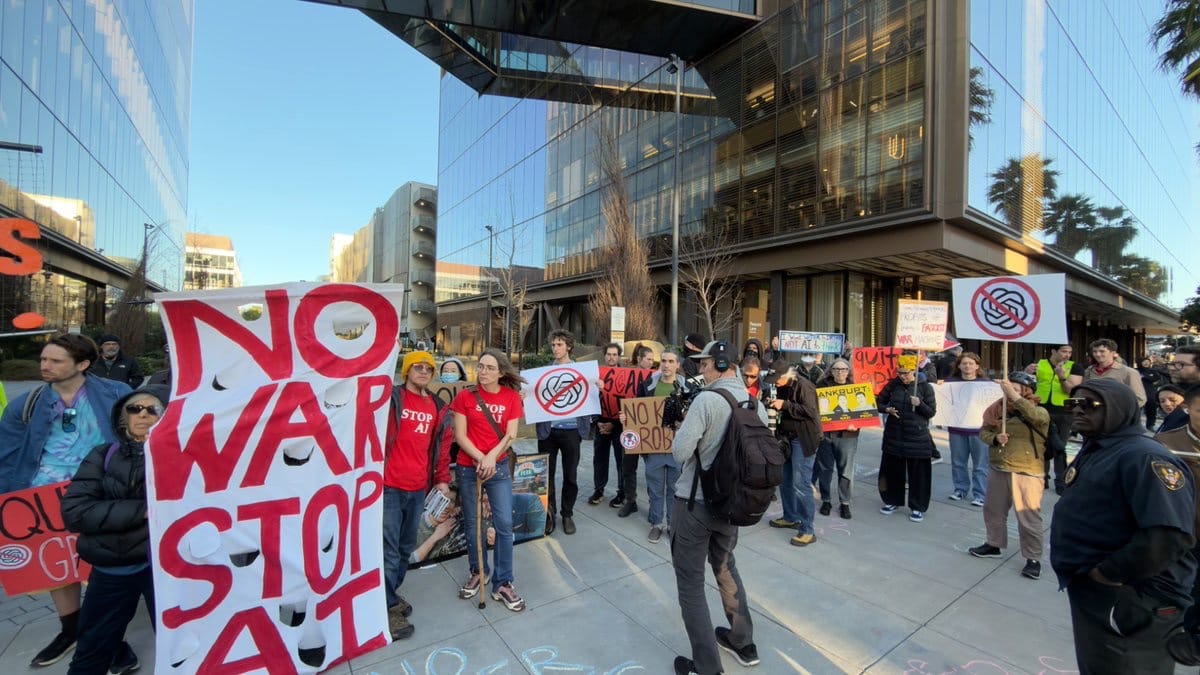
The chants of "1, 2, 3, 4, we don't want a robot war!" and "5, 6, 7, 8, no AI surveillance state!" echoed outside OpenAI's headquarters in San Francisco, where a small group of protesters gathered to warn of a looming AI surveillance state. The demonstrators were responding to the dramatic turn of events that saw OpenAI take Anthropic's place as the United States' lead vendor for military AI services. On Thursday, the Pentagon declared Anthropic a "supply chain risk," a designation previously reserved for foreign adversaries. OpenAI is now reportedly back at the negotiating table with the Pentagon, seeking to add yet more safeguards to its contract after an earlier effort failed to reassure the public.
The protest was the latest in a wave of anti-AI demonstrations that have taken place around the country. Last week, hundreds marched outside DeepMind, OpenAI, and Meta's headquarters in an anti-AI protest that organizers said drew up to 500 people. Last month, 200 marched on Virginia's state capital to protest the data centers being built in the state. For OpenAI, initial doubts about the strength of the company's safeguards against the use of its technologies for domestic surveillance and autonomous weapons have metastasized into a full-blown PR crisis.
On Tuesday, the company's dealmaking resulted in a spur-of-the-moment protest that drew about three dozen people to OpenAI's San Francisco headquarters. OpenAI did not respond to a request for comment. The protesters, some of whom were likely OpenAI employees, intermittently walked in and out of the building, studiously avoiding eye contact. As bleak as the slogans were, the juxtaposition of the mundane and the apocalyptic had a certain dark comedy to it.
The backlash against military AI is growing, even if its politics are still half-formed. The Pentagon's decision to label Anthropic a supply chain risk has raised concerns about the potential misuse of AI technology in military applications. Critics argue that the rapid development of AI could lead to the creation of autonomous weapons that pose a significant threat to global security.
OpenAI's role in the military AI landscape has been a point of contention. The company has faced criticism for its decision to work with the Pentagon, particularly after its acquisition of Anthropic. Some activists view OpenAI's involvement in military AI as a betrayal of its original mission to ensure AI benefits humanity.
The protests outside OpenAI and other tech giants highlight a growing public concern about the potential dangers of AI. While the political landscape surrounding these issues remains unclear, the demonstrations signal a growing awareness of the risks associated with the development and deployment of AI in military contexts.
As the debate over military AI continues, the Pentagon's decision to label Anthropic a supply chain risk has reignited the conversation about the need for stricter regulations and greater transparency in the development and use of AI technology. The backlash against military AI is not just a protest; it is a call for accountability and a reminder that the potential consequences of unchecked AI development are far-reaching and complex.
In the face of these concerns, OpenAI and other tech companies must grapple with the ethical implications of their work and the responsibility they bear in shaping the future of AI. The protests outside their headquarters are a stark reminder that the public is watching and that the stakes are high. As the AI race heats up, the need for robust oversight and collaboration between governments, tech companies, and civil society has never been greater.
The backlash to the AI war machine is a reflection of a broader societal shift in attitudes toward technology and its role in shaping our world. While the politics of this movement are still evolving, the protests outside OpenAI and other tech giants are a powerful testament to the growing awareness and concern about the potential dangers of unchecked AI development. The challenge now lies in finding a way to harness the power of AI for the betterment of society while mitigating the risks it poses to global security and human rights.









