Home HealthInside Spain’s ASF crisis: how a top lab became th...
Health⭐ Featured

Inside Spain’s ASF crisis: how a top lab became the centre of a virus outbreak

In November 2025, Europe’s largest pig producing country, Spain, discovered the ASF virus in its wild boar population. Research lab IRTA-CReSA, located close to Barcelona, found itself in the middle of that all. While playing a pivotal role in analysing blood and carcasses on the one hand, it became scrutinised on the other: what if […]

6 April 2026 at 12:34 pm
1 views

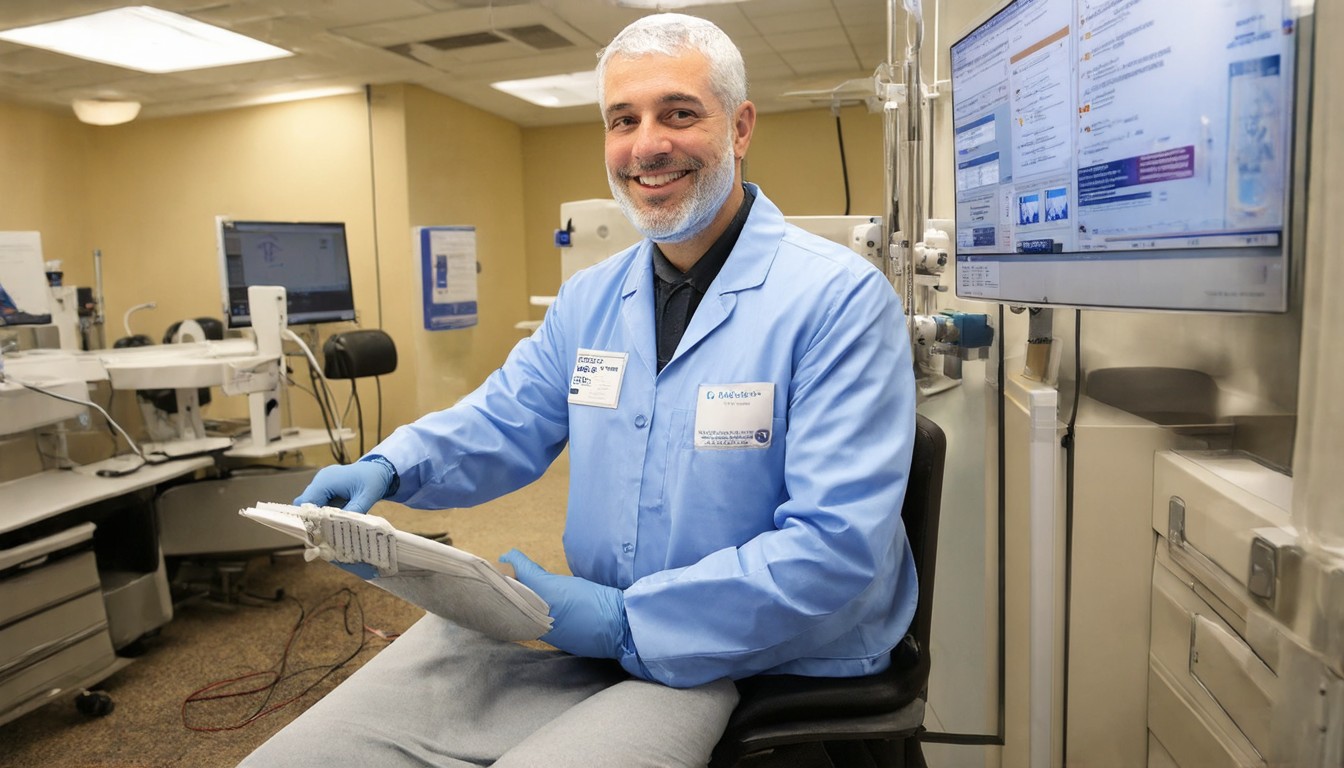
In November 2025, Europe’s largest pig producing country, Spain, faced an unprecedented crisis when the African Swine Fever (ASF) virus was detected in its wild boar population. This outbreak sent shockwaves through the agricultural sector, threatening the livelihoods of thousands of farmers and raising concerns about the future of the country’s pork industry. At the heart of this crisis was the IRTA-CReSA research lab, located just outside Barcelona. While the lab played a crucial role in analyzing blood and carcasses to understand the virus’s spread, it also became the focal point of intense scrutiny, as questions about its potential involvement in the outbreak began to surface.

The IRTA-CReSA lab, a joint venture between the Spanish National Research Council (CSIC) and the University of Barcelona, is renowned for its expertise in animal health and virology. Its state-of-the-art facilities and experienced team made it a natural choice to lead the investigation into the ASF outbreak. Researchers at the lab quickly got to work, analyzing samples from infected wild boars and attempting to trace the virus’s origin. Their efforts were critical in mapping the virus’s spread across the country and identifying potential containment strategies.

However, as the investigation progressed, whispers of conspiracy began to circulate. Some experts suggested that the lab’s proximity to wild boar habitats and its handling of ASF-infected samples might have inadvertently contributed to the outbreak. Critics pointed out that the lab had been conducting research on ASF for several years, and the possibility of a leak or accidental release of the virus could not be entirely ruled out. These concerns intensified when it was revealed that the lab had recently expanded its ASF research, including experiments on live virus strains.

In response to the mounting suspicions, the Spanish government launched an independent inquiry into the lab’s operations. Investigators meticulously reviewed the lab’s protocols, security measures, and records to determine whether any breaches or negligence could have led to the virus’s release into the wild. Meanwhile, the lab’s directors insisted that they had followed strict biocontainment procedures and that their research had been conducted in a manner that posed no risk to the environment. They emphasized that their work was essential for understanding the virus and developing strategies to combat its spread.

As the inquiry dragged on, tensions between proponents of the lab’s innocence and those accusing it of negligence grew. Supporters of the lab argued that its expertise was too valuable to discard and that the outbreak was likely the result of natural transmission from wild boars migrating from neighboring countries. They pointed out that ASF had already been detected in wild boar populations in several European countries, and the virus’s presence in Spain was not entirely unexpected.

Others, however, remained unconvinced. They highlighted the lab’s unique position as a potential source of the outbreak, given its extensive work with ASF and its location near vulnerable wild boar populations. These critics demanded transparency and called for stricter regulations on research labs handling dangerous pathogens. They argued that the ASF crisis was a stark reminder of the risks associated with conducting such research and the need for robust oversight to prevent similar incidents in the future.

The ongoing debate surrounding the IRTA-CReSA lab and the ASF outbreak has highlighted the complex interplay between scientific research, environmental risks, and public health. While the lab’s role in analyzing the virus and informing containment efforts cannot be denied, the questions about its potential involvement in the outbreak have sparked a broader conversation about the responsibilities of research institutions in safeguarding both human and animal health. As the inquiry continues, the Spanish government and the international scientific community will be closely watching to see whether the lab can clear its name and whether new protocols can be established to prevent such crises in the future.

Source: Pig Progress
📰 Related News
The Rise and Sudden Fall of OpenAI’s Sora
OpenAI’s abrupt decision to shut down its AI video generation app, Sora, just 103 days after launch has sparked widespread debate about the company’s strategic direction and financial health. Despite a $1 billion partnership with Disney and a viral debut that…
13 Apr
St. Luke’s stays on track with massive expansion
St. Luke’s Medical Center continues to absorb higher costs brought about by the ongoing Middle East crisis as much as it can, with the company staying on track with massive investments for expansion and technology upgrades.
7 Apr
Granulated Lime vs. Bulk Lime: What’s the Difference?
Understanding the type of lime required for your soil can significantly impact your crop yield and overall soil health.
7 Apr
Can surgery used to treat fluid accumulation also help with Alzheimer’s? A Singapore trial is exploring this possibility
Early results from a small clinical trial at Changi General Hospital suggest the technique could lead to improvements in memory, mood and cognition.
7 Apr
Famers hear how to ‘Look after your health and your herd’ at latest meeting of Grassland Club
The members of Fermanagh Grassland Club were in for a treat in March when eminent qualified doctor and vet, Professor Patrick Wall, Dublin, was the speaker at their meeting in the Killyhevlin Hotel, Enniskillen.
7 Apr
ICMSA: HSA rules on telescopic telehandlers ‘way over the top’
The vast majority of farmers are completely unaware that training is now required under Health and Safety Authority (HSA) telescopic telehandlers rules, according to farm organisation. Pat O’Brien, chairperson of the farm business committee for the Irish Creamery Milk Suppliers Association (ICMSA) has criticised requirements for training from the Health and Safety Authority (HSA). Under […] The post ICMSA: HSA rules on telescopic telehandlers ‘way over the top’ appeared first on Agriland.ie .
7 Apr
ICSA: ‘Additional support’ needed for bluetongue vaccination
Bluetongue vaccination must be supported as “an additional measure” and not at the expense of core animal health actions, the Irish Cattle and Sheep Farmers’ Association (ICSA) has warned. Last month the Minister for Agriculture, Food and the Marine, Martin Heydon said that vaccination against bluetongue virus would be included as an “option” for farmers […] The post ICSA: ‘Additional support’ needed for bluetongue vaccination appeared first on Agriland.ie .
7 Apr
AWS Weekly Roundup: Amazon Connect Health, Bedrock AgentCore Policy, GameDay Europe, and more (March 9, 2026)
Fiti AWS Student Community Kenya! Last week was an incredible whirlwind: a round of meetups, hands-on workshops, and career discussions across Kenya that culminated with the AWS Student Community Day at Meru University of Science and Technology, with keynotes from my colleagues Veliswa and Tiffany, and sessions on everything from GitOps to cloud-native engineering, and […]
7 Apr
Farm accident survivor welcomes requirements for use of telehandlers
A farm accident survivor originally from Co. Sligo has welcomed the stringent requirements outlined by the Health & Safety Authority for the use of telehandlers, sometimes called teleporters. It follows comments made earlier this week by the Irish Creamery Milk Suppliers’ Association (ICMSA) claiming that the requirements were “over the top”. Such commentary has been […] The post Farm accident survivor welcomes requirements for use of telehandlers appeared first on Agriland.ie .
7 Apr
Sabah bans export and import of some local freshwater fish, including koi, after virus outbreak
Mr Jamawi said such actions violated biosecurity principles and caused infections among native species.
7 Apr