India unlocks major milestone in nuclear power as Kalpakkam PFBR attains criticality: Read how it will help the nation to tap its vast Thorium reserves for long-term energy security
The Kalpakkam PFBR achieving criticality marks the start of a sustained chain reaction. The fast breeder reactor converts uranium-238 into fissile material and creates the fuel base needed for stage III thorium reactors.
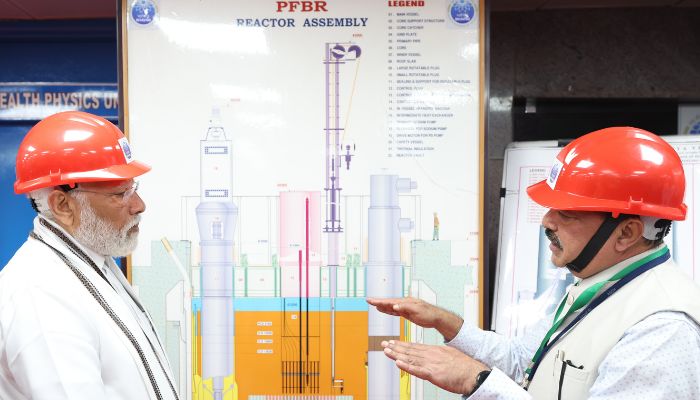
On April 6, 2026, India achieved a significant milestone in its nuclear power programme when the Prototype Fast Breeder Reactor (PFBR) at Kalpakkam attained criticality. This marked the beginning of a sustained nuclear chain reaction, a crucial step in the country's journey towards long-term energy security and the utilization of its vast thorium reserves.
The PFBR, developed by Bharatiya Nabhikiya Vidyut Nigam Limited (BHAVINI) and the Indira Gandhi Centre for Atomic Research (IGCAR), is a 500 MWe reactor designed and built indigenously under the Department of Atomic Energy at Kalpakkam in Tamil Nadu. This achievement positions India as the second nation after Russia to operate a commercial-scale Fast Breeder Reactor (FBR).
The attainment of criticality by the PFBR signifies the start of stage II in India's three-stage nuclear programme, envisioned by Dr. Homi Bhabha. This milestone is pivotal as it lays the foundation for the development of thorium-based reactors in stage III, which will enable India to tap its abundant thorium resources for sustainable and secure energy production.
The PFBR's key feature is its ability to produce more fuel than it consumes. This capability is essential for India's long-term nuclear strategy, as it allows for the conversion of uranium-238 into fissile material, creating the fuel base needed for future thorium reactors. This process is critical for India's energy security, given its limited uranium reserves and the potential of thorium as a more abundant and sustainable fuel source.
Prime Minister Narendra Modi highlighted the significance of this achievement in a post on X, describing it as a defining moment in India's civil nuclear journey. He emphasized that the indigenously designed and built PFBR at Kalpakkam has attained criticality, advancing the second stage of India's nuclear programme. Modi also noted that the advanced reactor's ability to produce more fuel than it consumes showcases the depth of the scientific and engineering capabilities of the country.
The successful attainment of criticality by the PFBR is a testament to India's commitment to developing its nuclear power capabilities independently. This milestone not only strengthens the nation's energy security but also positions it as a global leader in advanced nuclear technology. As India moves towards the third stage of its nuclear programme, focusing on thorium-based reactors, the PFBR's success serves as a strong foundation for the future of India's nuclear energy landscape.
In the coming years, India will continue to build on this achievement, working towards the development and deployment of thorium reactors. These reactors will play a crucial role in meeting the country's growing energy demands while ensuring long-term sustainability and security. The PFBR's criticality marks a significant step in this direction, highlighting India's dedication to harnessing its vast thorium reserves and establishing itself as a major player in the global nuclear energy sector.