India Has 100 Crore Internet Users, Yet 2 In 5 Govt Schools Are Still Offline
For millions of students from economically weaker sections, government schools remain the only point of access to digital learning
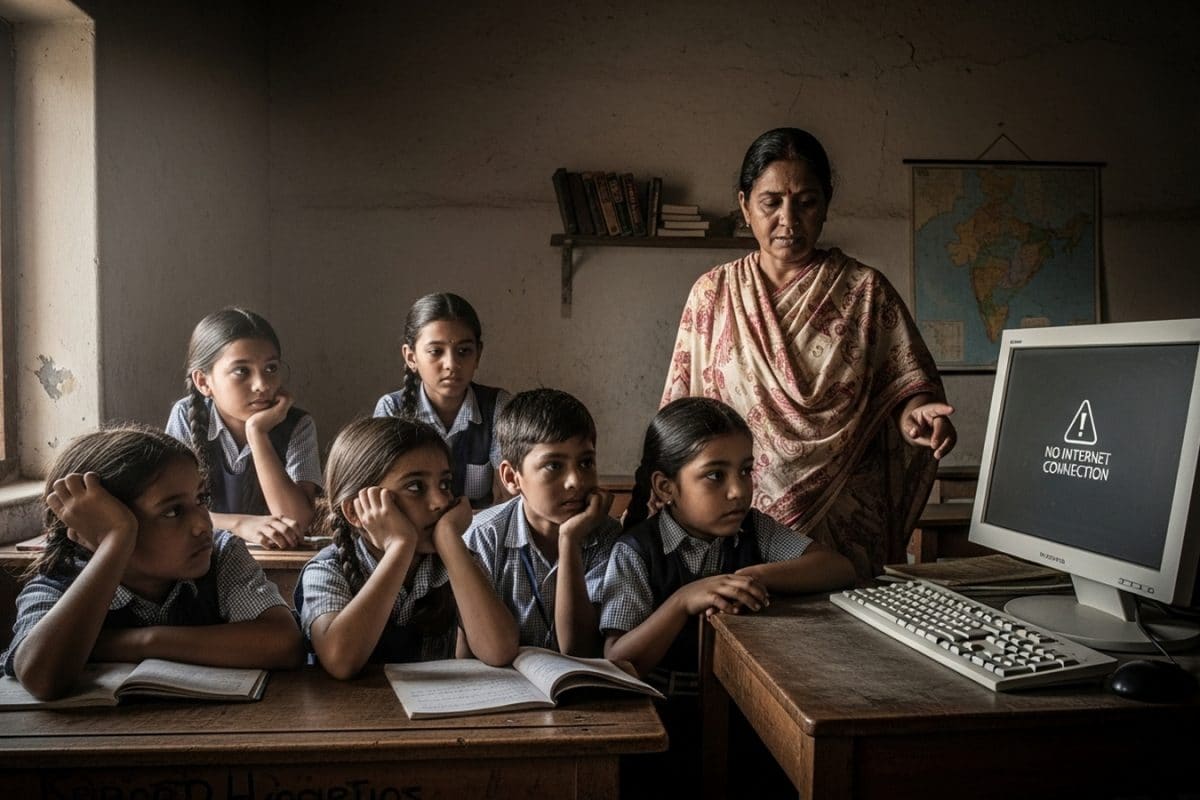
India has witnessed a remarkable surge in internet usage, with the country now boasting over 100 crore (1 billion) internet users. This staggering figure underscores the nation's rapid digital transformation, driven by factors such as the proliferation of affordable smartphones, government initiatives, and the push for digital inclusion. However, despite this impressive statistic, a stark contrast emerges when we look at the state of government schools, where nearly two-fifths (40%) remain offline, leaving millions of students from economically weaker sections without access to digital learning opportunities.
The digital divide in India is not merely a matter of individual access but extends to the institutional level, particularly in the education sector. While the country's urban and affluent populations have benefited significantly from the digital revolution, rural and underprivileged areas lag behind. Government schools, which cater to a large portion of these marginalized students, are often inadequately equipped to provide digital learning experiences. This lack of infrastructure not only hinders the educational journey of millions but also limits their potential to participate fully in the digital economy of the future.
The story of India's digital landscape is a complex one, shaped by a mix of government policies, private sector investments, and grassroots initiatives. The Indian government has launched several schemes aimed at expanding digital access, such as the Digital India Land Records Modernization Programme (DILRMP) and the Digital India Mission. These initiatives have been instrumental in bringing digital services to rural areas and improving connectivity. However, the challenge of ensuring that government schools are equipped with the necessary technology and resources to support digital learning remains unresolved.
One of the primary reasons for the offline status of many government schools is the lack of adequate funding and prioritization of digital infrastructure in the education budget. While the central and state governments have recognized the importance of digital education, the actual allocation of resources to schools has been inconsistent and insufficient. This has resulted in a situation where schools in urban centers, which often have better connectivity and resources, are better positioned to adopt digital learning tools. In contrast, rural and underprivileged schools struggle to provide even basic facilities like electricity and internet connectivity.
Moreover, the digital divide in India is exacerbated by the uneven distribution of digital literacy among teachers and students. Many educators lack the necessary skills and knowledge to integrate digital tools into their teaching methodologies. This gap in digital competence further limits the potential benefits of digital learning, as students are not being exposed to the full range of opportunities that the internet and technology can offer.
The situation is particularly alarming when we consider the demographic makeup of India's student population. Over 60% of the country's children attend government schools, which are often the only source of education available in rural and remote areas. For millions of students from economically weaker sections, these schools remain the only point of access to digital learning. The offline status of these institutions not only deprives these students of valuable educational resources but also limits their exposure to the digital world, which is increasingly becoming a crucial factor in determining their future prospects.
The consequences of this digital divide are far-reaching and multifaceted. For individuals from underprivileged backgrounds, the lack of access to digital learning can perpetuate a cycle of poverty and limited opportunities. In an increasingly digitalized world, those who are not exposed to digital tools and platforms during their formative years may find it challenging to compete in the job market or adapt to new technologies. This can lead to a widening gap between the digitally empowered and those who are left behind, with long-term implications for social and economic development.
To address this issue, a comprehensive approach is needed that involves both government policy and private sector collaboration. The Indian government must prioritize the allocation of resources to ensure that government schools are equipped with the necessary digital infrastructure. This includes investing in reliable internet connectivity, providing teachers with the necessary training to integrate digital tools into their teaching, and ensuring that schools have the required hardware and software to support digital learning.
The private sector, particularly tech companies, also has a crucial role to play in bridging the digital divide. Through initiatives such as partnerships with schools, providing affordable devices and internet connectivity, and offering educational content and resources, these companies can help empower students and teachers. Additionally, grassroots organizations and NGOs can play a vital role in advocating for digital inclusion and supporting local schools in their efforts to adopt digital learning.
In conclusion, India's impressive statistic of 100 crore internet users is a testament to the country's rapid digital transformation. However, the stark reality of 40% of government schools remaining offline highlights the need for urgent action to bridge the digital divide. By prioritizing the digital infrastructure of government schools, investing in teacher training, and fostering collaboration between the government, private sector, and civil society, India can ensure that all its citizens, regardless of their socio-economic background, have the opportunity to benefit from the digital revolution. This will not only empower individuals but also contribute to the nation's overall social and economic development, positioning India as a leader in digital inclusion.