
India announces three new telescopes in the Himalayan desert
The telescopes in Ladakh would significantly improve global coverage of transient and variable phenomena The post India announces three new telescopes in the Himalayan desert appeared first on Physics World .
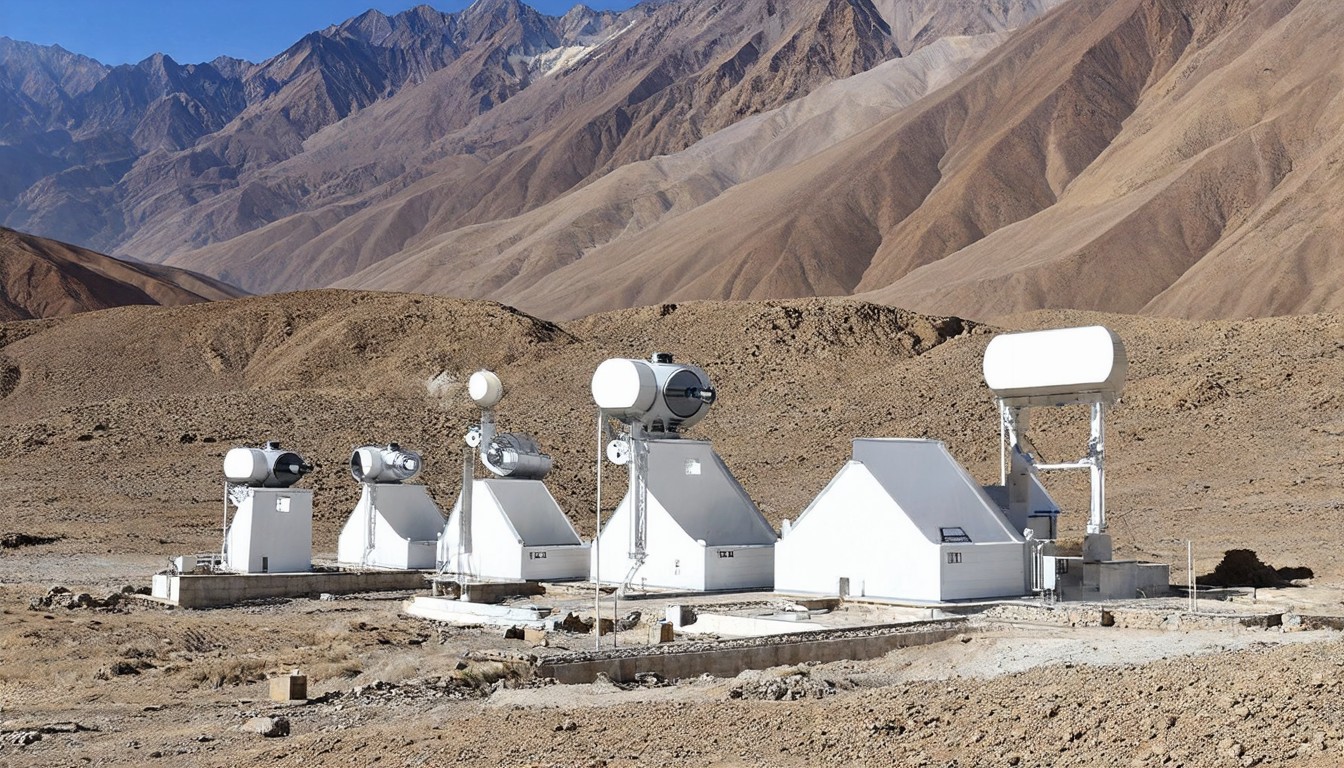
India has unveiled ambitious plans to build three new telescopes in the Himalayan desert region of Ladakh, marking a significant leap in the country's astronomical capabilities. The Indian finance minister, Nirmala Sitharaman, announced the project on 1 February, with an estimated cost of INR 35 billion (approximately £284 million). The three new facilities include a 3.7-meter optical-infrared telescope, a dedicated solar telescope, and a stepping stone towards a proposed 13.7-meter National Large Optical-Infrared Telescope (NLOT).
The first of these telescopes, the 3.7-meter optical-infrared telescope, is set to come online by 2030 and will be located near the existing 2-meter Himalayan Chandra Telescope (HCT) at Hanle, situated at an altitude of around 4,500 meters above sea level. The HCT has already proven to be a valuable asset for astronomers, enabling a wide range of investigations such as stellar evolution, galaxy spectroscopy, exoplanet atmospheres, and time-domain studies of supernovae, variable stars, and active galactic nuclei.
Annapurni Subramaniam, director of the Indian Institute of Astrophysics (IIA) in Bangalore, highlighted the suitability of the arid and high-altitude Ladakh desert for multiwavelength astronomy. She noted that the HCT has demonstrated both the site's quality and the opportunities for sustained and competitive science from this challenging location. The 3.7-meter telescope serves as a precursor to the proposed NLOT, which is expected to be operational by 2038.
Maheswar Gopinathan, a scientist at the IIA and a key figure in leading all three projects, explained that the NLOT is designed to address contemporary astronomy goals while working in synergy with major domestic and international facilities. The large collecting area of the NLOT will enable groundbreaking research on young stellar systems, brown dwarfs, and exoplanets. Additionally, it will allow astronomers to detect faint sources and rapidly follow up extreme cosmic events and gravitational wave detections.
Gopinathan emphasized that, alongside India's upgraded Giant Metrewave Radio Telescope, a planned gravitational-wave observatory in the country, and the Square Kilometre Array in Australasia and South Africa, the NLOT will usher in a new era of multimessenger and multiwavelength astronomy. By investing in these advanced telescopic facilities, India is positioning itself as a global leader in astronomical research, capable of contributing significantly to the understanding of the universe and its transient and variable phenomena. The new telescopes in Ladakh will not only enhance India's scientific capabilities but also foster international collaboration and bolster the country's reputation in the field of astronomy.








