In Rajaji’s Wetlands, a Father-Son Duo Captured a Rare Fishing Cat on Camera
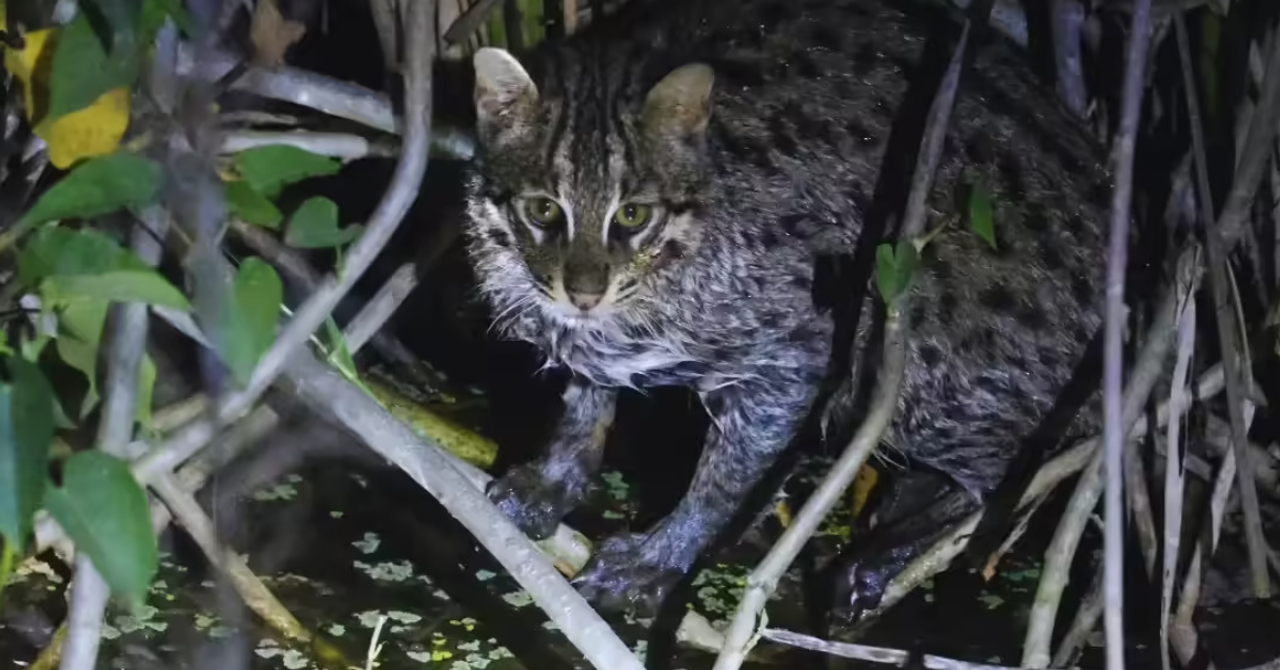
On an otherwise ordinary evening in early April, a wildlife enthusiast and his son were returning from a safari through the boundless and biodiverse expanse of Rajaji National Park when nature offered them a rare and unforgettable sight. Around 7.45 to 8.00 pm on 3 April 2026, Arun Kamath and his son Ashray spotted an unusual silhouette beside the route that wound its way through the wetlands of the Jhilmil Jheel Conservation Reserve, a lesser-known and serene part of the park. A mysterious creature surfaces from the water At first, the animal appeared typical, perhaps just another jungle cat settling in for the night. But as they watched, it did something astonishing. Rather than lingering on land, it boldly entered the water and swam across a narrow channel to settle on a bed of reeds on the opposite bank. Its behaviour was unusual for a cat, immediately catching their attention and filling them with a sense of wonder. Fishing cats, scientifically known as Prionailurus viverrinus, are semi-aquatic felines that inhabit marshes. Photograph: (BBC) When they shone a torch across the animal’s glossy fur, the distinctive pattern of spots and stripes became visible. These markings are not found on ordinary jungle cats, leading the Kamaths to realise they were witnessing something exceptionally rare. Later, wildlife experts who examined the photographs confirmed that the creature was a fishing cat , a species renowned for its skill as an aquatic hunter and its close association with wetlands. Fishing cats, scientifically known as
On an otherwise ordinary evening in early April, a wildlife enthusiast and his son were returning from a safari through the boundless and biodiverse expanse of Rajaji National Park when nature offered them a rare and unforgettable sight. Around 7:45 to 8:00 pm on 3 April 2026, Arun Kamath and his son Ashray spotted an unusual silhouette beside the route that wound its way through the wetlands of the Jhilmil Jheel Conservation Reserve, a lesser-known and serene part of the park.
At first, the animal appeared typical, perhaps just another jungle cat settling in for the night. But as they watched, it did something astonishing. Rather than lingering on land, it boldly entered the water and swam across a narrow channel to settle on a bed of reeds on the opposite bank. Its behavior was unusual for a cat, immediately catching their attention and filling them with a sense of wonder.
Fishing cats, scientifically known as Prionailurus viverrinus, are semi-aquatic felines that inhabit marshes. When they shone a torch across the animal's glossy fur, the distinctive pattern of spots and stripes became visible. These markings are not found on ordinary jungle cats, leading the Kamaths to realize they were witnessing something exceptionally rare.
Later, wildlife experts who examined the photographs confirmed that the creature was a fishing cat, a species renowned for its skill as an aquatic hunter and its close association with wetlands. Fishing cats, scientifically known as Prionailurus viverrinus, are semi-aquatic felines that inhabit marshes, swamps, and riverine ecosystems. They use powerful limbs and partially webbed paws to catch fish and other prey.
Although they are distributed across parts of South and Southeast Asia, including the Sundarbans of West Bengal, sightings are rare and usually brief, making every encounter a significant event for wildlife documentation. The Kamaths' experience highlights the importance of conservation efforts in preserving these fragile habitats and the species that depend on them.
Rajaji National Park, located in the state of Uttarakhand in India, is a 1,300-square-kilometer haven for biodiversity, home to leopards, tigers, and a variety of bird species. The park's wetlands, including the Jhilmil Jheel Conservation Reserve, play a crucial role in supporting the unique ecosystems that sustain fishing cats and other aquatic wildlife.
The Kamaths' encounter with the fishing cat serves as a reminder of the untapped potential of these natural reserves for ecotourism and research. By sharing their experience, they have contributed to raising awareness about the plight of endangered species and the need for sustainable conservation practices.
In the years to come, the footage and photographs captured by Arun and Ashray may prove invaluable to scientists and conservationists working to understand the elusive habits of fishing cats and to develop strategies for their protection. As the world continues to face mounting challenges related to biodiversity loss, such rare encounters underscore the importance of safeguarding the planet's natural wonders for future generations.
The Kamaths' story is a testament to the magic that can be found in the most unexpected places, and it inspires hope that the world's natural treasures can still be protected and celebrated. Their experience in Rajaji's wetlands not only brought them face-to-face with a rare and beautiful creature but also deepened their connection to the delicate balance of nature and the responsibility we all share in its preservation.