
In Paris’s Catacombs, Can a Restoration Breathe New Life Into City’s Dead?
For centuries, the bones of some six million people were buried in the catacombs beneath the city. Curators are trying to preserve and modernize the tunnels while maintaining the spooky ambience.
In Paris’s Catacombs, Can a Restoration Breathe New Life Into City’s Dead?
Nestled beneath the bustling streets of Paris, the catacombs are a macabre testament to the city’s history. For centuries, the bones of an estimated six million people have been interred in these labyrinthine tunnels, a legacy that has long captivated the imagination of both Parisians and tourists alike. Now, as curators and restorers work to preserve and modernize this eerie underworld, the question lingers: can a restoration breathe new life into the city’s dead, or will it risk diminishing the very allure that has drawn visitors for generations?
The catacombs, originally carved out of limestone in the 13th century, were initially used as quarries. However, by the 1780s, the city’s growing population and limited cemetery space led to a decision to relocate the remains of those buried in Parisian churches and cemeteries to this subterranean necropolis. Over time, the catacombs became a place of both fascination and fear, their chilling atmosphere enhanced by the intricate arrangements of bones and skulls that line the walls.
Today, the catacombs remain a popular tourist attraction, drawing visitors from around the world who are drawn to the eerie beauty of this place. Yet, as the years have passed, the tunnels have begun to show signs of wear and tear. Cracks in the walls, deteriorating bone displays, and the ever-present threat of flooding have posed a significant challenge to those tasked with preserving this unique site.
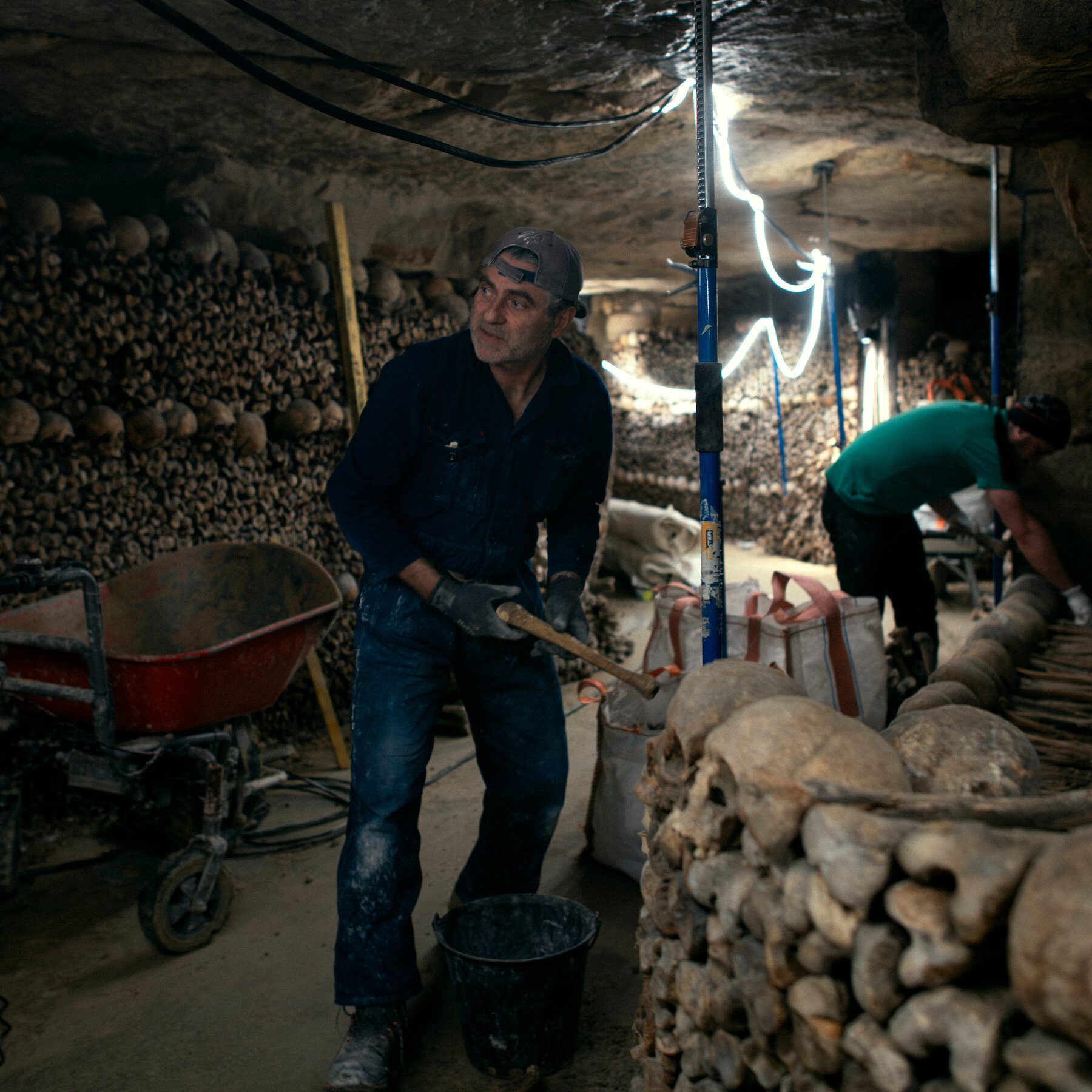
In response to these challenges, a team of curators and restorers has embarked on a ambitious project to breathe new life into the catacombs. Their goal is to modernize the infrastructure while preserving the spooky ambiance that has made the catacombs so iconic. Workers have been hard at work, repairing walls, restoring bone displays, and installing new lighting to better showcase the intricate arrangements that adorn the tunnels.
One of the key challenges faced by the restoration team is striking a balance between preserving the catacombs’ historical integrity and making them more accessible to modern visitors. While the bones and skulls that line the walls are a vital part of the site’s allure, the need for improved safety measures and visitor facilities cannot be ignored. New signage, better pathways, and enhanced lighting are all being considered to ensure that visitors can navigate the tunnels safely and comfortably, without losing sight of the catacombs’ haunting beauty.
The restoration project also aims to address the environmental threats that the catacombs face. Flooding, in particular, has been a persistent problem, with water seeping through the limestone walls and threatening to undermine the stability of the tunnels. To combat this, the team is exploring innovative solutions, such as the installation of drainage systems and the use of advanced monitoring technology to detect and prevent water infiltration.
As the restoration work progresses, the curators are also considering how to better educate visitors about the catacombs’ history and significance. Interactive displays, augmented reality experiences, and guided tours are all being considered as ways to enhance the visitor experience while providing valuable context about the site’s past and present.
Despite the challenges posed by the restoration project, there is optimism that the catacombs can be preserved for generations to come. By modernizing the infrastructure and enhancing the visitor experience, the curators hope to ensure that the catacombs remain a powerful symbol of Paris’s history, a place where the past and present converge in a way that is both awe-inspiring and unsettling.
In the end, the fate of the catacombs hinges on the delicate balance between preserving their haunting allure and making them a safe and enjoyable destination for visitors. As the restoration work continues, it remains to be seen whether this unique site can emerge stronger and more vibrant than ever before, or if the modern touches will somehow rob it of its timeless mystique. Only time will tell if the catacombs can truly breathe new life into the city’s dead, or if they will remain a silent, eternal witness to the passage of time.








