If life exists in Venus's atmosphere, it could have come from Earth
The theory of panspermia holds that life is spread through the cosmos via asteroids, comets, and other objects. When the building blocks of life emerge on one planet, impacts can eject surface material into space, which then carries these seeds to other worlds. For decades, scientists have debated whether this could have occurred between Earth and Mars (in both directions). However, the recent controversy over the possible existence of microbial life in Venus's dense clouds has sparked discussions of interplanetary transfers between Venus, Earth, and Mars.
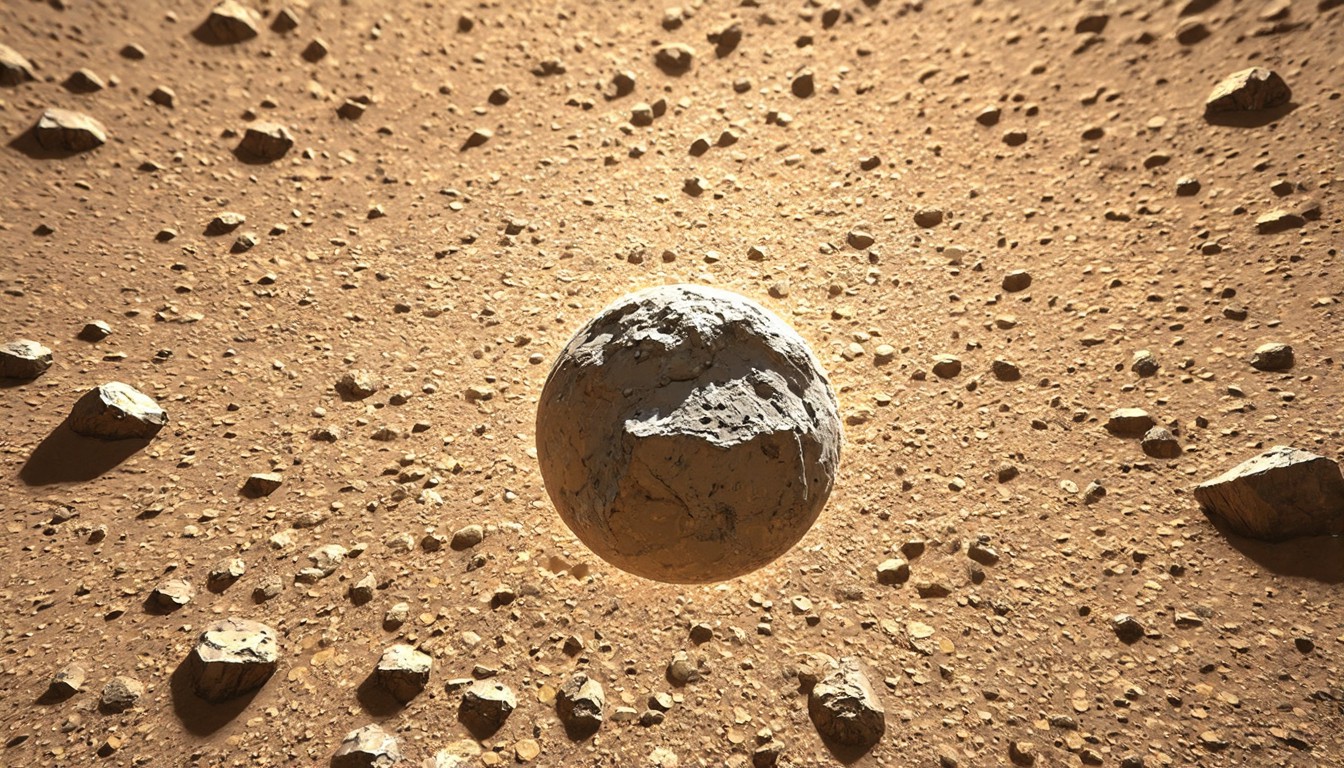
In recent years, the possibility of life existing in the inhospitable environment of Venus's atmosphere has captivated scientists and sparked new discussions about the origins of life in our solar system. The dense, acidic clouds of Venus, once thought to be devoid of any form of life, have now become a focal point for astrobiologists and planetary scientists. This renewed interest has led to a reevaluation of the theory of panspermia, which posits that life can be spread throughout the cosmos via asteroids, comets, and other celestial objects.
The concept of panspermia has long been debated, particularly in relation to the exchange of life between Earth and Mars. Scientists have speculated that the building blocks of life, once formed on one planet, could have been ejected into space by impacts and subsequently delivered to another world. This idea has been explored in both directions—suggesting that life could have originated on Mars and been transferred to Earth, or vice versa.
However, the recent controversy surrounding Venus's atmosphere has expanded the scope of these discussions. The discovery of phosphine gas in Venus's clouds, a substance that on Earth is primarily produced by living organisms, has reignited the debate about the potential existence of microbial life in the planet's upper atmosphere. This development has prompted scientists to consider the possibility of interplanetary transfers of life between Venus, Earth, and Mars.
If life were to exist in Venus's clouds, one intriguing hypothesis is that it could have originated on Earth. The theory of panspermia suggests that life-bearing material could have been ejected from Earth's surface due to asteroid impacts and then traveled through space to reach Venus. Similarly, it is also possible that life could have been transferred from Venus to Earth or Mars through the same mechanism.
This idea is not without its challenges. The harsh conditions on Venus, including its extreme surface temperature and atmospheric pressure, make it difficult to imagine how life could have survived there. However, the clouds of Venus, located at a higher altitude, are potentially more hospitable. The presence of phosphine gas, along with other organic molecules, has led some researchers to propose that life could indeed exist in these clouds.
If life were found to exist in Venus's atmosphere, it would have profound implications for our understanding of the origins of life in the universe. It would suggest that life is not a rare occurrence but rather a more common phenomenon that can adapt to a wide range of environments. Furthermore, it would support the theory of panspermia, indicating that life can indeed be transferred between planets through celestial impacts.
The debate over the existence of life in Venus's atmosphere is far from resolved. While the discovery of phosphine gas has provided intriguing evidence, it is not definitive proof of life. Scientists are now working to gather more data, such as spectroscopic analysis and potential biosignatures, to determine whether the clouds of Venus truly harbor life.
In the meantime, the exploration of panspermia and interplanetary transfers of life continues to captivate researchers. The potential for life to exist on Venus, and the possibility that it could have originated on Earth, underscores the importance of studying the early history of our solar system. By examining the interactions between Earth, Mars, and Venus, scientists hope to uncover clues about the origins of life and its potential distribution throughout the cosmos.
As the search for extraterrestrial life expands, the study of Venus's atmosphere serves as a reminder of the vast potential for life to exist in the universe. The possibility that life could have been transferred between planets, including Venus and Earth, challenges our understanding of the uniqueness of life on our own planet. Ultimately, the exploration of panspermia and the potential existence of life in Venus's atmosphere highlights the interconnectedness of celestial bodies and the possibility that life may be more widespread than we currently imagine.