
Ice Age dice show early Native Americans may have understood probability
Ice Age hunter-gatherer "were intentionally relying on random outcomes in repeatable, rule-based ways."
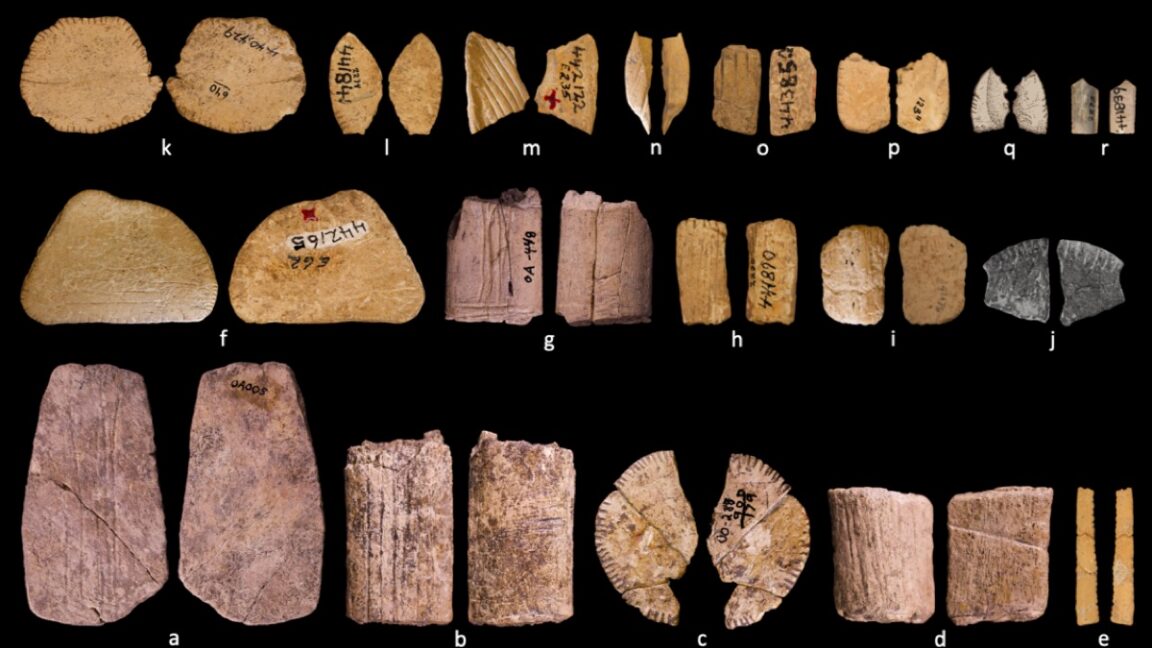
In a surprising revelation that challenges long-held assumptions about the origins of probability, archaeologists have discovered that early Native Americans may have understood and utilized the concept of randomness in structured games over 12,000 years ago. This groundbreaking discovery, published in the journal American Antiquity, sheds new light on the intellectual capabilities of Ice Age hunter-gatherers and their engagement with chance-based activities.
The research, led by Robert Madden, a graduate student at Colorado State University, focuses on the ancient dice used by Native American tribes. These dice, which date back to the Ice Age, predate the earliest known dice in the Old World by millennia. Traditionally, historians have viewed dice and probability as Old World innovations, but Madden's findings challenge this notion by revealing that ancient Native American groups were deliberately creating objects designed to produce random outcomes and using these outcomes in structured games, far earlier than previously recognized.
Madden's interest in Native American gaming began with the study of Maya ballgames, eventually expanding to include Native American dice and games of chance. These dice were rudimentary, with just two sides rather than the six sides of modern dice, often referred to as "binary lots." Remarkably, these dice were common across virtually every Native American tribe.
Archaeologists had previously traced the use of such dice back 2,000 years, but many were hesitant to classify dice-like artifacts older than that as actual dice. The challenge lay in distinguishing between intentional dice and other random artifacts. However, Madden's meticulous analysis of the archaeological record has provided compelling evidence that these ancient dice were indeed used for games of chance, indicating a deep understanding of probability among early Native Americans.
The significance of this discovery lies in its implications for our understanding of human cognitive development. By demonstrating that early Native Americans intentionally relied on random outcomes in repeatable, rule-based ways, the study challenges the notion that such concepts were exclusive to the Old World. This suggests that the ability to conceptualize and manipulate probability may have emerged independently in multiple human societies, rather than being a linear development tied to specific cultural or geographical contexts.
Moreover, the findings underscore the importance of cross-cultural and interdisciplinary approaches in archaeology and history. By examining the Native American context, Madden has been able to redefine the timeline for the emergence of probability, highlighting the richness and complexity of non-Western intellectual traditions.
The study also raises questions about the social and cultural functions of these dice games. Were they used for entertainment, religious rituals, or as a means of resolving disputes? The precise role of these games in early Native American societies remains an open area of inquiry, but the discovery of their antiquity serves as a powerful reminder of the ingenuity and adaptability of human societies in the face of adversity.
In conclusion, the Ice Age dice discovered by Robert Madden and his team challenge long-standing assumptions about the origins of probability and the intellectual capabilities of early human societies. By demonstrating that Native Americans were using dice for games of chance over 12,000 years ago, the research redefines our understanding of the history of chance and randomness, offering a fresh perspective on the universal nature of human cognition and innovation. As further archaeological investigations continue to uncover the intricacies of these ancient dice and their associated games, the story of early Native American engagement with probability is poised to become an increasingly important chapter in the history of human thought.









