
Home TechnologyHow To Use AI for the Ancient Art of Close Reading...
Technology⭐ Featured

How To Use AI for the Ancient Art of Close Reading

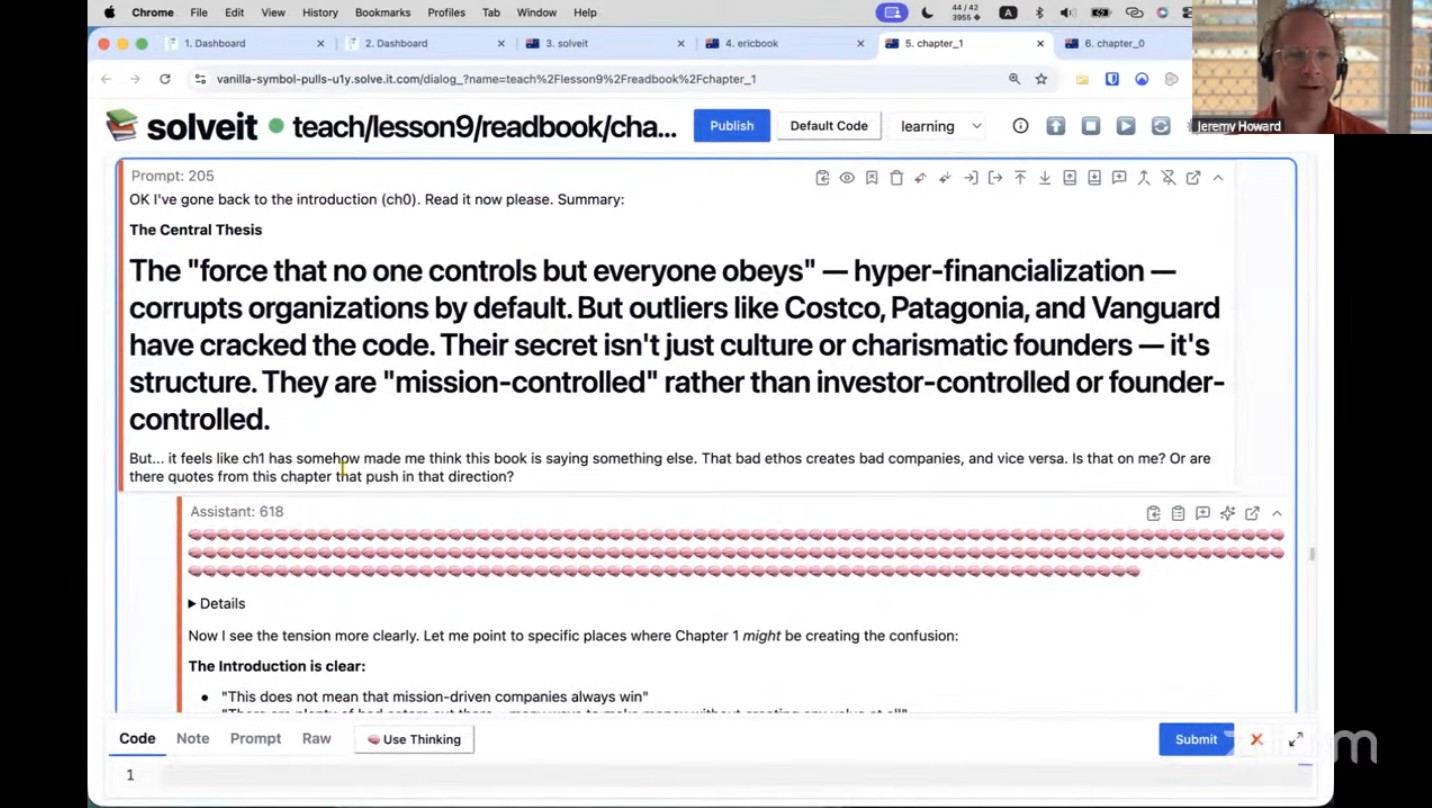
Close reading is a technique for careful analysis of a piece of writing, paying close attention to the exact language, structure, and content of the text. As Eric Ries described it ,ā€œ close reading is one of our civilization’s oldest and most powerful technologies for trying to communicate the gestalt of a thing, the overall holistic understanding of it more than just what can be communicated in language because language is so limited. ā€ It was (and in some cases still is) practiced by many ancient cultures and major religions.
7 April 2026 at 08:24 am
1 views
How To Use AI for the Ancient Art of Close Reading

In recent years, artificial intelligence (AI) has revolutionized various fields, from healthcare to finance, and now it's finding its way into the ancient art of close reading. Close reading, a technique for meticulous analysis of written texts, has been practiced for centuries across different cultures and religions. The practice involves a deep dive into the language, structure, and content of a piece to grasp its holistic meaning, as Eric Ries once described it. Now, AI is being leveraged to enhance this time-honored method, making it more efficient and accessible to a broader audience.

The roots of close reading can be traced back to ancient civilizations, where it was used for religious, philosophical, and literary purposes. In Buddhism, for instance, monks engaged in close reading of scriptures to understand their profound meanings. Similarly, in medieval Europe, scholars meticulously analyzed texts to uncover hidden layers of meaning. Today, close reading remains a cornerstone of literary and academic study, helping readers decipher the nuances of a piece.

AI's role in close reading begins with natural language processing (NLP), a branch of AI that enables machines to understand and interpret human language. By applying NLP algorithms, AI can identify patterns, themes, and context within a text, providing insights that might be overlooked by human readers. This technology can analyze vast amounts of data quickly, uncovering connections and trends that enhance the reader's comprehension.

One of the key advantages of using AI for close reading is its ability to handle large volumes of text. Scholars and students often face the challenge of sifting through extensive literary works or archival documents. AI tools can efficiently scan and categorize these texts, highlighting significant passages and offering summaries that streamline the reading process. This capability is particularly valuable in the humanities, where traditional methods may be time-consuming and less efficient.

Moreover, AI can facilitate collaborative close reading experiences. Platforms that integrate AI technology allow multiple readers to analyze a text simultaneously, sharing their perspectives and building a collective understanding. This collaborative approach not only enriches the reading experience but also encourages diverse interpretations, fostering a deeper appreciation of the text's complexity.

However, the integration of AI into close reading is not without its challenges. One concern is the potential for AI to oversimplify or misinterpret the text's nuances. Since language is inherently complex and subjective, relying solely on AI might lead to a loss of the human touch that is crucial for close reading. Additionally, the algorithms used by AI are often based on large datasets, which may skew their understanding of less common or archaic languages and styles.

Despite these challenges, the potential benefits of AI in close reading are significant. By enhancing the analytical capabilities of readers, AI can help uncover hidden meanings and connections that enrich our understanding of texts. As AI technology continues to evolve, it will be interesting to see how it adapts to the evolving needs of close reading practitioners, balancing efficiency with the depth of human interpretation.

In conclusion, the ancient art of close reading is experiencing a renaissance through the integration of AI. While concerns about the limitations of AI persist, the technology's potential to enhance the reading experience and uncover new insights is undeniable. As AI tools become more sophisticated, they may pave the way for a new era of close reading, blending the power of machine learning with the human capacity for deep, nuanced understanding.


Source: fast.ai
šŸ“° Related News
Ekaya Banaras Founder Palak Shah’s ₹40 Lakh Billboard Mistake Became a Masterclass in Startup Marketing
Ekaya Banaras founder Palak Shah recently opened up about one of the most expensive mistakes she made while building her luxury textile brand. During the early years of the company, Shah rented a premium billboard near Delhi’s DLF Emporio to increase brand visibility. However, after forgetting to cancel the campaign, the hoarding reportedly continued running for months — resulting in losses of nearly ₹40 lakh. The incident has now become a viral example of how small operational oversights can turn into costly business lessons for startups and entrepreneurs.
28 May
Betting On AI: Jensen Huang And NVIDIA’s Rise To The Top
Before AI was inevitable, it was a gamble—and Jensen Huang went all in.
14 Apr
Red Hat OpenShift sandboxed containers 1.12 and Red Hat build of Trustee 1.1 bring confidential computing to bare metal and AI workloads
Red Hat is excited to announce the release of Red Hat OpenShift sandboxed containers 1.12 and Red Hat build of Trustee 1.1, marking a major leap forward in our confidential computing journey. These releases graduate confidential containers on bare metal from …
14 Apr
Large AI firms hoovering maximum funding, not enough for smaller startups: Y Combinator’s Ankit Gupta
YC Startup School: India’s talent pool across colleges and universities are key for building next-gen startups, which is what YC is looking to tap into. It wants to target entrepreneurs building for global markets, focussed on fintech, consumer, B2B, and ecom…
14 Apr
TSMC likely to book fourth straight quarter of record profit onĀ insatiable AI demand
TSMC-RESULTS/ (PREVIEW, PIX):PREVIEW-TSMC likely to book fourth straight quarter of record profit onĀ insatiable AI demand
14 Apr
TSMC likely to book fourth straight quarter of record profit onĀ insatiable AI demand
Any profit result ā€Œabove T$505.7 billion would mark the company's highest-ever quarterly net income ​and its ninth consecutive quarter of profit growth
14 Apr
TSMC likely to book fourth straight quarter of record profit on insatiable AI demand
On Thursday, ​TSMC is expected to report a net profit of $17.1 billion for the quarter, according to an LSEG SmartEstimate compiled from 19 analysts. The war in the Middle East threatens to disrupt the supply of production materials for semiconductors such as…
14 Apr
If we can’t kick the habit, how do we manage AI’s energy needs?
One can only hope that OpenAI’s Sam Altman was joking when he sought to justify the immense energy consumption of artificial intelligence
14 Apr
What caused Nvidia Blackwell GPU prices to spike? #tech
Blackwell GPU hourly ā€œrentā€ surges on agentic AI demand A compute pricing index tracking hourly costs for Nvidia Blackwell GPUs shows a sharp climb: hourly rental hit $4.08 , up 48% from $2.75 just two months earlier. The reported driver is rising demand tied…
14 Apr
Anthropic Releases Claude Mythos Preview with Cybersecurity Capabilities but Withholds Public Access
Anthropic has introduced Claude Mythos Preview, its most advanced AI model, improving significantly in reasoning, coding, and cybersecurity. Unlike previous releases, it will not be publicly available. Access is limited to a consortium of tech companies throu…
14 Apr







