How Kraftwerk’s 22-Minute Song “Autobahn” Became an Early Masterpiece in Electronic Music (1975)
It takes about five hours to drive from Düsseldorf to Hamburg on the Autobahn. During that stretch, you can listen to Kraftwerk’s album Autobahn seven times — or if you prefer, you can loop its eponymous opening song thirteen times. For it was “Autobahn,” more so than Autobahn, that changed the sound of music around the […]
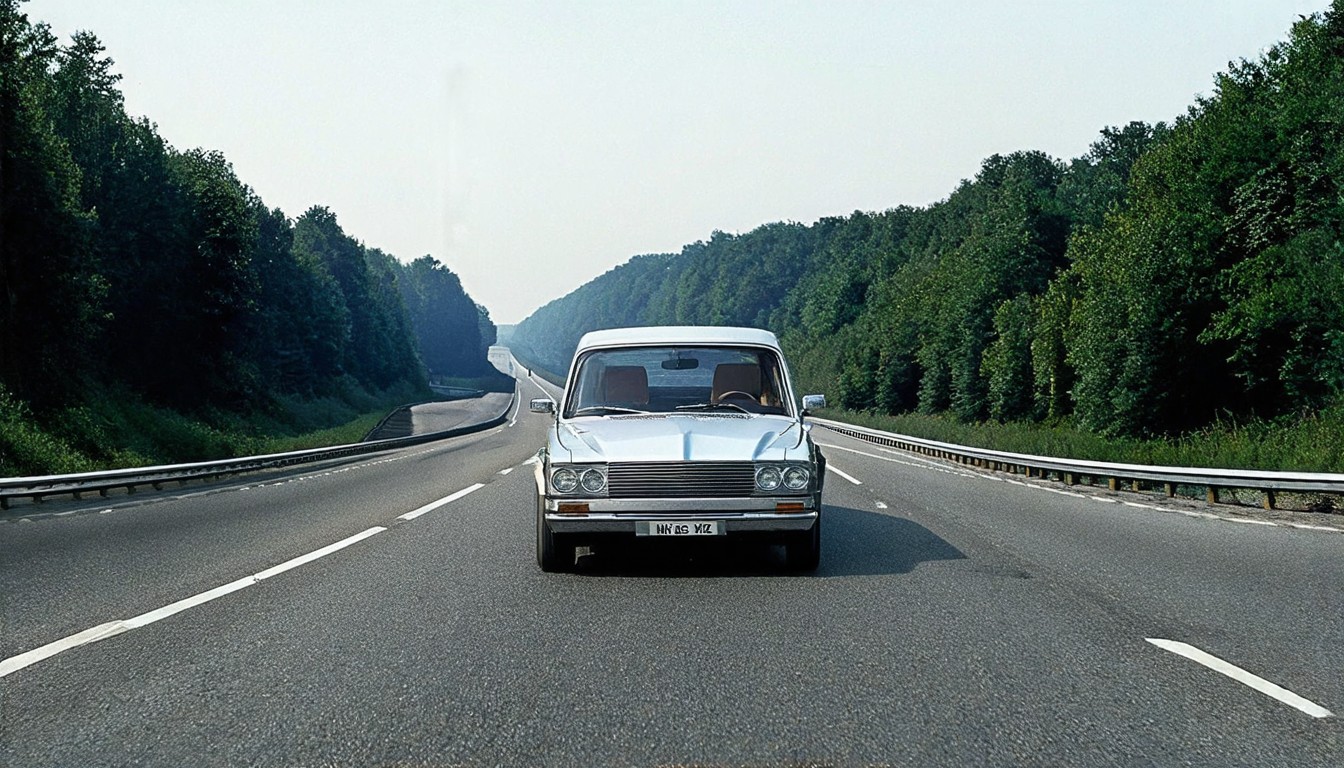
In early 1975, Kraftwerk released an album that would redefine the landscape of electronic music. The band's 22-minute song "Autobahn" became an early masterpiece, not just because of its length, but due to its innovative sound and the profound impact it had on the music world. The song's title and theme are inspired by the German Autobahn, a network of highways that stretches across the country, symbolizing freedom and modernity.
The Autobahn, with its origins in the Weimar Republic, was a concrete embodiment of personal freedom and responsibility within a culture that respected rules. For the young members of Kraftwerk, who frequently drove the Düsseldorf-Hamburg stretch, the Autobahn represented a promise of liberation. This sense of freedom resonated with the band's exploration of new musical possibilities through the Minimoog synthesizer, a groundbreaking instrument that cost as much as a Volkswagen at the time. The Minimoog allowed Kraftwerk to create sounds that had never been heard before, paving the way for their signature Teutonic-electronic style.
"Autobahn" quickly captured the imagination of listeners worldwide. Its repetitive, hypnotic structure and evocative soundscapes created a sense of movement and freedom that mirrored the experience of driving on the Autobahn. The song's influence extended far beyond its immediate audience, as it inspired a generation of musicians and reshaped the course of electronic music.
David Bowie, who famously listened to the album while driving on the Autobahn, was so captivated by its sound that he moved to Berlin and went on to create the electronically influenced albums "Low," "Heroes," and "Lodger." Brian Eno, another influential musician, relocated to the rural village of Forst to record with the avant-garde band Harmonia, further cementing the Autobahn's impact on the music scene.
The ripple effects of "Autobahn" were felt in the emergence of electronic pop bands such as Ultravox, DAF, and the Eurythmics. Even Donna Summer and Giorgio Moroder's iconic "I Feel Love" can be traced to the groundwork laid by Kraftwerk. This 22-minute, 43-second song about the German road network became a pop-cultural coup, propelling Germany onto the musical map and ushering in a new era of electronic music.
At the time of its release, Kraftwerk had already put out three full albums, but their signature sound hadn't quite solidified. However, "Autobahn" served as a catalyst, showcasing the band's ability to merge modernity with music. The Autobahn, with its symbolism of freedom and responsibility, provided the perfect inspiration for a song that would transcend cultural and musical boundaries.
In retrospect, "Autobahn" stands as a testament to the power of innovation and imagination. Its enduring influence on the music world is a reminder of how a single song can shape the course of history, much like the Autobahn itself, which continues to be a symbol of progress and freedom in Germany.