How Kraftwerk’s 22-Minute Song “Autobahn” Became an Early Masterpiece in Electronic Music (1975)
It takes about five hours to drive from Düsseldorf to Hamburg on the Autobahn. During that stretch, you can listen to Kraftwerk’s album Autobahn seven times — or if you prefer, you can loop its eponymous opening song thirteen times. For it was “Autobahn,” more so than Autobahn, that changed the sound of music around the […]
In early 1975, Kraftwerk released their album "Autobahn," which would go on to redefine the sound of electronic music worldwide. The eponymous opening track, a 22-minute and 43-second piece, became an early masterpiece that not only showcased the band's innovative approach to synthesizers but also inspired a wave of electronic music that would shape the future of pop culture.
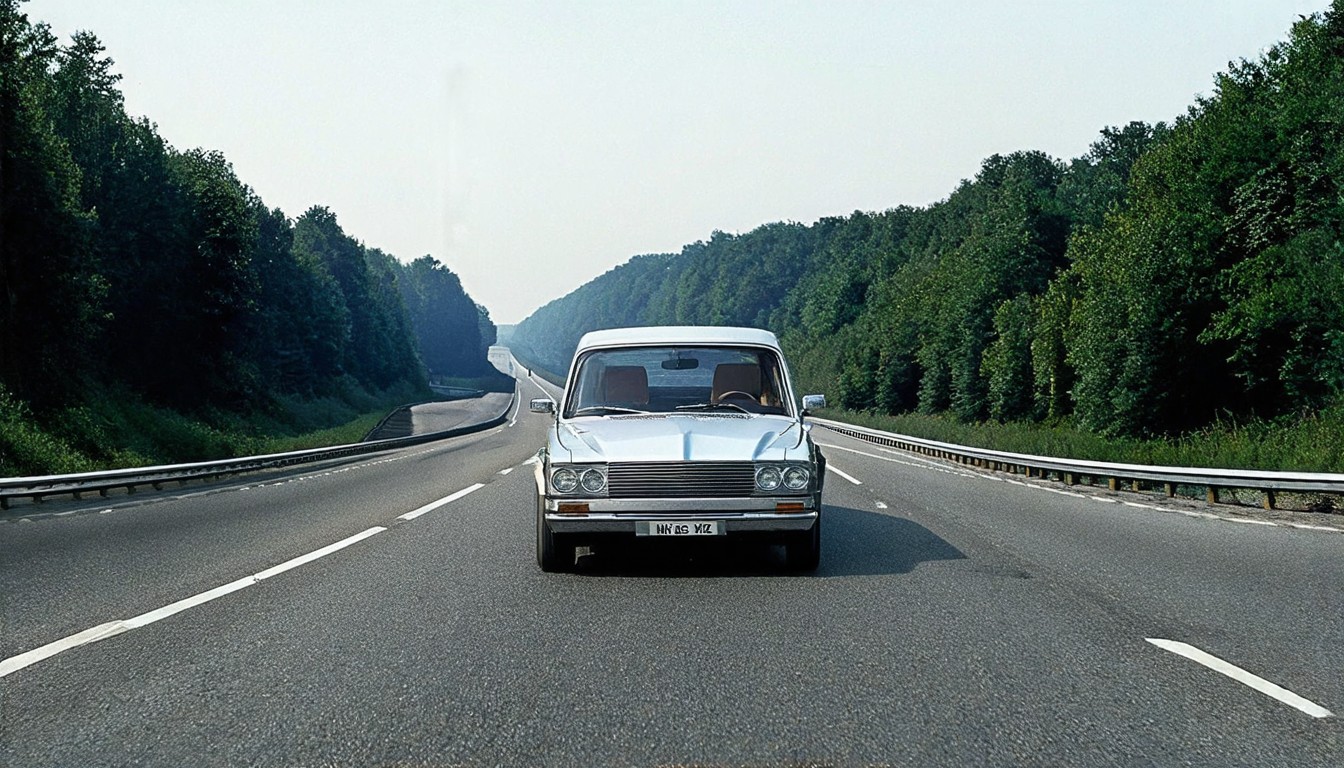
The inspiration for "Autobahn" came from the German freeway network, known as the Autobahn. Driving from Düsseldorf to Hamburg, a journey that takes about five hours, the band members were captivated by the vast, open roads that symbolized freedom and responsibility. The Autobahn, with its origins in the Weimar Republic and its long stretches without a speed limit, represented a concrete embodiment of modernity and the potential for personal freedom within a structured society.
At the time of the album's release, Kraftwerk had already put out three full albums, but their signature Teutonic-electronic sound hadn't quite solidified. However, the band's fascination with twentieth-century modernity and the technological advancements of the time were evident. The introduction of the Minimoog synthesizer, which cost as much as a Volkswagen at the time, offered a new way to create music that was unlike anything the public had heard before.
"Autobahn" captured the imaginations of listeners everywhere. The track's repetitive, hypnotic rhythms and atmospheric soundscapes created a sense of movement and freedom that mirrored the experience of driving on the Autobahn. The song's influence extended far beyond the album, sparking a global shift in electronic music.
The impact of "Autobahn" was profound. As Tim Jonze of The Guardian noted, Germany suddenly found itself on the musical map. David Bowie, who reportedly enjoyed listening to the record while driving on the Autobahn, moved to Berlin and went on to create the electronically influenced albums "Low," "Heroes," and "Lodger." Brian Eno relocated to the rural village of Forst to record with the avant-garde band Harmonia.
The ripple effects of "Autobahn" were felt in the electronic pop of Ultravox, DAF, and the Eurythmics, as well as in the groundbreaking track "I Feel Love" by Donna Summer and Giorgio Moroder. This 22-minute song about the German road network had a significant impact on the music industry, paving the way for a new era of electronic music.
"Autobahn" not only showcased Kraftwerk's innovative use of synthesizers but also captured the spirit of modernity and freedom embodied by the Autobahn. The track's enduring influence can still be heard in the electronic music of today, making it a true pioneering work in the history of popular music.