
Home TechnologyHow Fambo Is Fixing The Broken Supply Chain For In...
Technology⭐ Featured

How Fambo Is Fixing The Broken Supply Chain For India’s QSR Boom

With nearly 50,000 joints across organised and unorganised formats, India’s $27.80 Bn quick service restaurant (QSR) industry is sizzling at…
7 April 2026 at 08:09 am
1 views
How Fambo Is Fixing The Broken Supply Chain For India’s QSR Boom

India's quick service restaurant (QSR) industry is experiencing a significant boom, with nearly 50,000 outlets across both organised and unorganised formats. This dynamic market, valued at $27.80 billion, is projected to grow at a robust 9.25% annual rate, reaching $47.28 billion by 2031. As the industry scales, one of the major challenges it faces is reducing food waste without compromising on margins or customer satisfaction. QSRs worldwide typically waste between 4% to 10% of the food they procure before it reaches the customer. Preparation waste, including ingredients wasted during peeling, trimming, batching, demand mis-estimation, spoilage, and quality discards, is the largest contributor to food waste in QSR kitchens.

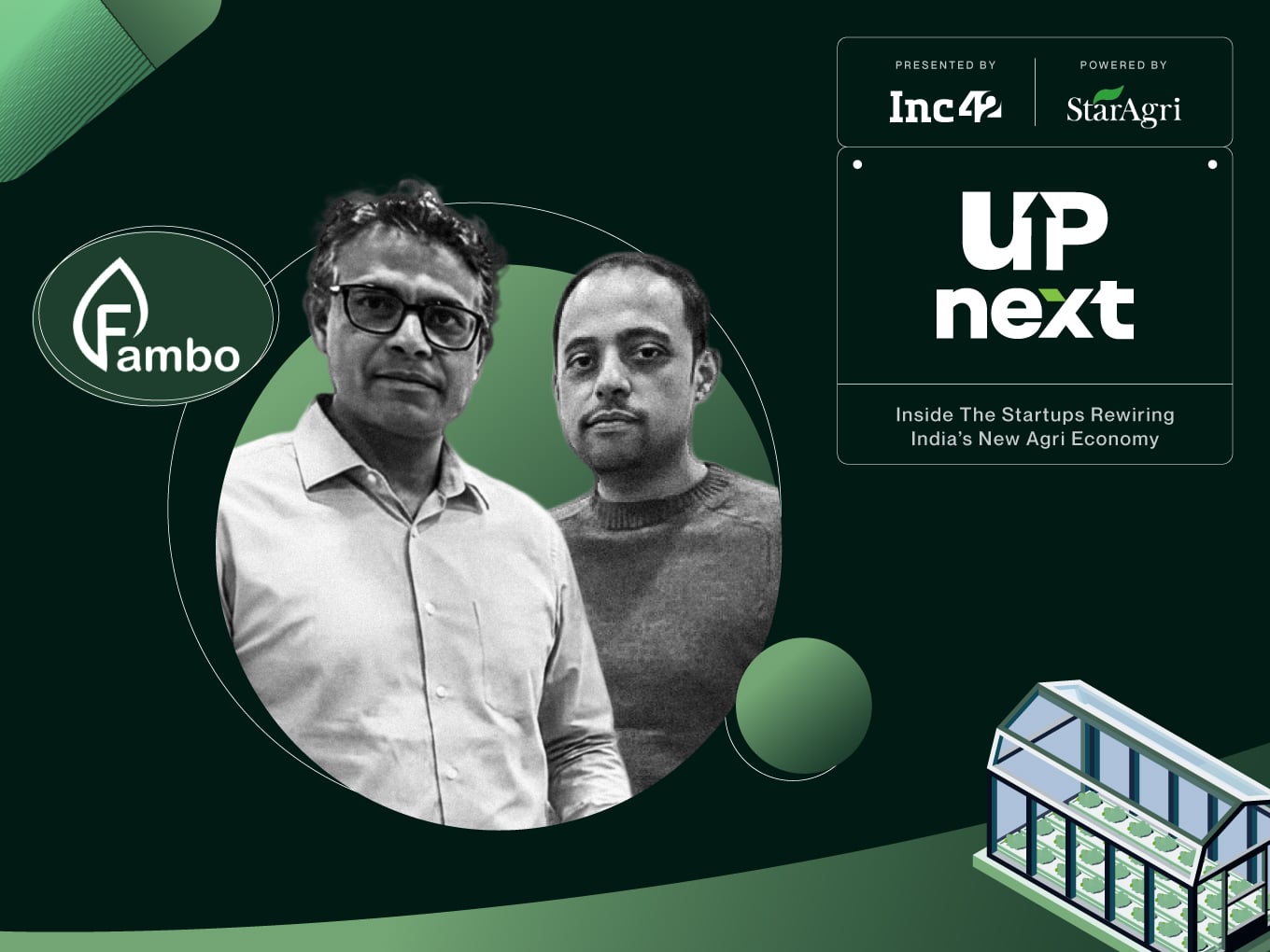
Against this backdrop, Delhi-NCR-based agri-food supply chain startup Fambo has emerged as a potential solution to address this critical issue. Founded in 2022 by Akshay Tripathi and Sushant Kumar, the venture leverages their combined expertise in advanced automation systems and over 20 years in food processing. The duo identified significant opportunities in the untapped areas of India's agri-perishable market. "In India, conventional agricultural supply chains lose anywhere between 25% and 35% of produce, despite India being a food-surplus country with some of the most fertile land in the world," Tripathi explained to Inc42. "The problem was infrastructure."

This insight led the founders to focus not on growing more food or delivering it faster through cold chain supply systems, but on building a modern, perishability-focused supply chain that could efficiently move produce from farms to institutional kitchens. Unlike companies such as Waycool and Ninjacart, which focus on moving fresh produce in its raw form from farms to retailers or kiranas, Fambo operates further downstream in the food value chain. The startup processes agricultural produce into customised, ready-to-use formats specifically designed for quick service restaurants and chain dining brands.

Fambo does not distribute to kiranas or end-consumers. Instead, its primary focus is on removing labour and complexity from commercial kitchens. By doing so, the company aims to reduce food waste and optimise the supply chain for QSRs. Today, Fambo supplies 40 different SKUs (Stock Keeping Units) to various QSR chains, helping them manage their food supply more efficiently and sustainably.

The founders' approach to the problem highlights the importance of innovation in addressing the challenges posed by the rapidly growing QSR industry in India. By focusing on the downstream processing of agricultural produce, Fambo is not only reducing food waste but also enhancing the efficiency of commercial kitchens. This, in turn, helps QSRs maintain their margins and customer satisfaction, ensuring a smoother and more sustainable growth trajectory for the industry.

As India's QSR industry continues to expand, the role of companies like Fambo becomes increasingly crucial. By leveraging technology and expertise to optimise the supply chain, Fambo is not only contributing to reducing food waste but also setting a precedent for other players in the industry. The startup's success serves as a reminder that innovation in the agri-food supply chain can have a significant impact on both the environment and the bottom line, paving the way for a more sustainable future for India's burgeoning QSR sector.


📰 Related News
Ekaya Banaras Founder Palak Shah’s ₹40 Lakh Billboard Mistake Became a Masterclass in Startup Marketing
Ekaya Banaras founder Palak Shah recently opened up about one of the most expensive mistakes she made while building her luxury textile brand. During the early years of the company, Shah rented a premium billboard near Delhi’s DLF Emporio to increase brand visibility. However, after forgetting to cancel the campaign, the hoarding reportedly continued running for months — resulting in losses of nearly ₹40 lakh. The incident has now become a viral example of how small operational oversights can turn into costly business lessons for startups and entrepreneurs.
28 May
Betting On AI: Jensen Huang And NVIDIA’s Rise To The Top
Before AI was inevitable, it was a gamble—and Jensen Huang went all in.
14 Apr
Red Hat OpenShift sandboxed containers 1.12 and Red Hat build of Trustee 1.1 bring confidential computing to bare metal and AI workloads
Red Hat is excited to announce the release of Red Hat OpenShift sandboxed containers 1.12 and Red Hat build of Trustee 1.1, marking a major leap forward in our confidential computing journey. These releases graduate confidential containers on bare metal from …
14 Apr
Large AI firms hoovering maximum funding, not enough for smaller startups: Y Combinator’s Ankit Gupta
YC Startup School: India’s talent pool across colleges and universities are key for building next-gen startups, which is what YC is looking to tap into. It wants to target entrepreneurs building for global markets, focussed on fintech, consumer, B2B, and ecom…
14 Apr
TSMC likely to book fourth straight quarter of record profit on insatiable AI demand
TSMC-RESULTS/ (PREVIEW, PIX):PREVIEW-TSMC likely to book fourth straight quarter of record profit on insatiable AI demand
14 Apr
TSMC likely to book fourth straight quarter of record profit on insatiable AI demand
Any profit result ‌above T$505.7 billion would mark the company's highest-ever quarterly net income ​and its ninth consecutive quarter of profit growth
14 Apr
TSMC likely to book fourth straight quarter of record profit on insatiable AI demand
On Thursday, ​TSMC is expected to report a net profit of $17.1 billion for the quarter, according to an LSEG SmartEstimate compiled from 19 analysts. The war in the Middle East threatens to disrupt the supply of production materials for semiconductors such as…
14 Apr
If we can’t kick the habit, how do we manage AI’s energy needs?
One can only hope that OpenAI’s Sam Altman was joking when he sought to justify the immense energy consumption of artificial intelligence
14 Apr
What caused Nvidia Blackwell GPU prices to spike? #tech
Blackwell GPU hourly “rent” surges on agentic AI demand A compute pricing index tracking hourly costs for Nvidia Blackwell GPUs shows a sharp climb: hourly rental hit $4.08 , up 48% from $2.75 just two months earlier. The reported driver is rising demand tied…
14 Apr
Anthropic Releases Claude Mythos Preview with Cybersecurity Capabilities but Withholds Public Access
Anthropic has introduced Claude Mythos Preview, its most advanced AI model, improving significantly in reasoning, coding, and cybersecurity. Unlike previous releases, it will not be publicly available. Access is limited to a consortium of tech companies throu…
14 Apr







