
How did Iran Claim to Down Multiple US Jets in 24 Hours? Here’s What We Know About the Technology and S‑500 Rumours
In a sharp escalation that could redefine modern aerial warfare, Iran has reportedly brought down multiple US military aircraft within just 24 hours. The incidents, involving some of America’s most battle-tested platforms, have triggered intense debate among defense analysts and raised serious questions about the future of air superiority. According to emerging reports, the aircraft […] The post How did Iran Claim to Down Multiple US Jets in 24 Hours? Here’s What We Know About the Technology and S‑500 Rumours appeared first on Tfipost.com .
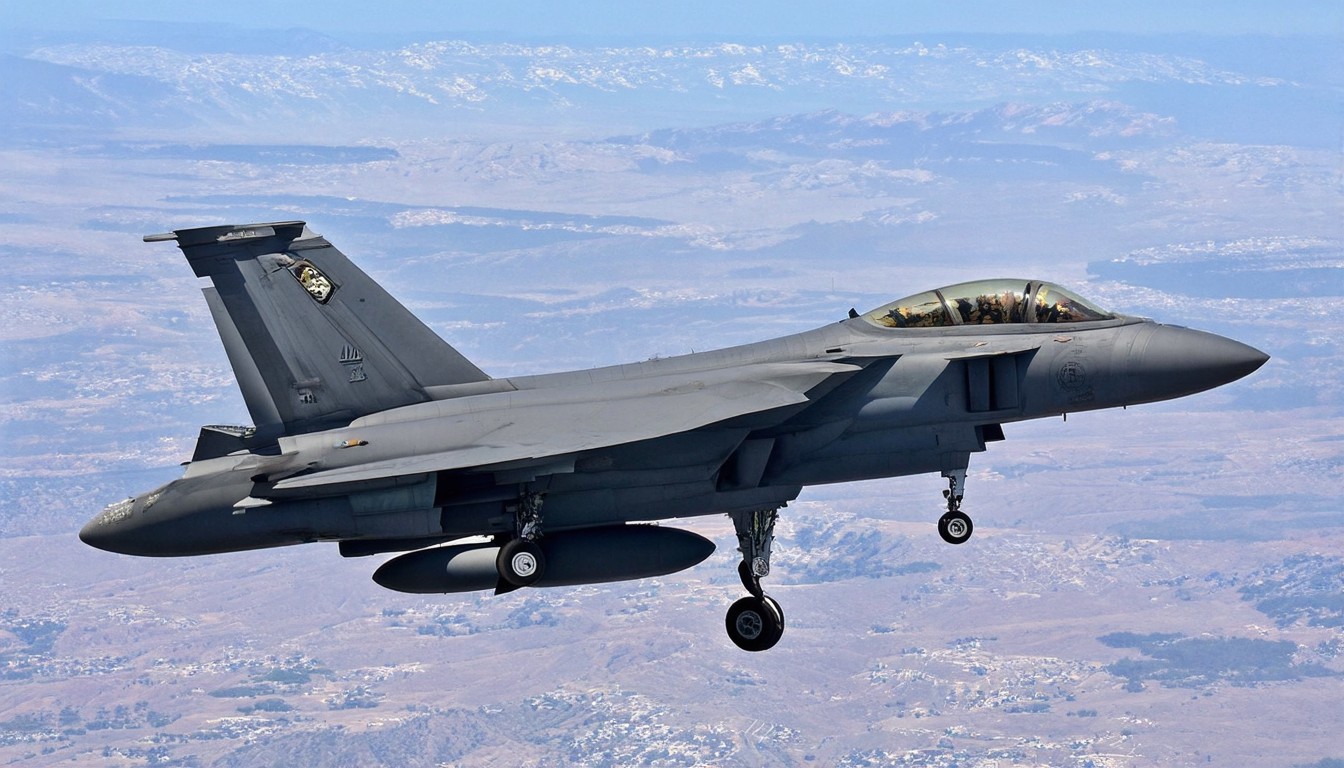
In a sharp escalation that could redefine modern aerial warfare, Iran has reportedly brought down multiple US military aircraft within just 24 hours. The incidents, involving some of America’s most battle-tested platforms, have triggered intense debate among defense analysts and raised serious questions about the future of air superiority. According to emerging reports, the aircraft allegedly hit include an F-15 Strike Eagle, an A-10 Thunderbolt II, a Black Hawk helicopter, and possibly an F-16 variant. While details remain contested, the scale and timing of these incidents have made them impossible to ignore.
Reports from US media indicate that an F-15E Strike Eagle was shot down over Iranian territory. The aircraft, which carries two crew members, saw one individual rescued, while efforts are ongoing to locate the second. Around the same time, an A-10 Thunderbolt II, widely known for its durability and close air support role, was also reportedly hit. The pilot managed to eject safely and was later recovered. There are additional claims that a Black Hawk helicopter involved in rescue operations may have been downed, and that an F-16CJ aircraft was also targeted during the same operational window. Iran has further claimed that it successfully shot down an F-35 stealth fighter. However, Western analysts have disputed this assertion, suggesting that available wreckage and evidence are more consistent with an F-15 rather than a fifth-generation stealth jet.
Despite conflicting narratives, one fact stands out: multiple US aircraft were engaged within or near Iranian airspace in a very short period, marking a significant development in the ongoing conflict. The technology behind these downings has sparked widespread speculation, with many pointing to Iran’s advanced air defense systems.
One of the most discussed aspects of these incidents is the possible use of passive infrared detection systems by Iran. Unlike traditional radar systems, which emit signals and can be detected or jammed, passive infrared systems work by detecting the heat signature of aircraft. These systems are often used in conjunction with man-portable air defense systems (MANPADS) like the Russian-made Igla or the Chinese-made HN-5, which are known for their portability and effectiveness against low-flying targets.
Iran has also been reportedly deploying the S-300 and S-400 air defense systems, which are capable of engaging multiple targets simultaneously. However, the most intriguing rumor revolves around the S-500 Prometey, a Russian-made system that is currently under development. The S-500 is designed to counter advanced stealth technologies and is capable of engaging targets at extremely long ranges. While there is no concrete evidence that Iran has acquired this system, the possibility has raised concerns among Western defense circles.
The S-500’s advanced capabilities, including its ability to detect and neutralize stealth aircraft, could potentially shift the balance of power in aerial warfare. The system is equipped with a phased array radar that can track and engage multiple targets simultaneously, making it a formidable adversary. If Iran has indeed obtained this technology, it could pose a significant threat to US air operations in the region.
However, experts caution against jumping to conclusions. The S-500 is still in the developmental stage, and it is unclear whether Iran has access to this cutting-edge technology. Additionally, even if Iran has deployed advanced air defense systems, the downing of multiple US aircraft within a short span would still require precise coordination and execution.
The recent incidents have also highlighted the vulnerabilities of US aircraft in the region. The F-15, A-10, and Black Hawk are all workhorses of the US military, but they are not invincible. The A-10, in particular, is known for its durability but lacks the advanced stealth capabilities of newer platforms like the F-35. The Black Hawk, while versatile, is not designed for high-speed engagements and can be vulnerable to man-portable systems.
The US has responded to these incidents with a mix of denial and caution. Officials have downplayed the claims, suggesting that the downings were either accidents or the result of friendly fire. However, the US has also increased its presence in the region, deploying additional aircraft and personnel to bolster its aerial defenses.
In the aftermath of these incidents, defense analysts are reevaluating the future of air superiority. The ability of Iran to engage multiple US aircraft within a short period has raised questions about the effectiveness of US air dominance. It has also underscored the need for advanced countermeasures, such as stealth technologies and electronic warfare capabilities, to counter emerging threats.
As tensions continue to rise, the stakes in the skies above the Middle East have never been higher. The recent downings serve as a stark reminder that aerial warfare is an evolving domain, and those who fail to adapt may find themselves at a disadvantage. The technology behind these incidents will continue to be a focal point of debate, with experts and policymakers scrambling to understand the implications for global security.









