
How CIMMYT is advancing women-centered agriculture in Africa
CIMMYT is advancing inclusive agricultural innovation across Africa by placing women farmers at the center of research, technology development, and on-farm solutions. What to read next: Enhancing the resilience of our farmers and our food systems: global collaboration at DialogueNEXT | CIMMYT makes progress on some of the world’s top problems: 2022 Annual Report, “Harvesting Success” | SPG Coalition: CIMMYT is a leading organization for climate-smart agriculture, nutrient-use efficiency, and pest and fertilizer management | CIMMYT and WorldVeg strengthen collaboration in the midst of the climate crisis to increase their impact
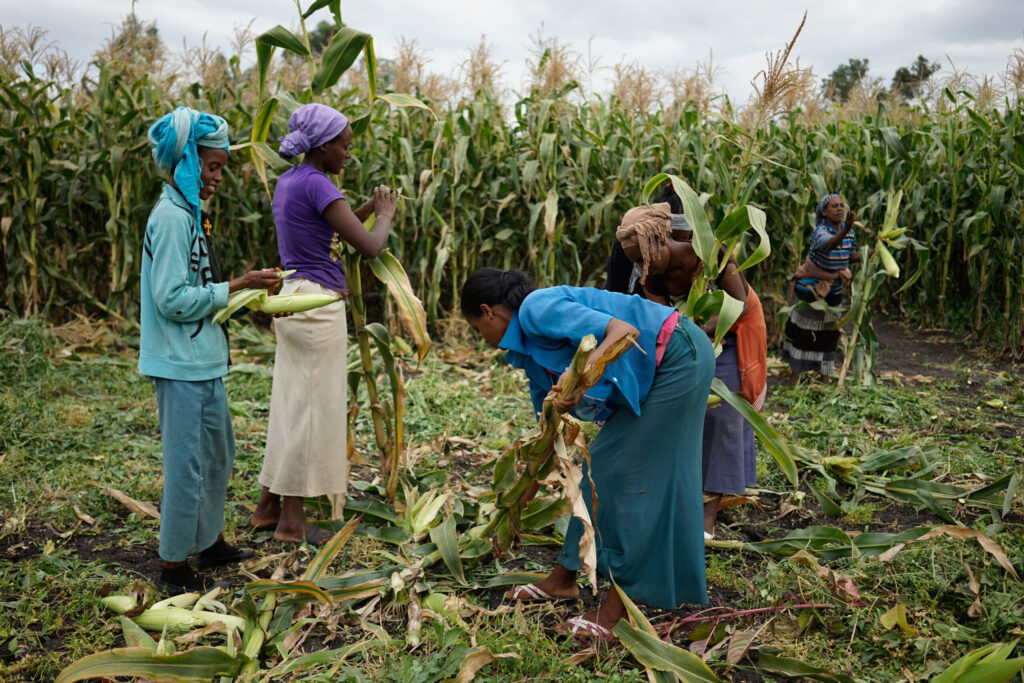
Across Africa, women play a central role in food production, farm management, and sustaining household nutrition and incomes. Despite their critical contributions, they often face constraints such as unequal access to land, inputs, information, finance, and decision-making. As we mark Women’s History Month, the International Maize and Wheat Improvement Center (CIMMYT) is highlighting the importance of designing agricultural research and innovation that reflect the realities of women farmers and address their needs.
CIMMYT’s work across the continent underscores that agricultural innovation is stronger when it is inclusive from the start. Whether through crop breeding, seed systems, or testing new technologies in farmers’ fields, CIMMYT is ensuring that women are not treated as an afterthought in research but as essential partners in shaping solutions that can improve livelihoods and strengthen resilience.
In Zimbabwe, CIMMYT’s maize breeding efforts demonstrate the significance of representation in research. Maize is a staple crop and a foundation of food security, but not all farmers experience production in the same way. Through extensive on-farm trials conducted in plots managed by men, women, and households jointly, CIMMYT is gaining critical insights into how different farmers interact with improved maize varieties under real-world conditions. These trials reveal an important pattern: while men and women may share similar preferences for improved seed, women are often more likely to choose varieties that match the realities they face, such as limited access to fertilizer or fewer productive resources.
This makes inclusive trial design essential. If breeding efforts only reflect the conditions of better-resourced or male-managed farms, the resulting varieties risk overlooking the needs of a large share of farmers. To address this, CIMMYT has strengthened women’s representation in participatory breeding trials by training extension officers and partners to support more inclusive and deliberate farmer selection. This approach ensures that the research outcomes better align with the diverse realities of women farmers, enhancing the effectiveness of the resulting crop varieties.
CIMMYT’s commitment to women-centered agriculture extends beyond maize breeding. The organization is also working on improving wheat quality and pest management strategies that consider the unique challenges faced by women farmers. For instance, in Ethiopia, CIMMYT has collaborated with local organizations to develop improved wheat varieties that are better suited to the soil and climate conditions of the highlands, where many women farmers are located.
In addition to crop development, CIMMYT is also focusing on enhancing women’s access to information and resources. The organization has launched training programs for women farmers on sustainable agricultural practices, such as conservation tillage and integrated pest management, which can improve crop yields and reduce input costs. CIMMYT has also been working to strengthen seed systems, ensuring that women farmers have access to high-quality, affordable seeds that are well-suited to their specific farming conditions.
CIMMYT’s efforts to advance women-centered agriculture are part of a broader global movement to recognize and empower women in agriculture. By placing women farmers at the center of research, technology development, and on-farm solutions, CIMMYT is not only addressing gender-based constraints but also enhancing the resilience of food systems and improving the livelihoods of millions of women across Africa.
As the world faces growing food insecurity and climate change, the need for inclusive agricultural innovation has never been greater. CIMMYT’s work in Africa serves as a powerful example of how focusing on the needs and realities of women farmers can lead to more effective, sustainable, and equitable solutions for the future.









