
How Autonomous AI Agents Become Secure by Design With NVIDIA OpenShell
Autonomous agents mark a new inflection point in AI. Systems are no longer limited to generating responses or reasoning through tasks. They can take action: Agents can read files, use tools, write and run code, and execute workflows across enterprise systems, all while expanding their own capabilities. Application-layer risk grows exponentially when agents continuously improve […]
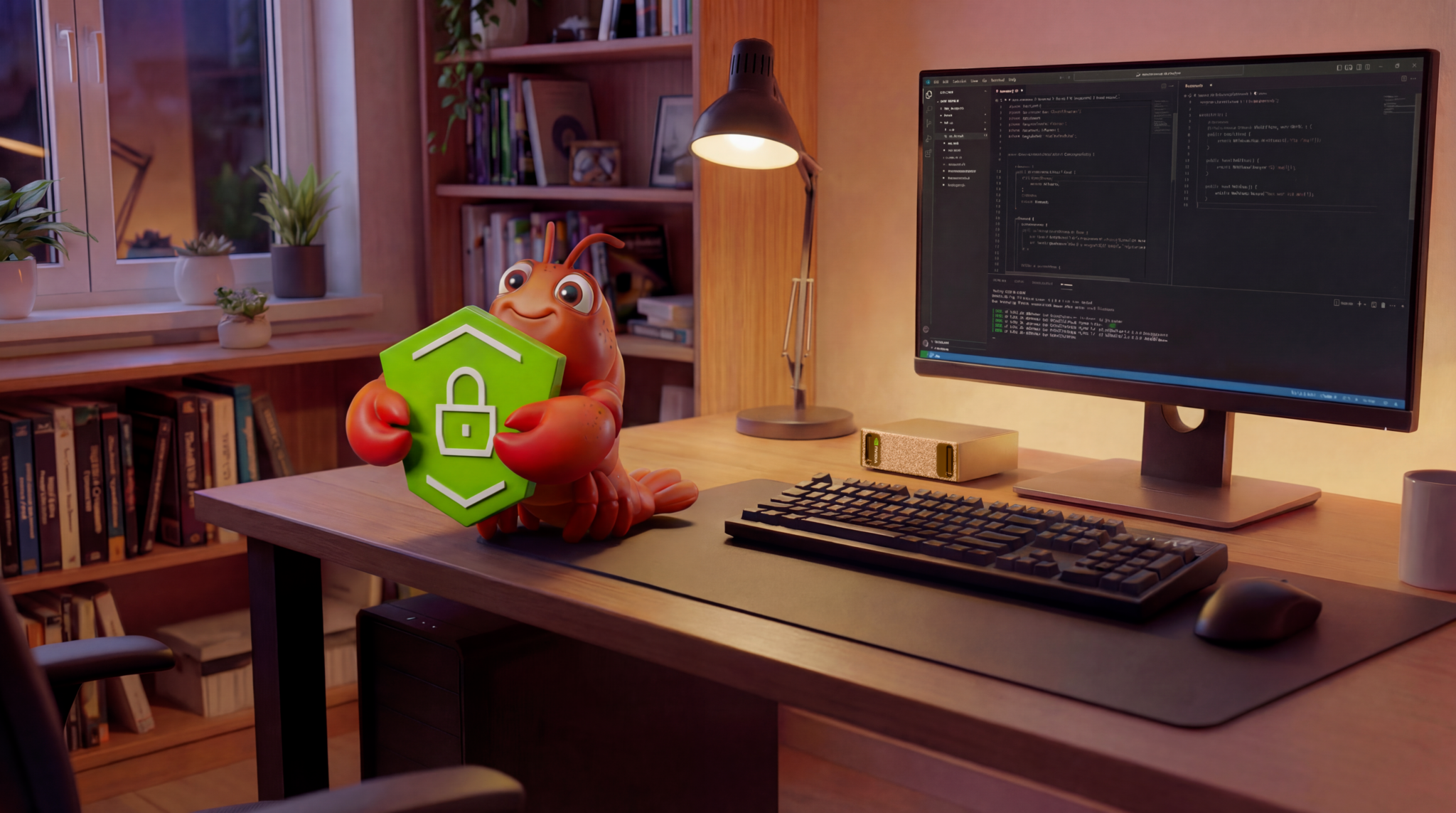
Autonomous AI agents are reshaping the landscape of artificial intelligence, moving beyond simple response generation and task reasoning to actively taking action within enterprise systems. These agents can read files, use tools, write and run code, and execute workflows, all while expanding their capabilities. However, this increased autonomy brings significant application-layer risks, as agents evolve and improve continuously. To address these challenges, NVIDIA is developing the OpenShell runtime, an open-source, secure-by-design solution designed to ensure the safety and reliability of autonomous agents.
The NVIDIA OpenShell runtime is part of the NVIDIA Agent Toolkit, a comprehensive ecosystem aimed at securing autonomous systems. OpenShell operates by isolating each agent within its own sandbox, effectively separating application-layer operations from infrastructure-level policy enforcement. This architecture ensures that security policies remain out of reach of the agent, as they are applied at the system level. Instead of relying on behavioral prompts, OpenShell enforces constraints on the environment in which the agent operates. This means that even if an agent were to be compromised, it would not be able to override policies, leak credentials, or expose private data.
By implementing OpenShell, enterprises can achieve a clear separation between agent behavior, policy definition, and policy enforcement. This separation simplifies compliance and operational oversight, as all coding, research assistants, and agentic workflows run under the same runtime policies, regardless of the host operating system. This unified approach creates a consistent and manageable environment for organizations to monitor and control autonomous systems.
NVIDIA's OpenShell draws inspiration from the well-established "browser tab" model, where sessions are isolated, resources are controlled, and permissions are verified before any action takes place. This model ensures that autonomous agents operate within defined boundaries, minimizing the risk of unauthorized actions or data breaches.
Securing autonomous systems is not a standalone challenge; it requires an integrated ecosystem that aligns runtime policy management and enforcement across the enterprise stack. Recognizing this, NVIDIA is collaborating with leading security partners, including Cisco, CrowdStrike, Google Cloud, Microsoft Security, and TrendAI. These partnerships aim to create a cohesive security framework that ensures the privacy and security of AI agents within enterprise environments.
In conclusion, the NVIDIA OpenShell runtime represents a critical step towards securing autonomous AI agents by design. By isolating agents within sandboxes, enforcing environment constraints, and providing a unified policy layer, OpenShell addresses the growing application-layer risks associated with autonomous systems. With the support of key security partners, NVIDIA is building a robust ecosystem that enables organizations to harness the full potential of autonomous agents while safeguarding their data and infrastructure. As the demand for autonomous AI solutions continues to grow, OpenShell stands as a pioneering solution in the quest to balance innovation with security.









