How a QR code on a liquor bottle helped police crack a murder case in 24 hours
In a shocking murder case near Agra, police cracked the mystery of a man's death within a day, thanks to a QR code on a liquor bottle.
In a small town near Agra, India, a brutal murder case that had left the community in shock was solved in just 24 hours, thanks to an unexpected technological tool: a QR code on a liquor bottle. The case, which had initially baffled the local police, became a chilling reminder of how modern technology can be both a blessing and a curse, turning the tide of an investigation in a matter of hours.
The victim, a middle-aged man named Rajan Kumar, was found dead in an alleyway behind a popular bar in the town. The initial investigation revealed that Kumar had been stabbed multiple times, and there were no obvious signs of a struggle. The police were at a loss as to how the killer had managed to approach Kumar so closely without being noticed. The lack of witnesses and the absence of any security camera footage in the area made it difficult for the investigators to piece together the sequence of events leading up to the murder.
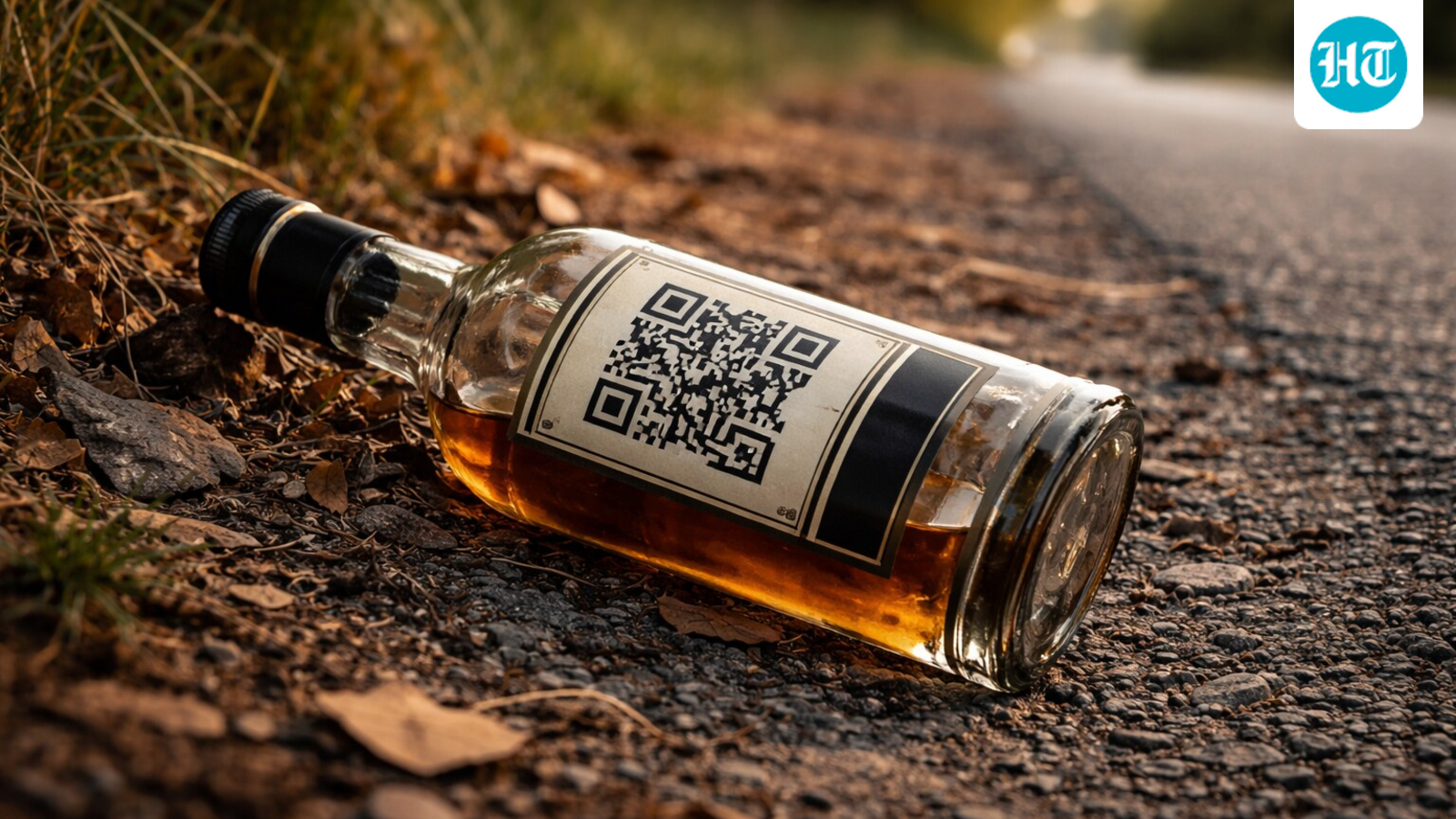
It was during the routine collection of evidence from the crime scene that a constable noticed something unusual. Among the items recovered was an empty liquor bottle, which had a QR code printed on its label. Intrigued, the officer scanned the code using his smartphone, which led him to a website containing information about the liquor brand, its distribution network, and a list of authorized retailers. The website also included a feature that allowed users to report any issues with the product, including counterfeit bottles.
The constable shared this discovery with his superior, who immediately realized the potential significance of the QR code. He contacted the local liquor store owners and asked them to check their inventory to see if any of their bottles had been sold to the victim or his associates. One of the store owners, who had a good relationship with Kumar, recalled that he had purchased a bottle of the same brand just a few days before his death.
With this new lead, the police visited the store and obtained the security footage from the day of the purchase. The footage showed Kumar entering the store, selecting the bottle, and paying for it. The store owner confirmed that the bottle was genuine and had not been tampered with.
The police then traced the distribution of the liquor bottle from the manufacturer to the store. They discovered that the bottle had been delivered to the store in a large shipment, and the receipt for the delivery had been signed by the store owner. However, upon closer inspection, the police noticed that the signature on the receipt did not match the store owner's handwriting.
This discrepancy led the investigators to suspect that the delivery might have been intercepted by someone who had forged the signature. They contacted the courier company responsible for delivering the shipment and requested a review of their records. The courier company's records showed that the delivery had indeed been made to the store, but the driver had left the package outside the store's back door, where anyone could have accessed it.
The police then reviewed the security footage from the store's back door, which showed a man entering the premises shortly after the delivery. The man was wearing a courier uniform and carried a clipboard, which he used to forge the signature on the receipt. He then left the package outside the door and walked away.
Using the security footage, the police were able to identify the suspect as a local man named Amit Sharma, who had recently lost his job at the courier company and was known to have a grudge against Kumar. Sharma had stolen a courier uniform and clipboard, forged the signature, and replaced one of the genuine liquor bottles with a counterfeit one containing a deadly poison.
When Kumar drank the poisoned liquor, the effects were immediate and fatal. The QR code on the bottle had inadvertently provided the crucial link between the victim and the killer, allowing the police to solve the case in record time.
The arrest of Amit Sharma brought a sense of relief to the town, which had been living in fear since the murder. The case highlighted the importance of technology in modern investigations, as well as the need for vigilance in the distribution and security of goods. The QR code, which was initially meant to provide customer information and support, had inadvertently played a pivotal role in unraveling a complex murder plot.
This incident serves as a stark reminder of how technology can be both a tool for crime and a means of combating it. As more and more products incorporate QR codes and other digital features, law enforcement agencies must be prepared to leverage these tools to solve crimes and protect the public. In this case, a simple QR code on a liquor bottle had the power to change the course of an investigation and bring justice to a grieving community.