
Home ScienceHorticultural Research Institute invests $560K in ...
Science⭐ Featured

Horticultural Research Institute invests $560K in 18 green industry research projects

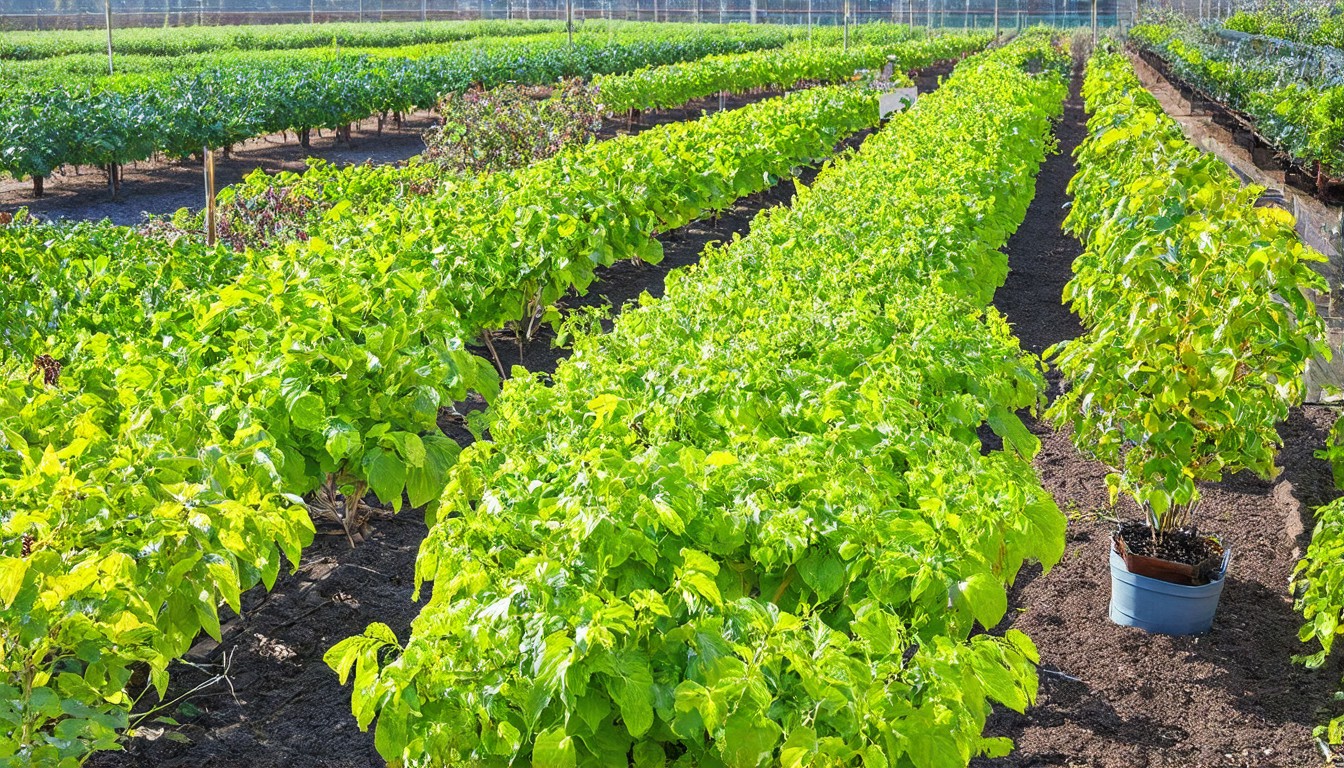
HRI’s investments are guided by four strategic research priorities: quantifying plant benefits, creating innovative solutions, gathering consumer insights and producing practical and actionable solutions.
6 April 2026 at 06:09 pm
1 views
Horticultural Research Institute invests $560K in 18 green industry research projects

The Horticultural Research Institute (HRI) has announced a significant investment of $560,000 in 18 research projects aimed at advancing the green industry. This strategic allocation of funds reflects the organization's commitment to driving innovation and addressing critical challenges in the horticultural sector. The projects, which span a range of disciplines, are guided by four core strategic research priorities: quantifying plant benefits, creating innovative solutions, gathering consumer insights, and producing practical and actionable solutions.

The first priority, quantifying plant benefits, focuses on understanding the complex interactions between plants and their environments. By leveraging cutting-edge technologies and scientific methodologies, researchers will strive to uncover the mechanisms that enable plants to thrive under various conditions. This knowledge will be instrumental in developing more resilient crop varieties that can withstand climate change and pests, ultimately ensuring food security and sustainable agricultural practices.

Creating innovative solutions is the second priority, which involves exploring novel approaches to horticultural challenges. This includes the development of advanced biotechnologies, such as gene editing and synthetic biology, to enhance plant productivity and quality. Additionally, researchers will investigate alternative agricultural systems, such as vertical farming and hydroponics, to optimize resource use and minimize environmental impact. The goal is to foster a more adaptable and efficient green industry that can meet the growing global demand for fresh produce.

Gathering consumer insights is the third priority, as it is crucial to align research outcomes with the needs and preferences of end consumers. By conducting comprehensive market research and engaging with stakeholders, HRI aims to identify emerging trends and gaps in the market. This information will inform the development of new products and services that cater to the evolving demands of consumers, from urban dwellers seeking convenient and sustainable food options to environmentally conscious buyers.

Lastly, producing practical and actionable solutions ensures that the research findings are translated into tangible improvements for the industry. HRI will collaborate with farmers, retailers, and other stakeholders to pilot innovative technologies and practices on a larger scale. This hands-on approach will help refine the solutions and demonstrate their viability in real-world settings. By bridging the gap between research and application, HRI aims to accelerate the adoption of sustainable practices and drive long-term growth in the horticultural sector.

The 18 research projects funded by HRI cover a diverse array of topics, including plant breeding, soil health, integrated pest management, and post-harvest technologies. Each project will be conducted by a team of experts who bring together interdisciplinary knowledge and experience. The collaborative efforts will not only enhance the understanding of horticultural systems but also foster a culture of innovation and collaboration within the industry.

The investment in these research projects underscores HRI's dedication to addressing the complex challenges faced by the green industry. By focusing on quantifying plant benefits, creating innovative solutions, gathering consumer insights, and producing practical and actionable solutions, HRI is poised to make a significant impact on the future of horticulture. As the world continues to grapple with issues such as climate change, population growth, and food security, the research outcomes will provide valuable tools and strategies for sustainable agricultural practices and improved food systems.

In conclusion, HRI's investment in 18 green industry research projects represents a strategic move towards a more sustainable and innovative horticultural future. By prioritizing the quantification of plant benefits, the creation of innovative solutions, the gathering of consumer insights, and the production of practical and actionable solutions, HRI is set to drive meaningful change in the industry. As the research progresses, it will be crucial to monitor the outcomes and ensure that they are effectively integrated into agricultural practices to maximize their impact on food security, environmental sustainability, and economic growth.


📰 Related News
The largest orbital compute cluster is open for business | TechCrunch
Kepler Communications is flying 40 GPUs in Earth orbit. And its latest customer is Sophia Space.
14 Apr
‘Mideast conflict poses risks to Philippines growth’
The Philippine economy is expected to grow at a faster pace of 5.3 percent this year from last year’s 4.4 percent but the ongoing Middle East conflict is seen to pose risks, according to the Association of Southeast Asian Nations Plus 3 Macroeconomic Research Office.
7 Apr
AFBI welcomes DUP representatives to its research farm at Hillsborough
The Agri-Food and Biosciences Institute (AFBI) welcomed a number of DUP representatives to its research farm at Hillsborough on Friday.
7 Apr
A simple way to get more value from metrics
We spent one day 1 building a system that immediately found a mid 7 figure optimization (which ended up shipping). In the first year, we shipped mid 8 figures per year worth of cost savings as a result. The key feature this system introduces is the ability to query metrics data across all hosts and all services and over any period of time (since inception), so we've called it LongTermMetrics (LTM) internally since I like boring, descriptive, names. This got started when I was looking for a starter project that would both help me understand the Twitter infra stack and also have some easily quantifiable value. Andy Wilcox suggested looking at JVM survivor space utilization for some large services. If you're not familiar with what survivor space is, you can think of it as a configurable, fixed-size buffer, in the JVM (at least if you use the GC algorithm that's default at Twitter). At the time, if you looked at a random large services, you'd usually find that either: The buffer was too small, resulting in poor performance, sometimes catastrophically poor when under high load. The buffer was too large, resulting in wasted memory, i.e., wasted money. But instead of looking at random services, there's no fundamental reason that we shouldn't be able to query all services and get a list of which services have room for improvement in their configuration, sorted by performance degradation or cost savings. And if we write that query for JVM survivor space, this also
7 Apr
Accelerating Mathematical and Scientific Discovery with Gemini Deep Think
Research papers point to the growing impact of Deep Think across fields
7 Apr
Gemini 3 Deep Think: Advancing science, research and engineering
Our most specialized reasoning mode is now updated to solve modern science, research and engineering challenges.
7 Apr
Context Engineering for Coding Agents
The number of options we have to configure and enrich a coding agent’s context has exploded over the past few months. Claude Code is leading the charge with innovations in this space, but other coding assistants are quickly following suit. Powerful context engineering is becoming a huge part of the developer experience of these tools. Birgitta Böckeler explains the current state of context configuration features, using Claude Code as an example. more…
7 Apr
What does less protein and nitrogen mean for methane?
Does feeding less protein to cows over a longer period not only reduce nitrogen losses, but also affect methane emissions? Researchers at Wageningen University & Research (WUR) investigated this in a multi-year study with dairy cows, funded by the Vereniging Diervoederonderzoek Nederland (VDN), the Dutch Ministry of Agriculture, Fisheries, Food Security and Nature (LVVN), and […] The post What does less protein and nitrogen mean for methane? appeared first on Agriland.ie .
7 Apr
Second’s Bark Boasts New era of Bitcoin Payments, drawing in former Blockstream developers
Bitcoin Magazine Second’s Bark Boasts New era of Bitcoin Payments, drawing in former Blockstream developers Second, the Bitcoin development lab founded by ex-Blockstream executives including CEO Steven Roose and CTO Erik De Smedt, has unveiled Bark — its custom Ark protocol implementation promising self-custodial payments that are faster and cheaper than Lightning channels. This post Second’s Bark Boasts New era of Bitcoin Payments, drawing in former Blockstream developers first appeared on Bitcoin Magazine and is written by Juan Galt .
7 Apr
'Morale boost': Nasa carries out Moon mission during tough year for science
HOUSTON — As the four Artemis astronauts approached a high point of their lunar mission -- getting slung around the far side of the Moon -- National Aeronautics and Space Administration (Nasa) staffers crowded into Houston's famed mission control room Monday for a team photo.
7 Apr






