Hong Kong applies to seize Jimmy Lai’s ‘offence-related’ properties on national security grounds
The Hong Kong government has filed an application to seize “offence-related” properties owned by jailed pro-democracy media tycoon Jimmy Lai on national security grounds. The application to the High Court was filed on Thursday “in order to achieve the important objectives of preventing and suppressing acts and activities endangering national security,” the government said in […]
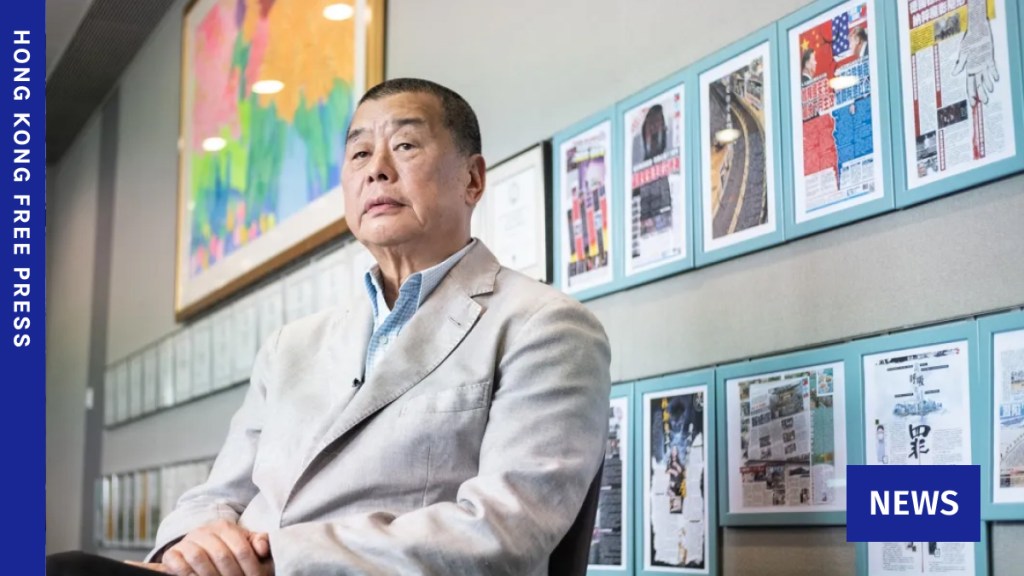
The Hong Kong government has filed an application to seize properties owned by jailed pro-democracy media tycoon Jimmy Lai on national security grounds. The move, announced on Thursday, aims to prevent and suppress acts and activities that endanger national security. The government's statement highlighted Lai's earlier convictions under the Beijing-imposed national security law, noting that the High Court had found him to be the "mastermind and driving force" behind efforts to undermine local and Beijing authorities through his media outlet, Apple Daily.
The decision to seize Lai's properties comes a week after the government designated three companies linked to the now-defunct Apple Daily tabloid as "prohibited organisations" and removed them from the corporate registry. Police subsequently cordoned off the Apple Daily building in Tseung Kwan O. The three firms were tried and convicted alongside Lai in his high-profile national security case. Lai was sentenced to 20 years in prison, while the firms were each fined HK$3,004,500.
The government's application cites a national security law provision that allows for the seizure and confiscation of funds and tools used or intended to be used in the commission of security offences, including financial aid, gains, and rewards. The High Court will order the forfeiture of the properties only if it is satisfied that they meet the relevant conditions after an application is made by the Secretary for Justice. The forfeiture order is intended to cut "funding chains" and prevent further acts that could endanger national security.
Six former Apple Daily executives were also jailed alongside Lai in the national security case. The government's actions highlight its ongoing efforts to enforce the national security law, which has been criticized by pro-democracy advocates and international human rights groups for stifling freedom of expression and political dissent.
The application to seize Lai's properties is part of a broader crackdown on pro-democracy figures and media outlets in Hong Kong. Since the imposition of the national security law in 2020, numerous activists, politicians, and journalists have been arrested and charged under the new regulations. Critics argue that the law is being used to suppress opposition to the Chinese government's policies in Hong Kong, while the authorities maintain that it is necessary to protect national security.
The government's decision to target Lai's assets is seen as an attempt to weaken the financial support base for pro-democracy movements and limit their ability to challenge the authorities. By seizing properties linked to Lai, the government aims to prevent further activities that could be deemed a threat to national security.
The application to the High Court is expected to draw significant attention from both pro-government and pro-democracy factions in Hong Kong. Supporters of the national security law argue that it is necessary to maintain stability and prevent subversion, while opponents view it as an erosion of Hong Kong's autonomy and democratic values.
The case of Jimmy Lai and his media outlet, Apple Daily, serves as a stark example of the impact of the national security law on Hong Kong's political and media landscape. As the government continues to enforce the law, questions remain about the future of freedom of expression and the rule of law in the region. The application to seize Lai's properties is likely to be closely watched by both local and international observers, as it underscores the ongoing tensions between the Chinese government's assertion of control over Hong Kong and the city's long-standing commitment to democratic principles.