
Holiday island is cloaked by Saharan dust storm - turning its blue skies blood red
The island of Crete, known for its blue skies, is seeing red - thanks to a cloud of Saharan dust.
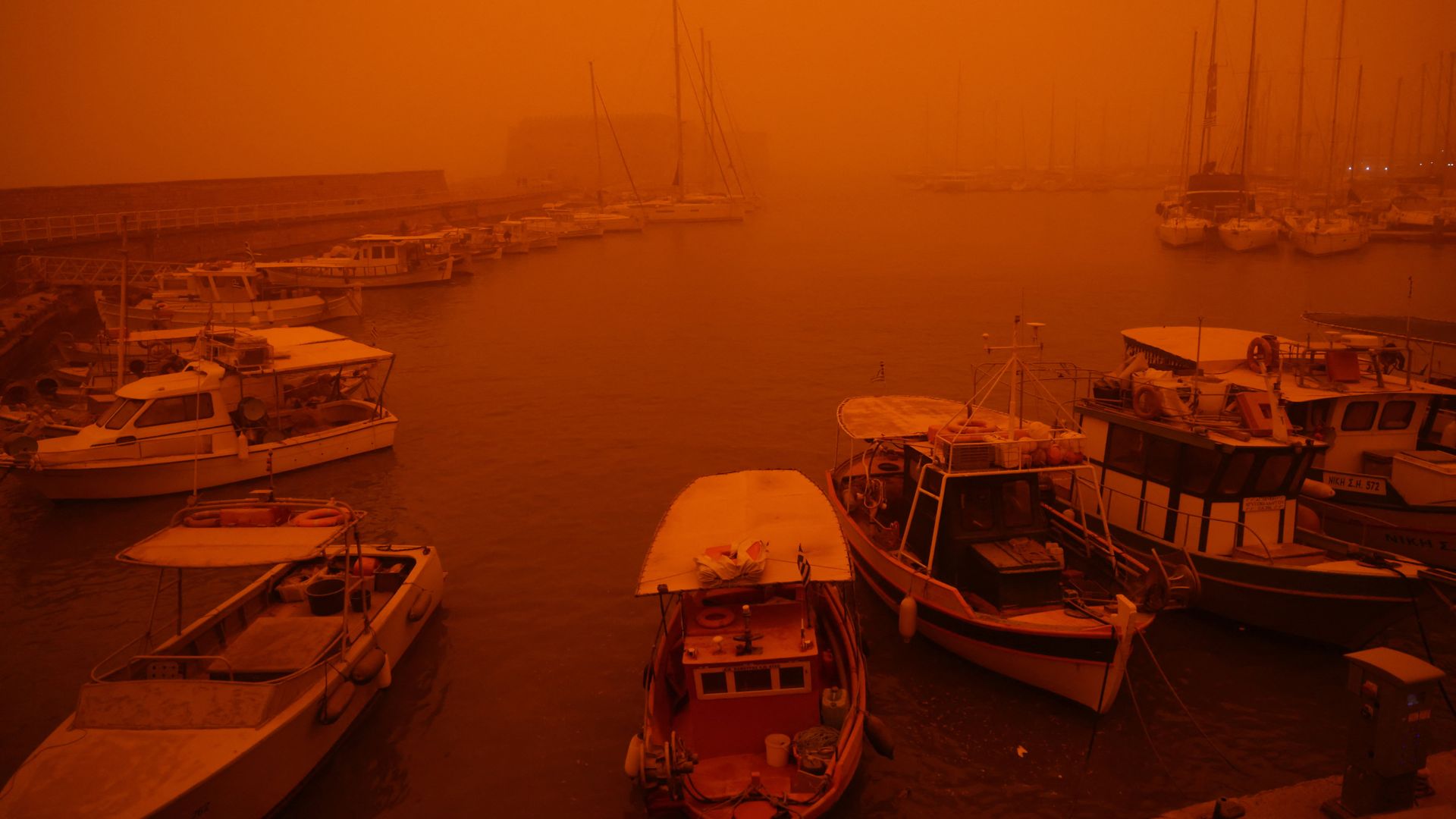
The island of Crete, famed for its azure skies and pristine beaches, has been transformed by a rare natural phenomenon. A massive cloud of Saharan dust has enveloped the region, casting an eerie red hue over the usually pristine blue skies. The unusual sight has left locals and tourists alike in awe, as the normally vibrant colors of the island are now replaced by a haunting crimson glow.
The Saharan dust storm, which originated from the arid expanse of the world's largest hot desert, has traveled over 1,000 kilometers to reach Crete. This annual occurrence, though not uncommon, is particularly intense this year. The dust particles, composed of fine sand and minerals, have scattered the sunlight, causing the sky to take on an unusual reddish tint.
Residents of Crete have reported a distinct change in the atmosphere, with a fine layer of dust coating surfaces and leaving a gritty taste in the air. While the dust storm poses no significant threat to health, it has prompted concerns among local authorities about the potential impact on air quality and the island's fragile ecosystem.
The phenomenon is not limited to Crete alone. Other parts of the eastern Mediterranean, including parts of Greece, Turkey, and Cyprus, have also experienced similar effects. Meteorologists attribute this widespread dust cloud to strong winds blowing from the west, which have carried the dust particles across the Mediterranean Sea.
The transformation of Crete's skies has captured the imagination of both locals and visitors. Photographers and social media users have shared striking images of the blood-red skies, with some describing the scene as "apocalyptic" or "surreal." Many have taken to the island's popular beaches, such as Elafonisi and Balos, to witness the unusual spectacle.
Scientists have explained that the reddish color is a result of Rayleigh scattering, a phenomenon where light is scattered by particles in the atmosphere. In this case, the fine Saharan dust particles are scattering the shorter blue wavelengths of sunlight more efficiently, allowing the longer red wavelengths to dominate, creating the striking crimson hue.
While the dust storm is a temporary occurrence, it serves as a stark reminder of the interconnectedness of our planet's environment. The Saharan dust, which originates from one of the hottest and driest regions on Earth, has traveled thousands of kilometers to reach the Mediterranean, highlighting the global impact of natural processes.
As the dust cloud continues to drift over Crete, locals and tourists alike are capturing the moment, documenting the unusual transformation of their beloved island. For now, the blood-red skies offer a mesmerizing contrast to the island's usual vibrant colors, a fleeting reminder of nature's power and beauty.









