
Holiday island is cloaked by Saharan dust storm - turning its blue skies blood red
The island of Crete, known for its blue skies, is seeing red - thanks to a cloud of Saharan dust.
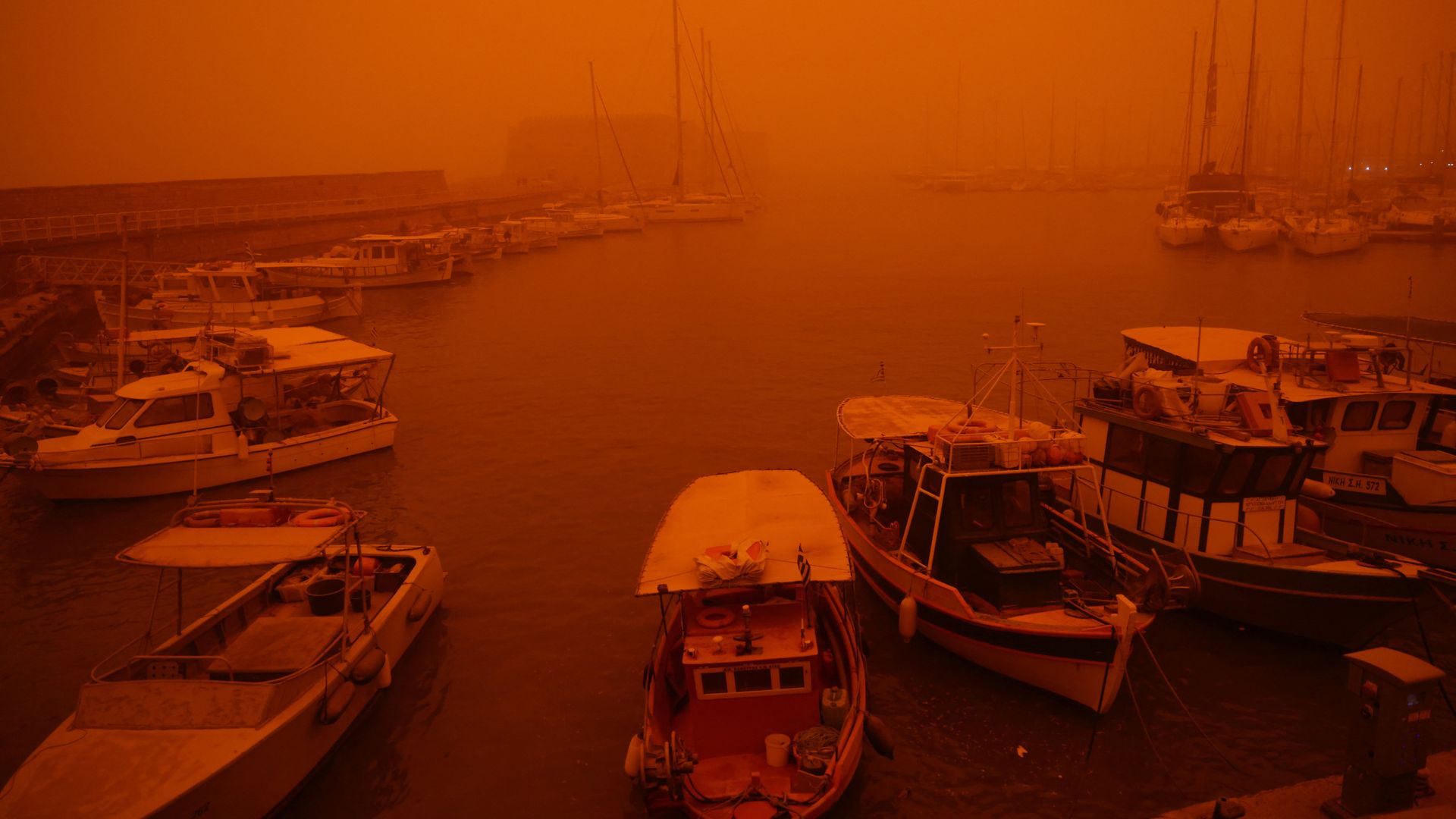
The island of Crete, renowned for its azure skies and pristine beaches, has been transformed by a dramatic meteorological event. A massive cloud of Saharan dust has engulfed the region, casting an eerie red hue over the usually pristine blue skies. The phenomenon, which has been captured by locals and tourists alike, has left many in awe and concern.
The Saharan dust storm, commonly known as a "calima," originates from the arid expanse of the Sahara Desert. These storms are typically driven by strong winds, carrying fine particles of sand and dust across the Mediterranean Sea. Under normal circumstances, these storms might affect parts of North Africa and the Middle East, but their reach has extended to Crete this year.
The arrival of the dust cloud in Crete has been particularly noticeable. Residents and visitors have reported a reddish tint to the sky, reminiscent of a sunset, even during the day. Photographs circulating on social media show the unusual coloration, with some describing it as "blood red." The dust has also settled on surfaces, leaving a fine layer of sand on windowsills and cars.
Scientists attribute the unusual sight to the interaction of sunlight with the dust particles. When sunlight passes through the dust, it scatters the shorter blue wavelengths more than the longer red wavelengths, resulting in the reddish appearance. This natural phenomenon is not uncommon in other parts of the world, such as during the Red Tide in the Persian Gulf or the Red Moon illusion, but its occurrence in Crete adds a unique twist to the island's typically picturesque landscape.
While the dust storm has provided a striking visual spectacle, it also raises concerns about its potential impact on the environment and health. The fine particles can affect air quality, particularly for those with respiratory conditions. Local authorities have advised residents to monitor the air quality indices and take precautions if necessary.
Crete's tourism industry, which relies heavily on its pristine environment, is also watching the situation closely. The island is a popular destination for visitors seeking pristine beaches and clear skies. The unusual sight of a blood-red sky could be both a draw and a deterrent for tourists. Some may be intrigued by the natural phenomenon, while others might be deterred by the unexpected change in scenery.
The Saharan dust storm serves as a stark reminder of the interconnectedness of global weather patterns. While it may seem distant from the daily lives of Crete's inhabitants, the effects of such events can be felt far beyond their origin. As the dust cloud continues to drift across the island, it offers a rare opportunity to witness the power of nature and the delicate balance of our atmosphere.
In the coming days, meteorologists are closely monitoring the situation, predicting when the dust cloud will disperse. Until then, Crete's skies will remain a sight to behold, a temporary yet striking departure from their usual blue hue. For now, the island's residents and visitors are treated to a unique experience, one that blends awe and curiosity in the face of nature's unpredictable beauty.









