Hindu faith hasn’t died in the Islamic country of Iran: Read the story behind the 134-year-old Lord Vishnu temple in Bandar Abbas
The historic Hindu temple in Bandar Abbas, Iran, stands as a 130-year-old symbol of trade and devotion.
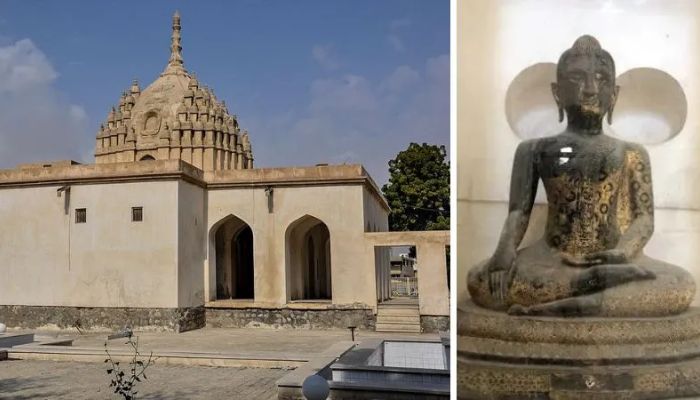
In the bustling port city of Bandar Abbas, on the shores of the Persian Gulf, there stands a quiet yet powerful symbol of faith—a 134-year-old Hindu temple dedicated to Lord Vishnu. In a country where the majority follows Islam, this temple tells a unique story of migration, trade, belief, and cultural connection that has endured for over a century.
Bandar Abbas has long been an important center for trade in the Persian Gulf. For centuries, ships from India regularly arrived here, carrying goods and traders. Merchants from regions like Gujarat, Kutch, and Sindh were especially active in this trade network. Many of these Indian traders began staying in Bandar Abbas for long periods due to business. Slowly, some of them settled there. Even though they were far from home, they did not leave behind their traditions. They continued speaking their languages, celebrating festivals, and practicing their religion.
However, living in a foreign land created a need for a place where they could gather, pray, and stay connected to their roots. This is how the idea of building a temple was born. The temple was constructed around 1892, during a time when Bandar Abbas was growing rapidly because of trade. It was built when Mohammad Hasan Khan Saad-ol-Malek was the local administrative ruler of the region. Today, the temple is around 130 to 134 years old and still stands in much of its original form. It is not just a building, but a reflection of the life and culture of the Indian community that once lived there.
The temple was not built by any king or government. It was the result of a collective effort by Indian traders living in the region. These merchants were financially stable and came together to fund the construction. The temple was dedicated to Lord Vishnu, who is known in Hinduism as the protector and preserver. For the Indian community, this temple represented a connection to their homeland and a place to maintain their spiritual practices.
Despite the passage of time and the changing political landscape of Iran, the temple has remained a testament to the resilience of its builders. It has survived political upheavals, shifts in trade patterns, and the gradual decline of the Indian community in Bandar Abbas. Today, the temple is cared for by a small group of devout Hindus who continue to visit and maintain it.
The temple's existence in an Islamic country like Iran is a poignant reminder of the historical interconnectedness between India and Iran. It highlights the centuries-old trade relationships that brought Indian merchants to Bandar Abbas and the importance of religious tolerance in a society that has long been shaped by diverse cultural influences.
In recent years, there has been renewed interest in preserving this historic temple. Local authorities and cultural organizations have taken steps to restore and protect the site, recognizing its significance as a symbol of shared heritage. The temple's continued presence in Bandar Abbas serves as a powerful reminder that faith and culture can transcend borders and endure through the test of time.
In the heart of an Islamic nation, the 134-year-old Lord Vishnu temple in Bandar Abbas stands as a silent yet profound testament to the enduring spirit of migration, trade, and devotion. It is a place where the past meets the present, and a story of resilience and cultural connection unfolds in the shadow of the Persian Gulf.