High Voter Turnout: Why Kerala Consistently Votes Above National Average
Kerala records voter turnout near 70 to 80, far above the 2024 national 65.79, driven by high literacy, strong grassroots politics and close LDF UDF contests
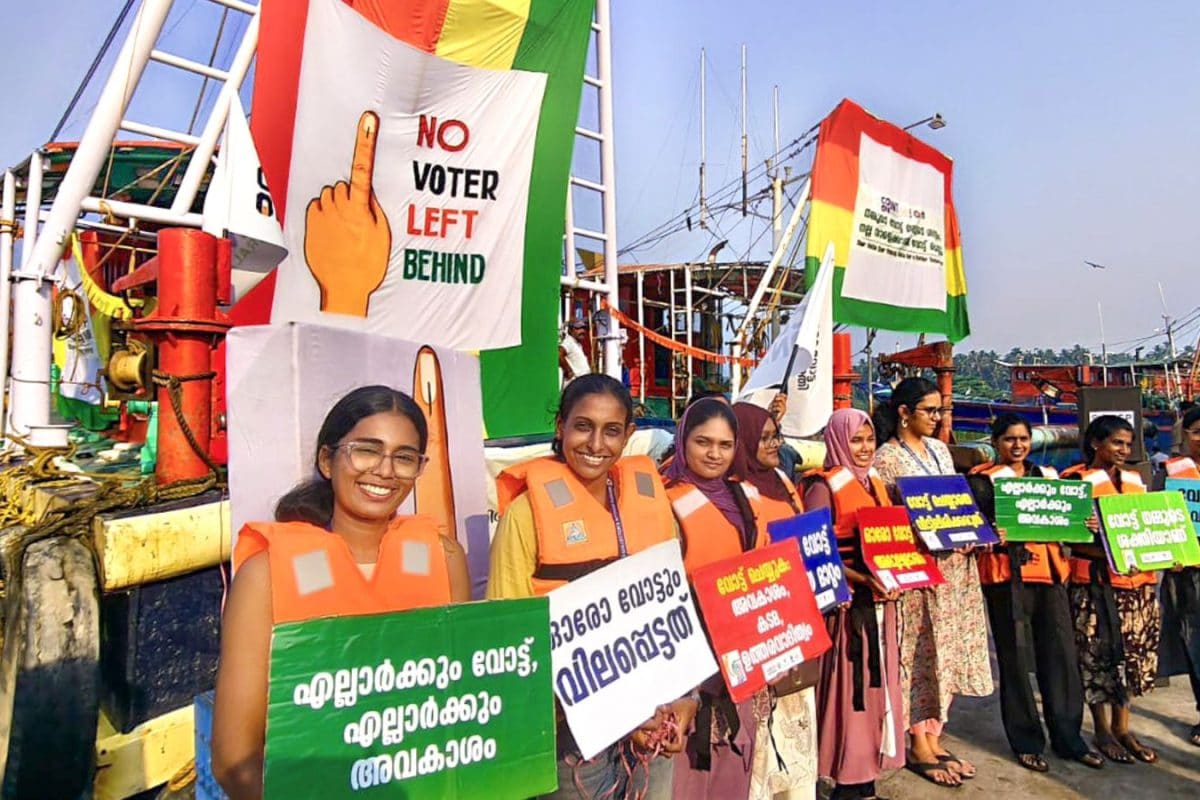
Kerala, the state in southern India known for its high literacy rates and vibrant political landscape, consistently records voter turnout rates that are significantly higher than the national average. In the 2024 elections, the national voter turnout was 65.79%, while Kerala's turnout hovered between 70 to 80%, showcasing a remarkable voter engagement that is often attributed to a unique combination of factors.
One of the primary reasons for Kerala's high voter turnout is its exceptionally high literacy rate. With over 93% of its population being literate, Kerala stands as one of the most educated states in India. This high literacy rate translates into a more informed electorate, who are better equipped to understand the political landscape and the implications of their votes. The ability to read and comprehend political issues fosters a sense of responsibility among voters, encouraging them to participate in elections.
Another critical factor driving high voter turnout in Kerala is the strength of grassroots politics. The state's political parties, particularly the Left Democratic Front (LDF) and the United Democratic Front (UDF), have a robust grassroots network that extends across the state. These networks are instrumental in mobilizing voters, ensuring that every individual has access to information about the elections and the candidates. The close-knit nature of these networks allows for effective communication and engagement with voters, which in turn encourages them to exercise their right to vote.
The close and competitive nature of LDF-UDF contests in Kerala also plays a significant role in maintaining high voter turnout. These two major political alliances have a long-standing rivalry, with each striving to secure the maximum number of seats in the state assembly. The intensity of this competition often leads to vigorous campaigns, where both parties work tirelessly to win over voters. This competitive dynamic creates an environment where voters feel their participation is crucial, thereby motivating them to cast their votes.
Moreover, Kerala's political system is characterized by a strong tradition of political participation. The state has a history of active political engagement, with a culture that values the importance of voting. This cultural emphasis on voting reinforces the notion that participating in elections is not only a right but also a duty. As a result, voters in Kerala are more likely to prioritize voting in their lives, leading to higher turnout rates.
The high voter turnout in Kerala also benefits from the state's efficient electoral machinery. The Election Commission of India (ECI) and the Kerala State Election Commission have worked diligently to ensure that the electoral process is smooth and transparent. This efficient administration, coupled with a culture of political awareness, further encourages voters to participate in elections.
However, it is essential to note that while Kerala's high voter turnout is a commendable achievement, it is not without its challenges. Despite the high turnout, issues such as voter intimidation, fraud, and the influence of money in politics persist. These challenges, common to many Indian states, underscore the need for continuous efforts to improve the electoral process and ensure fair and free elections.
In conclusion, Kerala's consistently high voter turnout can be attributed to a combination of factors, including its high literacy rate, strong grassroots politics, close LDF-UDF contests, and a culture of political participation. These elements create an environment where voters are well-informed, motivated, and engaged, leading to the state's exceptional voter turnout rates. While challenges remain, Kerala's electoral success serves as a model for other states in India to strive for greater voter engagement and participation in the democratic process.