
Here’s What Happened in the War in Iran and the Middle East on Monday
President Trump escalated his threats ahead of his pending Tuesday deadline for Iran to reopen the Strait of Hormuz.
On Monday, tensions in the Middle East escalated as President Trump intensified his threats towards Iran, with a looming deadline for the country to reopen the Strait of Hormuz. The situation added to the already volatile atmosphere in the region, where conflicts and geopolitical rivalries have long been a source of instability.
Trump’s administration has been pushing for Iran to lift its blockade of the Strait of Hormuz, a crucial waterway through which a significant portion of global oil is transported. The administration argues that the blockade is a threat to global energy security and economic stability. In a series of tweets on Monday, Trump warned that if Iran does not comply with the deadline, "the price of Iranian oil will go to zero." This stark warning underscored the administration’s determination to exert pressure on Tehran, potentially leading to further economic sanctions or even military action.
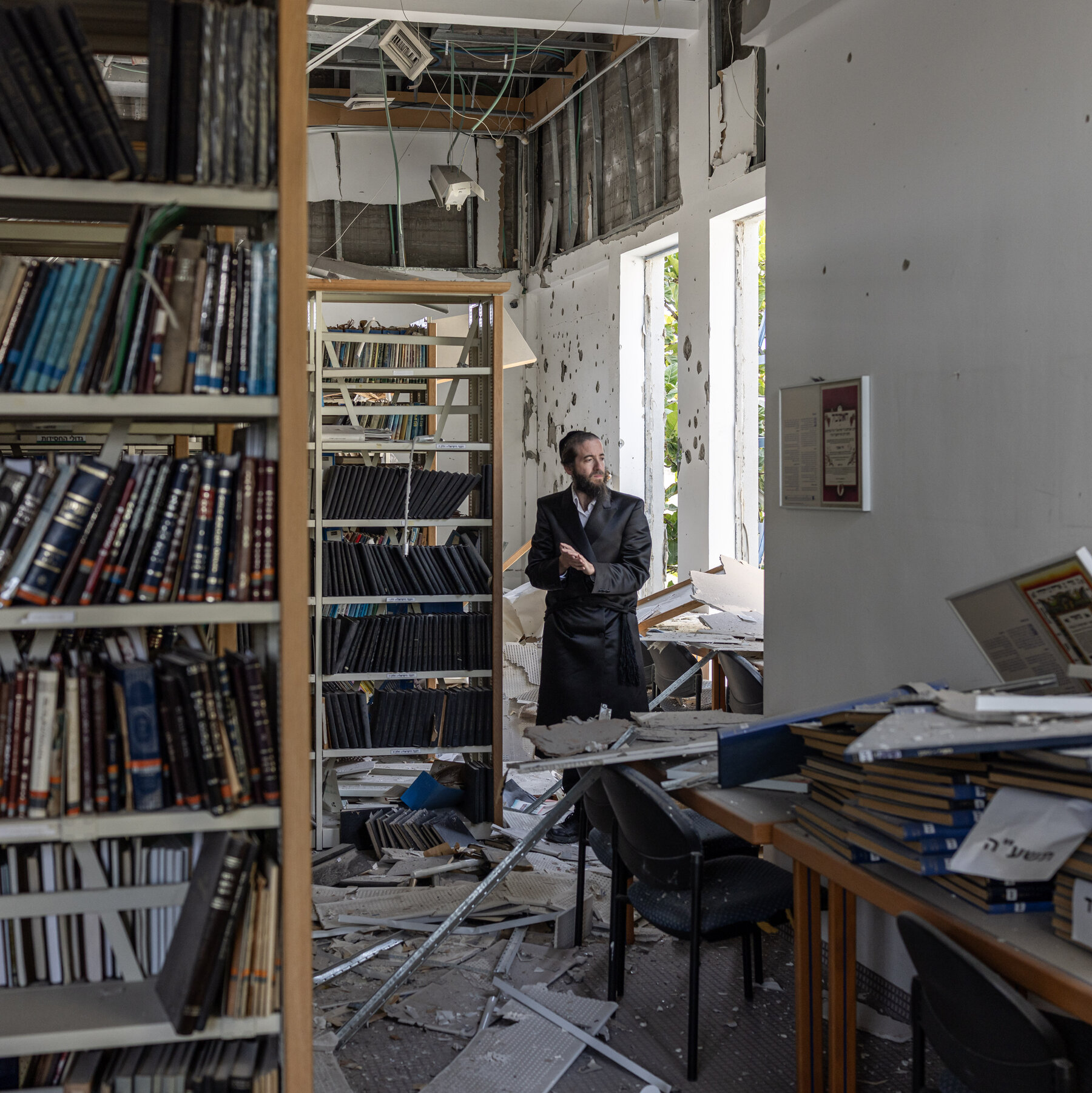
Meanwhile, in Israel, the region faced another wave of unrest as a missile strike targeted an ultra-Orthodox girls’ school in Tel Aviv. The attack caused panic and damage to the school library, prompting concerns about the safety of civilians in the area. Israeli officials quickly responded, vowing to investigate the incident and hold those responsible accountable. The strike came amid ongoing tensions between Israel and its neighbors, with both sides frequently accusing each other of supporting or carrying out attacks.
The situation in Iran and the Middle East is further complicated by the involvement of regional and global powers. The United States, Europe, and other nations have imposed strict sanctions on Iran in an attempt to curb its nuclear program and regional influence. In response, Iran has threatened to retaliate, citing the U.S. withdrawal from the nuclear deal as a breach of its obligations.
The escalating tensions have also prompted concerns about the potential for a broader conflict to spill over into neighboring countries. Saudi Arabia, a key U.S. ally in the region, has expressed its support for the U.S. stance on Iran, while Iran’s closest ally, Syria, has been accused of supporting pro-Iranian militias in Iraq. These developments have raised questions about the stability of the entire Middle East, with experts warning that a miscalculation or misstep could lead to a full-blown regional war.
In addition to the geopolitical tensions, the humanitarian impact of the ongoing conflicts is significant. Many civilians in the region are living in fear and uncertainty, with access to basic necessities often hindered by ongoing violence. The recent missile strike in Tel Aviv serves as a stark reminder of the daily challenges faced by ordinary people in the Middle East.
As the situation continues to evolve, it remains unclear how the various stakeholders will respond to the escalating threats and pressures. The upcoming deadline for Iran to reopen the Strait of Hormuz will likely be a critical point of tension, with both sides preparing for potential confrontations. The international community is closely monitoring the situation, hoping for a diplomatic resolution that can prevent further escalation and maintain regional stability.
In conclusion, Monday’s developments in the Middle East highlighted the complex and volatile nature of the region’s conflicts. President Trump’s threats towards Iran, the missile strike in Tel Aviv, and the broader geopolitical tensions all underscore the need for careful diplomacy and a commitment to peace. As the situation continues to unfold, it is crucial for all parties involved to exercise restraint and work towards a resolution that can ensure the safety and security of the region’s people.








