
Hemingway’s Advice on Writing, Ambition, and His Reading List of Essential Books for Aspiring Writers
"In any art you're allowed to steal anything if you can make it better."
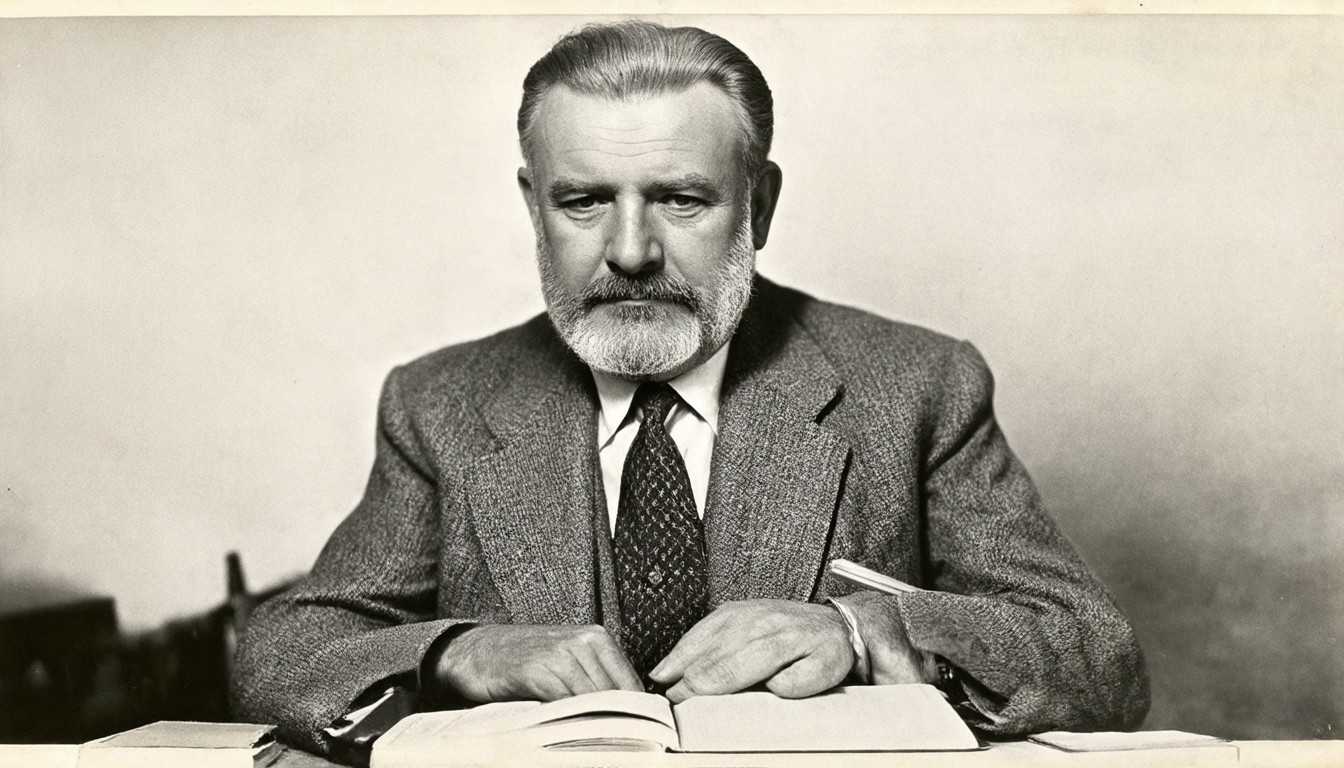
Ernest Hemingway, the renowned American novelist and short-story writer, once famously declared, "In any art you're allowed to steal anything if you can make it better." This statement encapsulates Hemingway's pragmatic approach to creativity and his belief in the power of adaptation and improvement. Beyond this aphorism, Hemingway offered invaluable guidance to aspiring writers, particularly through his interactions with a young aspiring writer named Arnold Samuelson.
In 1934, Samuelson, a 22-year-old from a Norwegian immigrant family in Minnesota, embarked on an ambitious journey to meet his literary hero. Having completed his journalism coursework but refusing to pay the $5 diploma fee, Samuelson believed that the best way to advance his writing was to apprentice himself to Hemingway, even if only briefly. He hitched a ride on a coal car from Minnesota to Key West, Florida, where Hemingway resided. Samuelson later recalled, "It seemed a damn fool thing to do, but a twenty-two-year-old tramp during the Great Depression didn't have to have much reason for what he did."
Despite the impracticality of his quest, Samuelson's determination paid off. He stayed with Hemingway for nearly a year, during which time he became the only true protégé of the literary titan. Samuelson documented his experiences and the lessons he learned in a manuscript that was only discovered by his daughter after his death in 1981. The manuscript, titled "With Hemingway: A Year in Key West and Cuba," provides the closest thing to a psychological profile of Hemingway and offers insights into his methods and philosophy.
Shortly after Samuelson's arrival in Key West, Hemingway provided him with a handwritten list of books that any writer should read as part of their education. Hemingway's list, which Samuelson later published, included a diverse range of works, reflecting Hemingway's own eclectic tastes and his belief in the importance of a well-rounded literary education. The list included classics such as "The Odyssey" by Homer, "Don Quixote" by Miguel de Cervantes, and "War and Peace" by Leo Tolstoy, alongside works by contemporary authors like John Dos Passos and Gertrude Stein.
Hemingway's advice to Samuelson extended beyond the reading list. He emphasized the importance of understanding rather than judging, a principle that reflects his own approach to writing. Hemingway's writing style, characterized by its simplicity and directness, was a reflection of his belief in the power of clear, concise language. He often advised writers to "show, don't tell," encouraging them to convey meaning through action and dialogue rather than exposition.
Hemingway's interaction with Samuelson also highlighted his mentorship style. While Hemingway was known for his reticent personality, he was generous with his time and knowledge. He encouraged Samuelson to write freely and without fear, emphasizing the importance of authenticity in creative expression. This approach was rooted in Hemingway's own experiences as a writer, particularly his struggles to find his voice and his belief in the transformative power of writing.
Hemingway's legacy as a writer and mentor is evident in his enduring influence on the literary world. His advice to aspiring writers—to steal, improve, and understand—remains a timeless guide for those seeking to hone their craft. Hemingway's reading list, in particular, serves as a testament to the value of a diverse and well-informed education, one that enables writers to draw from a rich tapestry of literary traditions while forging their own path.
In conclusion, Ernest Hemingway's interactions with Arnold Samuelson reveal a side of the writer that was both generous and insightful. Hemingway's advice, encapsulated in his famous statement about stealing and improving, and his reading list, offer invaluable insights for aspiring writers. By embracing a spirit of curiosity, understanding, and improvement, writers can build upon the foundations laid by their predecessors and create works that resonate with authenticity and power. Hemingway's enduring influence on literature and writing continues to inspire and guide writers today.








