Granulated Lime vs. Bulk Lime: What’s the Difference?
Understanding the type of lime required for your soil can significantly impact your crop yield and overall soil health.
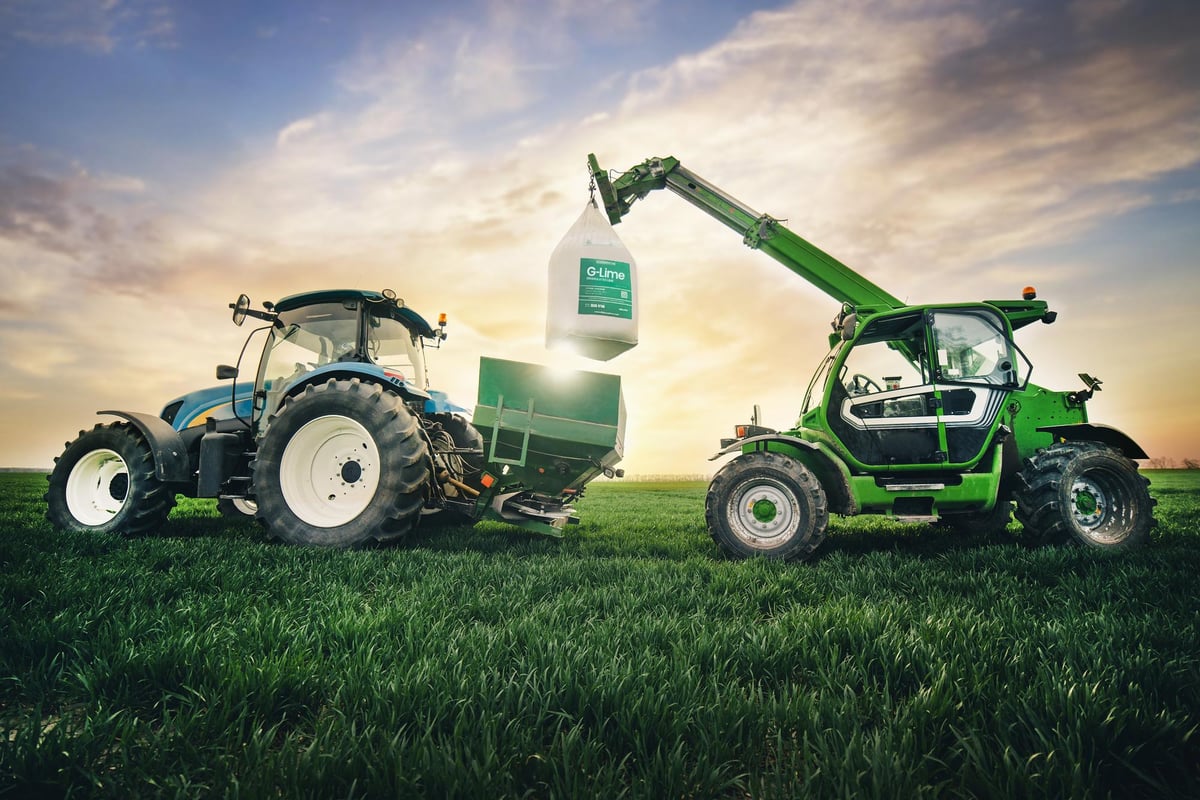
Granulated lime and bulk lime are two common forms of calcium carbonate used to adjust soil pH, but they differ in their application and effectiveness. Understanding the difference between these two can help gardeners and farmers optimize soil health and improve crop yields.
Granulated lime, also known as powdered lime, is finely ground calcium carbonate that comes in a powder form. It is widely used in gardening and agriculture because of its ease of application. The small particle size allows granulated lime to be mixed directly into the soil, ensuring a more uniform distribution of calcium. This uniformity is crucial for achieving the desired pH adjustment, as it ensures that the entire soil profile receives the necessary nutrients.
Bulk lime, on the other hand, is calcium carbonate in its natural, larger-particle form. It is often sold in bags or delivered in bulk by truck. While bulk lime is less processed than granulated lime, its larger particles can make it more challenging to distribute evenly in the soil. This can lead to uneven pH adjustments, which might not be as effective as using granulated lime. However, bulk lime can still be an economical choice for larger areas or when a significant amount of lime is needed.
The choice between granulated and bulk lime often depends on the specific needs of the gardener or farmer. For small-scale projects or areas where precise pH adjustments are critical, granulated lime is typically the better option. Its fine texture ensures that the lime is evenly distributed, leading to a more consistent soil pH. This consistency is particularly important for crops that are sensitive to pH changes, as it can prevent nutrient deficiencies and improve overall plant health.
In contrast, bulk lime may be more suitable for larger-scale agricultural operations or when cost is a primary concern. While the larger particles can make application a bit more labor-intensive, bulk lime can be significantly cheaper per pound compared to granulated lime. For farmers or landscapers working on a large scale, the cost savings can outweigh the challenges of uneven distribution.
Another consideration when choosing between granulated and bulk lime is the rate of action. Granulated lime tends to act more quickly in adjusting soil pH due to its fine particle size, which allows it to react with the soil more rapidly. Bulk lime, with its larger particles, may take longer to dissolve and adjust the pH, but it can provide a more sustained release of calcium over time.
In addition to the physical form of the lime, the method of application also plays a role in determining its effectiveness. Both granulated and bulk lime should be mixed into the top few inches of soil to ensure proper distribution. However, granulated lime's fine texture makes it easier to achieve this uniformity. For bulk lime, gardeners may need to break up the larger chunks or use a tiller to incorporate it evenly.
Understanding the difference between granulated and bulk lime is essential for achieving optimal soil health and crop yields. While granulated lime offers a more consistent and faster-acting solution, bulk lime can be a cost-effective choice for larger-scale projects. By considering the specific needs of your project and the characteristics of each type of lime, you can make an informed decision that will benefit your soil and your plants.