
Google Vids gets AI upgrade with Veo and Lyria models, directable AI avatars
Google Vids brings together Google's most capable AI creation tools.
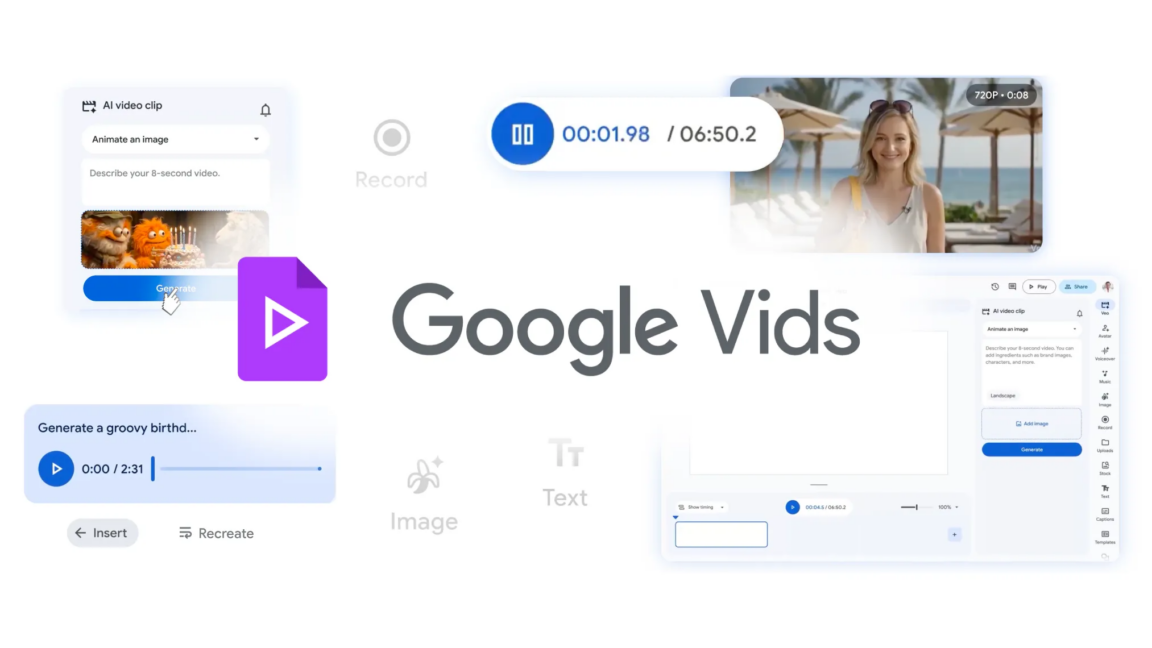
Google Vids, Google's video and audio editing tool, has recently undergone a significant AI upgrade, integrating the powerful Veo and Lyria models into its platform. This update positions Google Vids as a leading tool for content creators, offering unprecedented control over AI-generated videos and avatars.
The latest iteration of Google Vids, which now includes the Veo 3.1 model, was first introduced in Gemini last year. This update was designed to enhance the realism and consistency of the generated content, making it a valuable tool for filmmakers and content creators alike. However, Google has positioned Vids as a versatile platform for creating a wide range of content, from animated party flyers and business sizzle reels to video greeting cards.
Veo 3.1, the cornerstone of the Vids upgrade, has been praised for its ability to produce highly realistic and consistent video content. The model's improved capabilities allow users to generate videos that are more lifelike and engaging, making it an attractive option for creators looking to elevate their content. While Veo has been deployed in other Google products, the integration into Vids offers a unique opportunity for users to create and share their AI-generated videos seamlessly.
In addition to Veo, Google Vids now also incorporates the Lyria models, which provide users with the ability to direct AI avatars. This feature enables content creators to customize their videos with controllable avatars that can be tailored to specific needs and preferences. The inclusion of Lyria models adds an extra layer of creativity and flexibility to the platform, allowing users to produce videos that are not only realistic but also personalized.
Google Vids is designed to be user-friendly and accessible, with a range of pricing options to suit different needs. Users can generate videos for free, but the number of generations is limited to 10 per month. For those who require more capacity, Google offers an AI Pro subscription, which allows users to generate up to 50 videos per month. Additionally, Google's AI Ultra plan, available in both personal and enterprise versions, provides users with the ability to generate 1,000 videos per month.
The videos generated through Google Vids are eight seconds long and available in 720p resolution. This standardized format ensures that creators can easily share their content on platforms like YouTube, making it a convenient and efficient tool for producing and distributing AI-generated videos.
In conclusion, Google Vids' AI upgrade, featuring the Veo and Lyria models, has positioned the platform as a powerful and versatile tool for content creators. With its range of pricing options and seamless integration with YouTube, Google Vids offers a unique opportunity for users to generate high-quality, AI-driven videos with ease. As the tool continues to evolve, it is likely to become an essential resource for professionals and enthusiasts alike in the world of content creation.









