
Google adds channel performance timeline view to PMax campaigns
Google's new channel performance view for PMax gives advertisers a timeline breakdown of what's working across Search, YouTube, Display
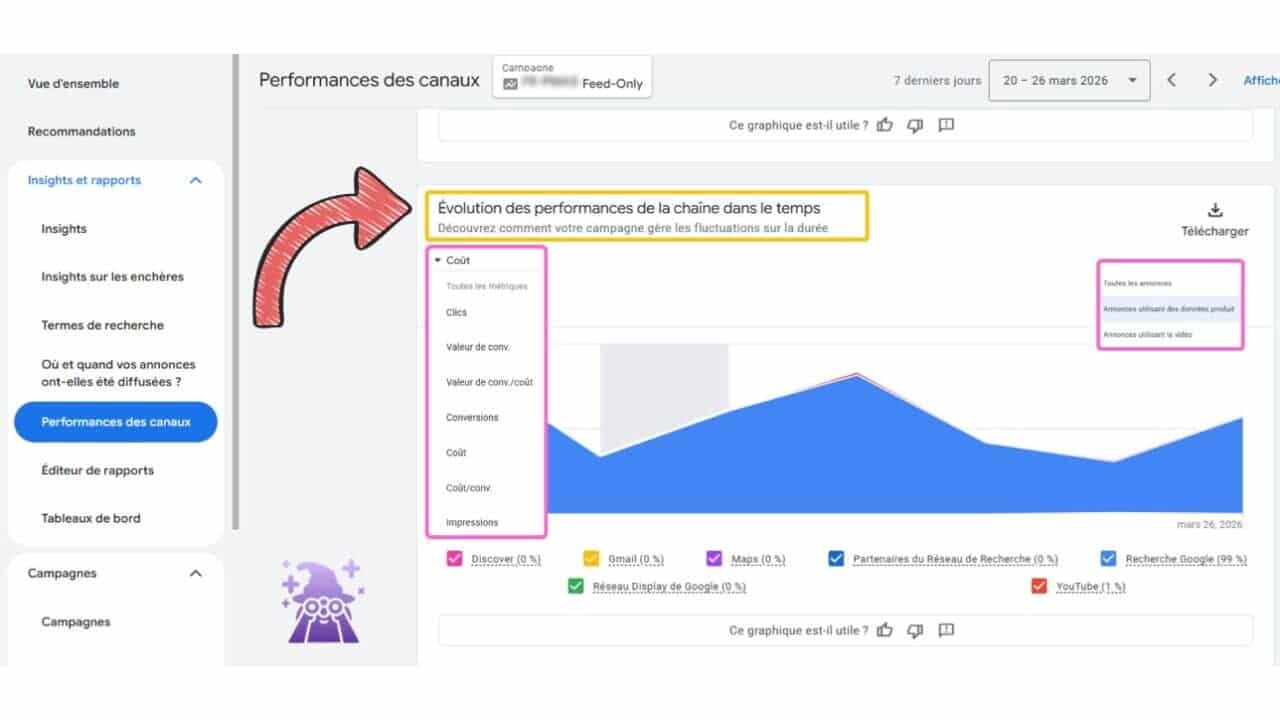
Google has recently introduced a new feature called the channel performance timeline view in its Performance Max platform, designed to provide advertisers with a more detailed breakdown of how different channels contribute to campaign results over time. This update aims to help businesses better understand the effectiveness of their advertising investments across various platforms, such as Search, YouTube, and Display.
The channel performance timeline view offers a visual representation of channel-level contributions through a timeline graph, allowing advertisers to track their campaigns' performance over a selected period. This feature is paired with investment and performance filters, enabling users to quickly identify which channels are delivering the desired results and which ones are underperforming. By presenting this information in a clear and concise manner, the new view eliminates the need for advertisers to sift through complex export data or rely on speculation.
One of the key benefits of the channel performance timeline view is its ability to reveal channel-level trends earlier, allowing businesses to make informed adjustments to their asset strategy or budget allocation. For instance, if YouTube is found to be underperforming while Search ads drive the majority of conversions, advertisers can now identify this issue without delving into extensive reports. This timely insight enables them to reallocate their resources more effectively, ensuring that their advertising dollars are spent on the most impactful channels.
Performance Max campaigns are known for their ability to run across multiple channels simultaneously, which can sometimes make it challenging for advertisers to determine where their budget is most effective. The new channel performance timeline view addresses this issue by providing a more actionable way to evaluate PMax performance. Instead of relying solely on Google's automated decisions, businesses can now make data-driven adjustments based on the insights gained from this feature.
While the channel performance timeline view does not offer full transparency into the inner workings of Google's algorithms, it represents a significant step in the right direction. By offering a cleaner and more intuitive way to spot trend anomalies early, advertisers can proactively adjust their strategies to optimize their campaigns' performance.
The update was first spotted by Axel Falck, Head of Search at Le Mage du SEA, who shared his findings on LinkedIn. Falck's discovery highlights the importance of staying informed about the latest developments in digital advertising tools, as well as the value of leveraging these features to enhance campaign effectiveness.
In conclusion, Google's channel performance timeline view in Performance Max provides advertisers with a valuable tool to better understand and optimize their multi-channel campaigns. By offering a clearer breakdown of channel contributions over time, this feature empowers businesses to make informed decisions about their advertising investments, ultimately leading to more effective and efficient campaigns.









