
GMEX Robotics advances development of ‘intelligent robot chassis’
GMEX Robotics, a developer of AI-powered robotic technologies, says it is advancing the development and integration of its “Intelligent Robot Chassis”, which the company describes as “a key innovation designed to enhance the resilience, mobility, and operational safety of autonomous robots across industries”. In connection with this technological advancement, GMEX is in the process of […]
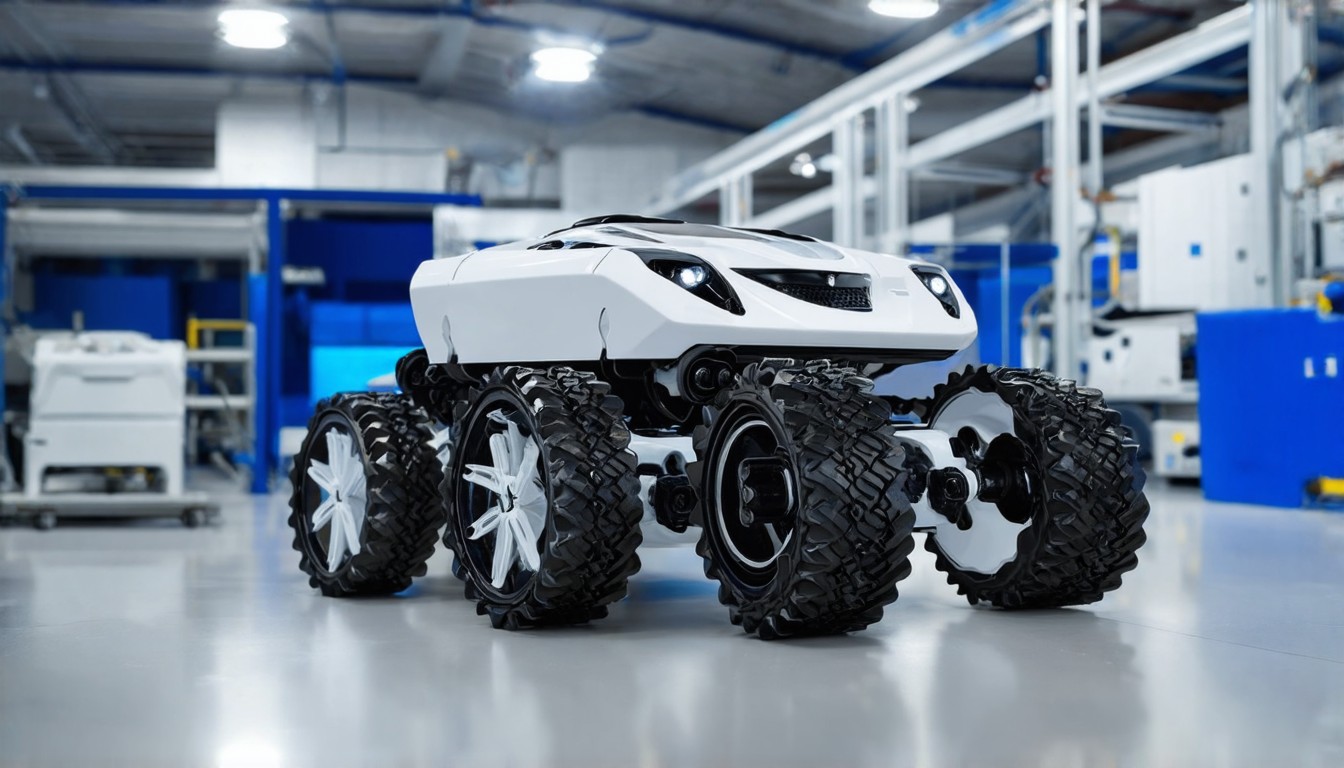
GMEX Robotics, a company specializing in AI-powered robotic technologies, has announced significant progress in developing its "Intelligent Robot Chassis". This innovative solution is designed to improve the resilience, mobility, and operational safety of autonomous robots across various industries. The company claims that this advancement will set a new standard for the performance and reliability of autonomous systems.
The Intelligent Robot Chassis is a modular design that integrates advanced sensors, AI algorithms, and robust structural components. By combining these elements, GMEX aims to create a platform that can adapt to diverse environments and tasks more effectively than traditional robotics systems. The chassis is equipped with a suite of sensors that allow it to perceive its surroundings with high precision, enabling it to navigate complex terrains and avoid obstacles in real-time.
One of the key features of the Intelligent Robot Chassis is its enhanced resilience. The chassis is built to withstand harsh conditions, such as extreme temperatures, humidity, and mechanical stress. This durability is achieved through the use of high-quality materials and innovative engineering techniques. By prioritizing resilience, GMEX aims to ensure that autonomous robots can operate consistently, even in challenging environments, reducing downtime and maintenance costs for users.
Mobility is another critical aspect of the Intelligent Robot Chassis. The chassis is designed to be highly maneuverable, allowing robots to traverse a wide range of terrains, from industrial floors to outdoor landscapes. This versatility is achieved through a combination of advanced propulsion systems and intelligent navigation algorithms. The chassis can switch between different modes of locomotion, such as wheeled, tracked, or legged systems, depending on the specific requirements of the task at hand.
Operational safety is a top priority for GMEX, and the Intelligent Robot Chassis reflects this commitment. The chassis is equipped with advanced collision avoidance systems and safety features that minimize the risk of accidents during operation. These include real-time obstacle detection, emergency stop mechanisms, and redundant control systems. By prioritizing safety, GMEX aims to build trust in its autonomous systems and enable their wider adoption in industries where human interaction is common.
GMEX Robotics is currently in the process of collaborating with industry partners to integrate the Intelligent Robot Chassis into a range of applications. The company has already demonstrated the potential of the technology through successful trials in manufacturing, logistics, and construction sectors. These trials have highlighted the chassis's ability to improve efficiency, reduce costs, and enhance overall system performance.
Looking ahead, GMEX plans to continue refining the Intelligent Robot Chassis and expanding its capabilities. The company is exploring the integration of additional AI technologies, such as computer vision and natural language processing, to further enhance the autonomy and adaptability of its autonomous systems. GMEX also intends to explore partnerships with other industry leaders to accelerate the adoption of its innovative chassis across a broader range of applications.
In conclusion, GMEX Robotics' development of the Intelligent Robot Chassis represents a significant leap forward in the field of autonomous robotics. By combining advanced AI technologies with robust engineering, the company is creating a platform that promises to transform the way robots operate in various industries. As the technology continues to evolve, it has the potential to revolutionize efficiency, safety, and adaptability in a wide range of applications, from manufacturing to healthcare and beyond.









