12-Foot King Cobra Rescued from Odisha School
A massive 12-foot King Cobra caused significant alarm at Ambapur School in Odisha's Ganjam district on Wednesday before being successfully rescued by wildlife experts and released into a forest.
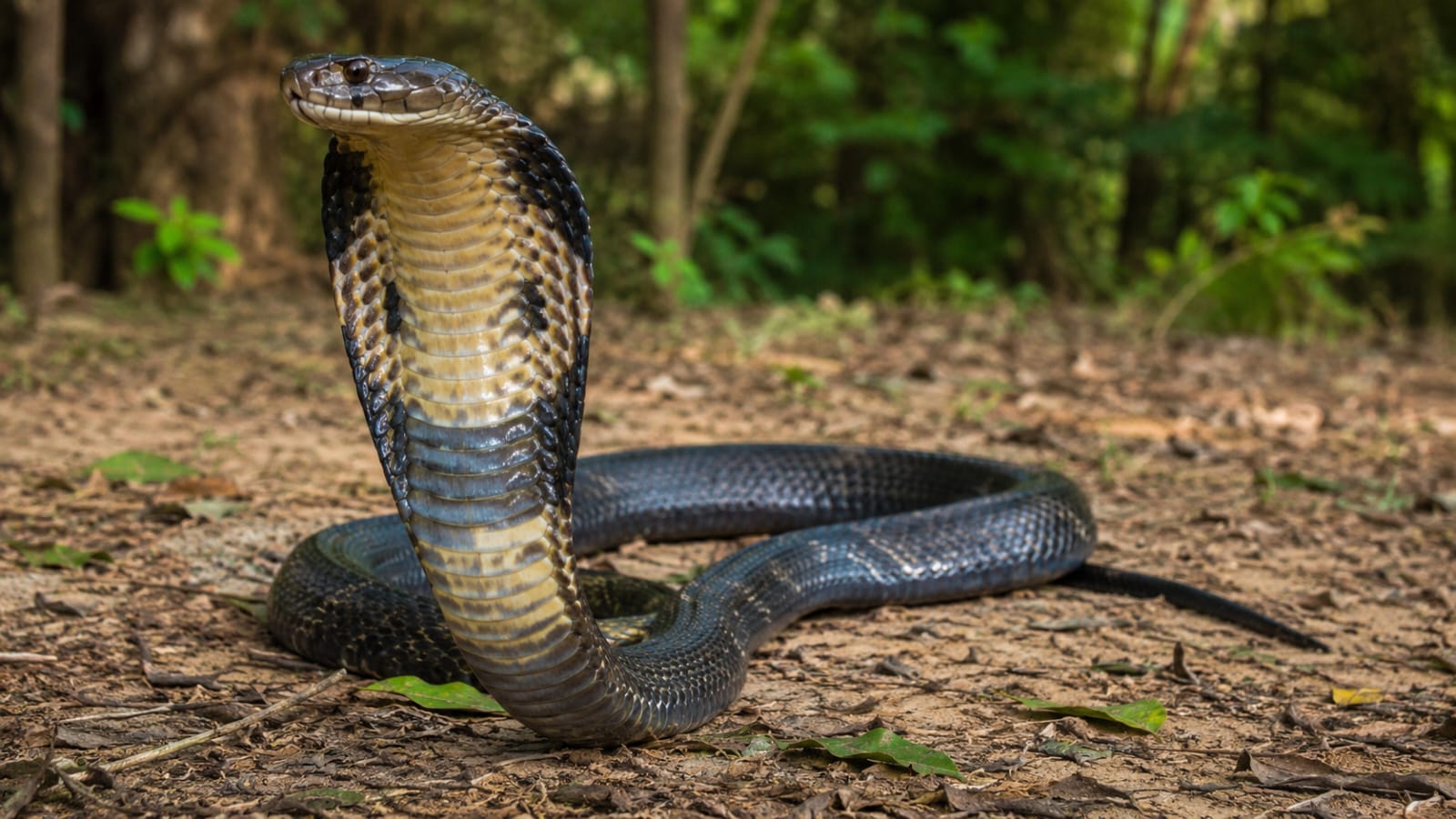
A massive 12-foot King Cobra caused alarm at Ambapur School in Odisha's Ganjam district on Wednesday before being successfully rescued and released into its natural habitat. The dramatic incident unfolded in the Patrapur block, drawing immediate attention and concern from both the local community and school administration. This rare sighting of such a large reptile within school premises underscored the delicate balance between human habitation and wildlife ecosystems in the region. The successful operation highlights the crucial role of trained wildlife rescuers in mitigating potential dangers and ensuring the safety of both humans and animals.
The presence of the colossal serpent was first noted within the school campus on Tuesday night, according to local reports. Its sheer size and the inherent danger associated with a King Cobra immediately prompted a wave of apprehension among residents. The discovery led to swift action, with local residents promptly alerting wildlife authorities to the unusual and potentially hazardous situation. The quick reporting mechanism proved vital in initiating a timely response to secure the area and plan for the reptile's safe removal.
Responding without delay to the urgent call, a member of the renowned Snake Helpline, an organization dedicated to snake rescue and rehabilitation, arrived at the scene. The expert undertook the challenging task of safely apprehending the formidable snake. Such operations require immense skill, patience, and a deep understanding of serpentine behaviour to ensure no harm comes to the animal or the rescuers. The successful capture brought a collective sigh of relief to the anxious school authorities and villagers who had gathered.
The King Cobra (Ophiophagus hannah) is the world's longest venomous snake, capable of reaching lengths of up to 18 feet. Known for its distinct hood and potent neurotoxic venom, it is a formidable apex predator primarily found in forests across Southeast Asia and parts of India. Despite its fearsome reputation, King Cobras are generally shy and reclusive, preferring to avoid human contact. They play a vital role in their ecosystem by controlling rodent and other snake populations, maintaining ecological balance. Their presence near human settlements often signals habitat encroachment or a search for food or water sources.
Incidents like the one at Ambapur School highlight the increasing instances of human-wildlife conflict, particularly in regions bordering dense forests or natural habitats. As human populations expand and encroach upon natural ecosystems, encounters with wild animals become more frequent. This often leads to fear and sometimes tragic outcomes for both humans and wildlife. The rescue operation in Ganjam serves as a poignant reminder of the necessity for coexistence and the implementation of effective strategies to manage such interactions responsibly.
The immediate and professional response by the Snake Helpline member was critical. Untrained attempts to capture or harm such a large and dangerous snake could have resulted in severe injury or even fatalities. Experts possess the necessary knowledge, equipment, and experience to handle venomous reptiles safely, ensuring their well-being and the security of the community. Public awareness campaigns often stress the importance of contacting trained professionals rather than attempting self-rescue in such situations.
Odisha, with its diverse geography ranging from coastal plains to dense forests, is home to a rich variety of wildlife, including numerous snake species. Encounters with snakes, including venomous ones, are not uncommon in rural and semi-urban areas of the state. Organizations like the Snake Helpline play an an indispensable role in educating the public, rescuing distressed reptiles, and relocating them to suitable habitats, thereby fostering a more harmonious relationship between humans and the natural world. Their consistent efforts contribute significantly to both wildlife conservation and public safety.
Following its successful rescue, the 12-foot King Cobra was carefully transported and subsequently released into a forest environment, far from human habitation. This crucial step ensures the snake's survival in its natural ecosystem while eliminating any further threat to the school community. Such responsible relocation practices are fundamental to wildlife conservation efforts, aiming to protect endangered species and maintain biodiversity. The incident underscores the importance of preserving natural habitats to minimize such conflicts.
The successful resolution brought immense relief to the residents of Patrapur block and the Ambapur School community. While the immediate danger has passed, the incident serves as a stark reminder for continued vigilance and awareness regarding wildlife presence in areas adjacent to forests. Educational initiatives on snake safety and the protocol for reporting sightings are essential to empower communities to react appropriately and safely in similar future encounters. The event concluded with a positive outcome, emphasizing the value of swift, expert intervention.