
German researchers set right the story of a 9,000-year-old shaman's grave
When a 9,000 year-old grave of a shaman was discovered in Nazi Germany, the discovery was quickly politicized to support Nazi propaganda. But new analysis shows that initial narrative was all wrong.
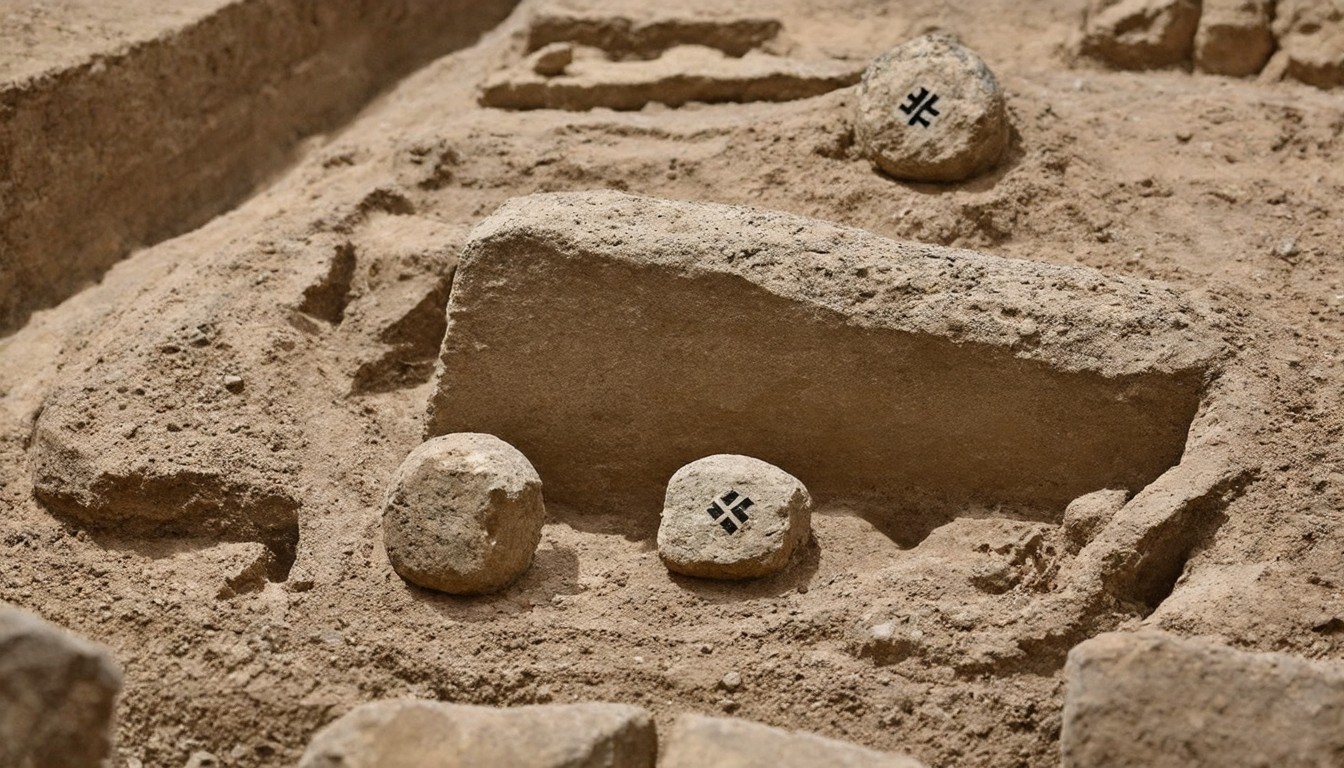
In a remarkable turn of events, German researchers have reexamined a 9,000-year-old shaman's grave that was initially misinterpreted and politicized during the Nazi era. The discovery, made in the 1930s, was co-opted by the regime to bolster their claims of a superior Aryan heritage. However, recent analysis of the artifacts and context surrounding the burial site has revealed that the original narrative was fundamentally flawed, shedding new light on the life and role of the individual buried there.
The grave, located in the region of Saxony-Anhalt, was first unearthed in 1933 by a team of archaeologists who were eager to provide historical evidence for the Nazi ideology. At the time, the Nazi regime was actively promoting the notion of a distinct Aryan race, and any archaeological findings that could be linked to this supposed race were given significant attention. The shaman's grave, with its elaborate burial goods, was seen as a perfect opportunity to reinforce this narrative.
The initial analysis focused on the grave's artifacts, which included intricately carved ivory objects and a wealth of jewelry. These items were interpreted as evidence of a high-status individual, possibly a leader or a religious figure, whose lineage could be traced back to the Aryan people. The Nazi propagandists seized upon this discovery, using it to argue that the Aryan race had a long and distinguished history in the region, predating the arrival of other ethnic groups.
However, the recent reevaluation of the grave has challenged these earlier conclusions. By employing modern technological tools, such as advanced imaging and computational analysis, the researchers have been able to gain a more nuanced understanding of the burial site. They have discovered that the grave's layout and the arrangement of the artifacts suggest a different social and religious context than previously thought.
One of the key findings is that the grave was not a solitary burial site but rather part of a larger communal burial ground. This indicates that the individual buried there was not an isolated figure but rather a member of a larger community. The artifacts, once seen as symbols of wealth and power, are now interpreted as indicators of a person who played a significant role within this community, likely as a shaman or a spiritual leader.
Furthermore, the researchers have challenged the earlier claims of Aryan lineage. By analyzing the genetic makeup of the remains, they have found that the individual buried in the grave did not belong to the same genetic group as the Aryan race as defined by the Nazis. Instead, the DNA analysis suggests that the individual was part of a population that had migrated into the region from a different area, possibly from the steppes of Eastern Europe.
This revised understanding of the shaman's grave not only corrects a historical misconception but also provides valuable insights into the social and cultural dynamics of a prehistoric society. The findings highlight the complexity of early human societies, which were likely more interconnected and diverse than previously assumed. They also underscore the dangers of politicizing archaeological discoveries, a practice that can lead to the distortion of historical truth.
The work of the German researchers serves as a reminder of the importance of objective and scientific analysis in archaeology. By setting aside ideological biases and relying on rigorous evidence, scholars can uncover the real stories of the past, free from the distortions of propaganda and prejudice. The reevaluation of the 9,000-year-old shaman's grave is a testament to the power of research to right historical injustices and reveal the truth about our ancestors.









