
From the blackboard to the backbenches: how physics teacher Dave Robertson became an MP
Matin Durrani talks to Dave Robertson, a politician who used to be a physics teacher The post From the blackboard to the backbenches: how physics teacher Dave Robertson became an MP appeared first on Physics World .
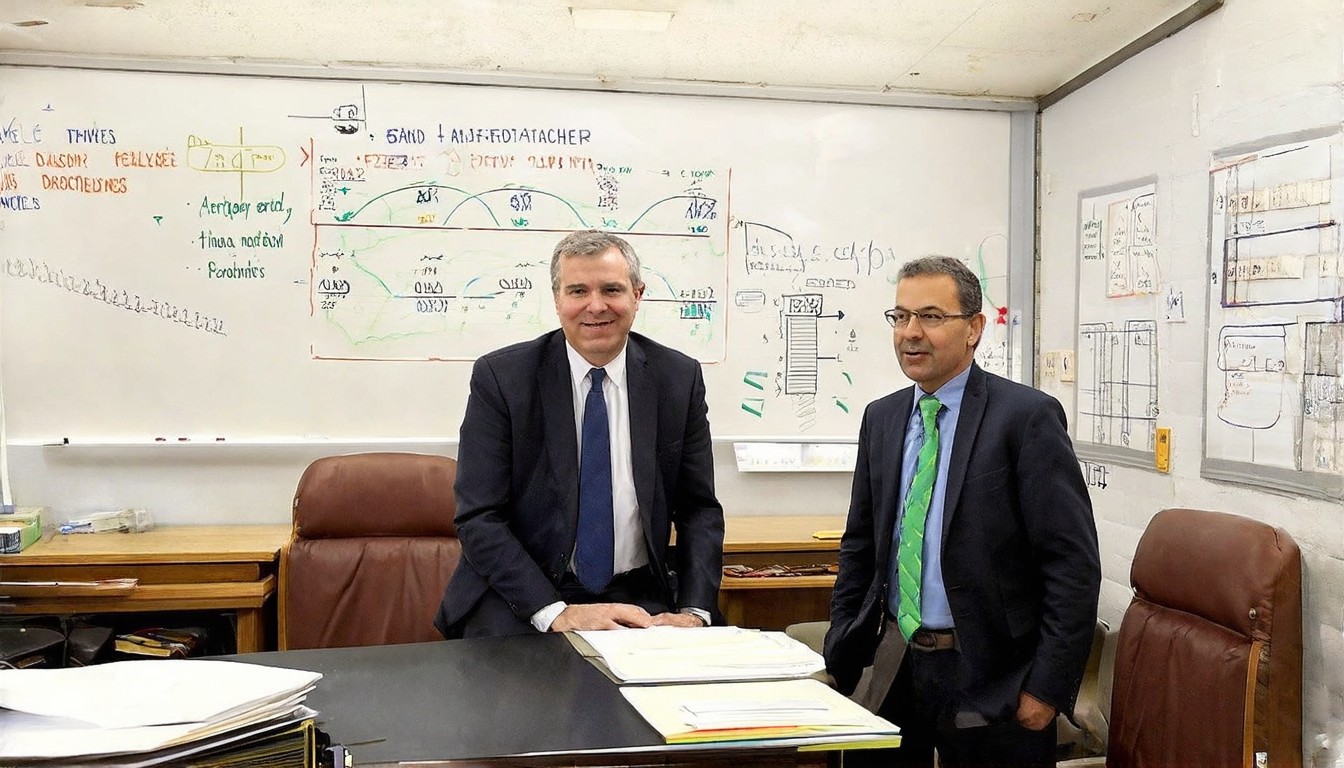
In a world where physicists often find themselves in the lab or classroom, the transition to politics is a rare journey. Yet, for Dave Robertson, a former physics teacher, this path became a reality. After a decade of teaching physics in Birmingham, Robertson embarked on a political journey that led him to become the Labour Member of Parliament (MP) for Lichfield, Burntwood, and the Villages in the 2024 general election.
Robertson's story is not unique in the realm of physicists entering politics, but it is unusual in its trajectory. While figures like Angela Merkel, Claudia Sheinbaum Pardo, and Alok Sharma have made their mark in politics, Robertson's journey from the classroom to the backbenches stands out. His decision to enter politics was not without its challenges, as he had little prior experience in the field.
Before his political career, Robertson studied physics at the University of Liverpool, where he developed a passion for the subject. After graduating, he dedicated nearly a decade to teaching physics in Birmingham schools. His experience in education and his commitment to the community laid the foundation for his political aspirations.
Robertson's entry into politics began with his involvement in the trade-union movement, where he gained valuable insights into the political landscape. This involvement eventually led him to local politics, where he honed his skills and built a reputation. In 2024, he ran for the Labour Party in the general election, facing a formidable opponent in Michael Fabricant, the incumbent Conservative MP who had represented the constituency for over 25 years.
The election results were a testament to Robertson's dedication and hard work. Despite the Conservative Party's stronghold in the area, Robertson managed to secure a narrow victory by just 810 votes. This victory marked a significant shift in the political dynamics of the region, as the Labour Party won a landslide majority in the 2024 general election, securing 174 additional seats.
In an interview with Physics World, Robertson candidly admitted to having little idea of what the job of an MP entailed. He described the British parliament as "a truly bonkers and bizarre workplace." Despite the challenges, Robertson has adapted well to his new role. He divides his time between his constituency in Lichfield and his duties in London, striving to balance his responsibilities as an MP.
Robertson's journey from the blackboard to the backbenches is a testament to the power of perseverance and a commitment to public service. He is not alone in his endeavors; other physicists, such as Layla Moran and Chris Philp, have also made their mark in politics. However, Robertson's path as a physics teacher turned MP is particularly noteworthy, as he represents the only physicist-turned-MP in the current Labour government.
As Robertson continues to serve his constituents, his story serves as an inspiration for those who believe in the power of education and the potential for change. His transition from teaching to politics highlights the diverse opportunities available to those who are passionate about making a difference. In a world where the intersection of science and politics is often overlooked, Robertson's journey underscores the importance of bridging these fields to drive meaningful change.








