From sacred relic to subject of controversy: Why the Shroud of Turin fuels debates over authenticity, narrative building, and attempts to link it to India
Researchers have discovered DNA traces from India on the famous linen cloth, which many believe to be the burial shroud of Jesus Christ.
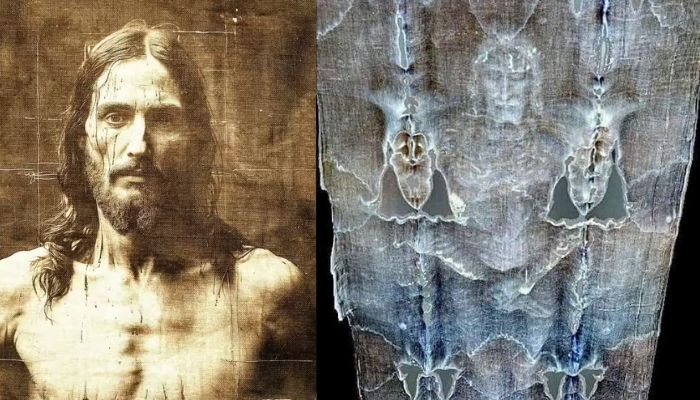
The Shroud of Turin, a piece of linen cloth bearing the faint image of a crucified man, has long been a subject of intense debate and fascination. Believed by many to be the burial shroud of Jesus Christ, the relic has captivated scholars, scientists, and the general public for centuries. Recently, new findings have reignited the controversy surrounding its origins, as researchers discovered DNA traces linked to India embedded within the cloth's fibers.
The latest development in the study of the Shroud of Turin began with a tweet from NDTV, which sparked widespread discussion online. The tweet highlighted a major scientific claim: advanced genetic testing had revealed both human and plant DNA from India on the cloth. Researchers from Italy analyzed material collected from the shroud and found that nearly 40% of the human DNA on the cloth is from Indian lineages. This startling discovery suggests that the shroud may have been woven in India or spent a significant amount of time there centuries before it surfaced in medieval Europe.
The study, published as a pre-peer-review paper on bioRxiv on March 31, 2026, has effectively reopened one of history's most debated mysteries. The findings blend faith, genetics, and global trade history into a single viral moment, prompting further exploration of the shroud's complex past.
The Shroud of Turin itself is a long piece of ancient linen cloth that bears a faint, almost ghost-like image of a man who appears to have been crucified. For centuries, many Christians have believed this cloth to be the burial shroud of Jesus Christ. The cloth first appeared in Europe in the 14th century and has since been preserved at the Cathedral of Saint John the Baptist in Turin, Italy. Over time, it has become one of the most studied and controversial religious artifacts in the world.
The discovery of Indian DNA traces on the shroud has fueled debates over its authenticity and the narrative surrounding its history. Some argue that the presence of Indian DNA could provide evidence of an earlier connection between the Middle East and South Asia, potentially linking the shroud to trade routes or cultural exchanges that are not well-documented in historical records. Others remain skeptical, pointing out that the shroud's history is already fraught with uncertainty and that new findings should be approached with caution.
The controversy surrounding the Shroud of Turin is not new. Over the years, numerous scientific studies have been conducted to determine its authenticity, with results ranging from claims of carbon dating inconsistencies to the detection of specific pollen grains and blood stains. Each new discovery has only served to deepen the mystery, as the shroud continues to defy easy categorization or explanation.
The recent findings of Indian DNA on the shroud have added another layer to this intricate tapestry of speculation. As the debate rages on, the Shroud of Turin remains a powerful symbol of faith and a fascinating object of scientific inquiry. Whether it is indeed the burial shroud of Jesus Christ or a piece of ancient linen with a captivating history, the shroud's enduring allure ensures that it will continue to captivate the world for generations to come.
In the face of these new revelations, the Shroud of Turin once again stands at the intersection of science, religion, and global history. As researchers and the public grapple with the implications of the Indian DNA traces, the shroud's enigmatic past continues to inspire debate and wonder, reminding us of the complex interconnections that have shaped our world throughout the centuries.