Focusing on fusion: Debbie Callahan talks commercial laser fusion
Plasma physicist Debbie Callahan , chief strategy officer at Focused Energy, talks to Hamish Johnston about her work in laser fusion research The post Focusing on fusion: Debbie Callahan talks commercial laser fusion appeared first on Physics World .
As global energy demands rise and the impact of climate change grows increasingly apparent, the quest for sustainable, clean energy production has intensified. This has led to a resurgence in research into fusion energy, a process that promises to revolutionize the way we generate power. Central to this effort is the International Thermonuclear Experimental Reactor (ITER), currently under construction in France, the world's largest fusion experiment. However, it is not the only project of its kind; numerous other large-scale facilities and academic research projects are also advancing the field. In addition, a growing number of smaller commercial companies are joining the race to harness the potential of fusion energy.
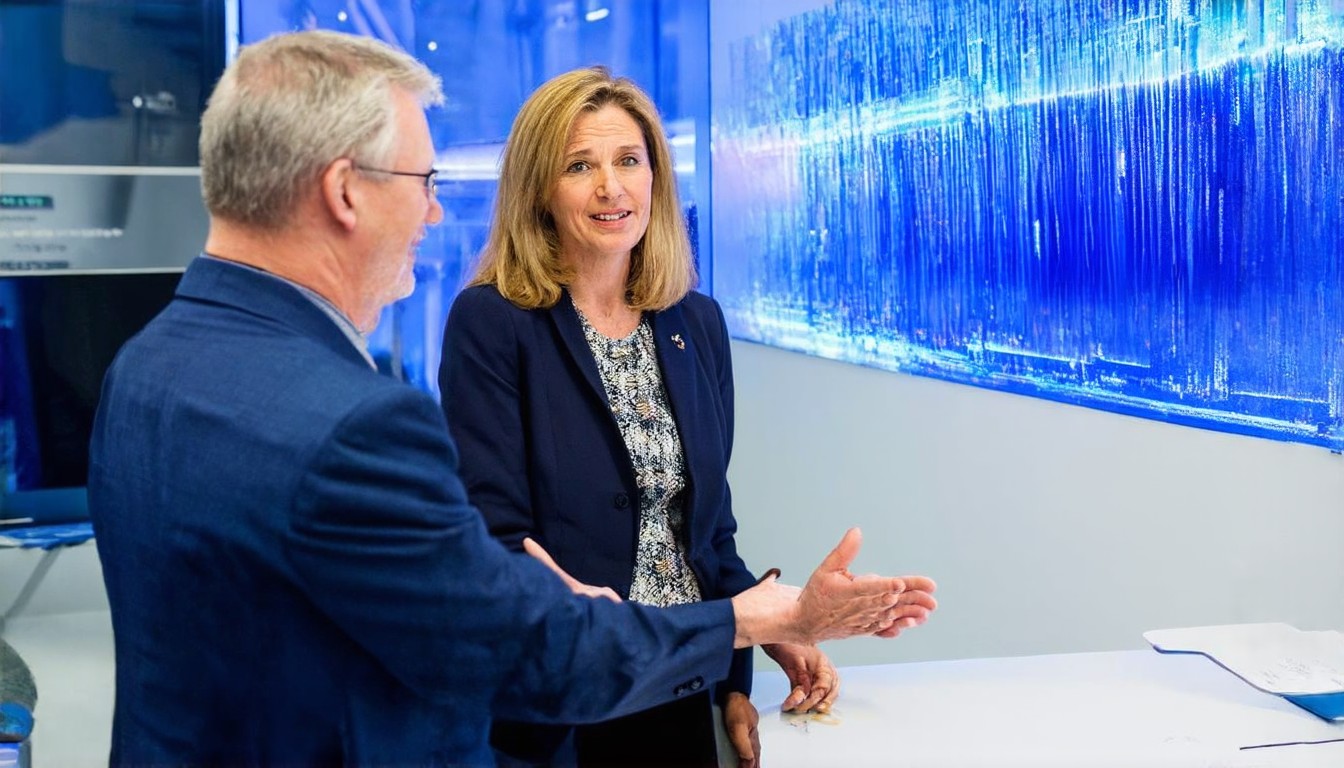
Among the key figures driving this fusion renaissance is Debbie Callahan, a plasma physicist with 35 years of experience at the National Ignition Facility (NIF) at Lawrence Livermore National Laboratory in the United States. Today, Callahan serves as the chief strategy officer at Focused Energy, a laser-fusion company based in Germany and California. Focused Energy is working to generate energy through the laser-driven fusion of hydrogen isotopes, a promising avenue that could pave the way for commercial fusion.
In a recent conversation with Hamish Johnston, online editor of Physics World, Callahan discussed her experiences in the fusion sector, the research and technology being developed by Focused Energy, and the career opportunities available in this dynamic field. The following is an edited extract of their conversation, which can be heard in full on the Physics World Weekly podcast.
When asked about the differences between the approach to fusion used by the National Ignition Facility (NIF) and that of magnetic confinement facilities like ITER, Callahan explained that both methods aim to achieve fusion by meeting the "triple product" requirements: sufficient plasma density, temperature, and confinement time. However, magnetic fusion systems like ITER use low-density plasmas that are held for extended periods using magnetic fields, while inertial fusion, as pursued by NIF, relies on high-density plasmas that are confined for very short durations.
"In a magnetic fusion system like ITER, you have a low-density plasma, but you hold it for a long time," Callahan said. "You do that by using magnetic fields that trap the plasma and keep it from escaping. In contrast, inertial fusion, as practiced at NIF, uses high-density plasmas that are compressed and heated extremely rapidly, typically using powerful lasers. The goal is to achieve fusion before the plasma has time to expand and lose its energy."
Callahan's extensive experience at NIF has provided valuable insights into the challenges and opportunities of inertial fusion. She noted that while magnetic confinement fusion has made significant progress, particularly with ITER, the path to commercial viability remains uncertain. In contrast, laser-driven inertial fusion, as pursued by Focused Energy, offers a different approach that could offer advantages in terms of scalability and cost.
"Laser-driven fusion has the potential to be more scalable and perhaps more cost-effective than magnetic confinement fusion," Callahan explained. "The technology is still in its early stages, but we believe that advancements in laser systems and plasma physics could lead to significant breakthroughs in the near future."
Focused Energy's research focuses on developing the technology needed to achieve net energy gain from laser-driven fusion, a milestone that has eluded scientists for decades. The company is working on improving the efficiency of laser systems, optimizing plasma confinement, and developing innovative approaches to energy capture and conversion.
In addition to the technical challenges, Callahan highlighted the importance of fostering a skilled workforce to support the growth of the fusion industry. She emphasized the need for collaboration between academia, industry, and government to create a robust ecosystem that nurtures talent and drives innovation.
"The fusion sector is poised for significant growth, and we need to invest in the people who will shape its future," Callahan said. "This includes not only physicists and engineers but also specialists in areas such as materials science, computer modeling, and project management. By creating opportunities for young professionals to enter the field and collaborating across sectors, we can ensure that the fusion industry has the talent it needs to succeed."
As the fusion research landscape continues to evolve, the contributions of individuals like Debbie Callahan and companies like Focused Energy are crucial in pushing the boundaries of what is possible. With a growing number of projects and initiatives underway, the prospect of achieving commercial fusion—and the clean, virtually limitless energy it promises—is becoming increasingly within reach.
In conclusion, the fusion energy sector is experiencing a renaissance, driven by both large-scale experimental projects and the emergence of commercial companies like Focused Energy. Debbie Callahan's work at the forefront of laser-driven fusion research underscores the potential of this technology to revolutionize energy production. As the field progresses, it will be essential to continue fostering collaboration, investing in talent, and overcoming the technical challenges that remain. With dedication and innovation, fusion could soon become a reality, offering a sustainable path to meeting the world's energy needs while mitigating the impacts of climate change.