Explosives found near pipeline that carries Russian gas to Hungary
Hungarian Prime Minister Viktor Orban called an emergency defense council meeting on Sunday after powerful explosives were found near a pipeline in Serbia that carries Russian gas to the…
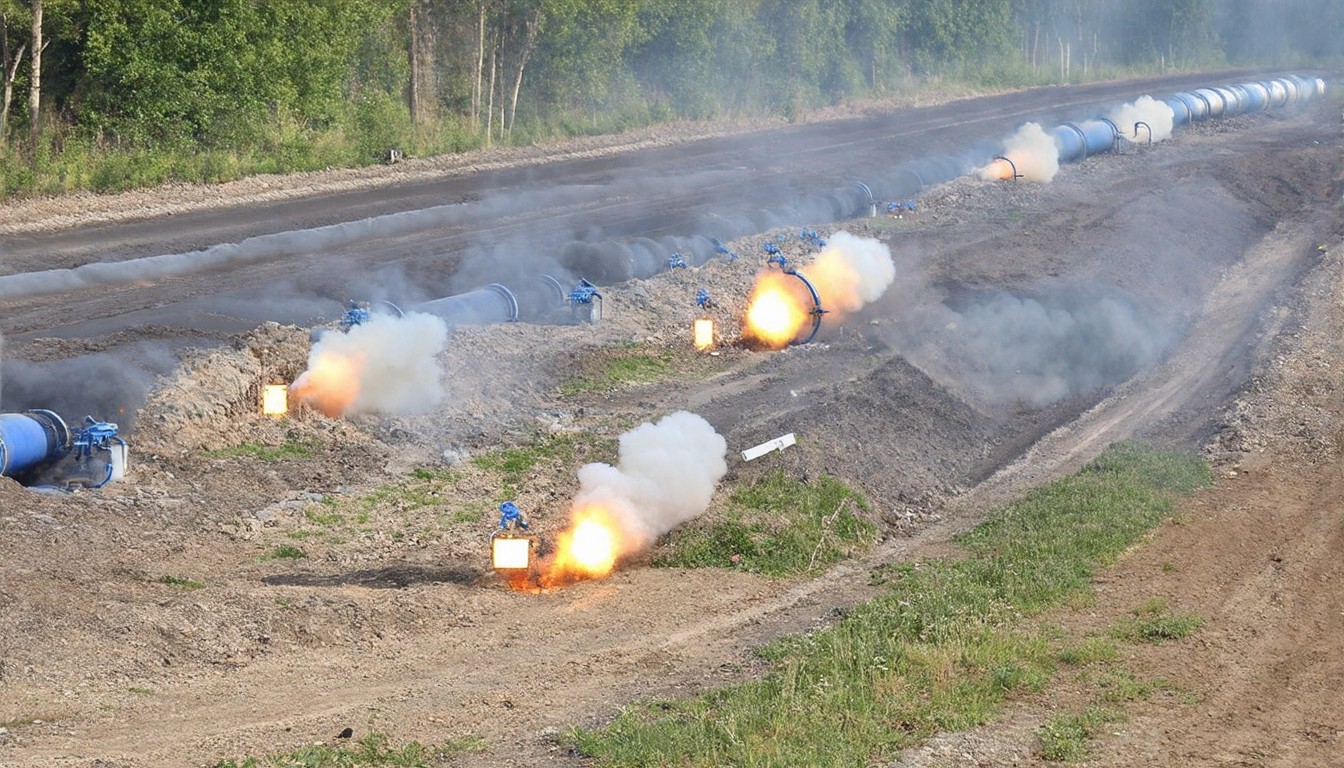
Hungarian Prime Minister Viktor Orban convened an emergency defense council meeting on Sunday following the discovery of powerful explosives near a pipeline in Serbia that transports Russian gas to Hungary. The incident has raised concerns about the security of the region's energy infrastructure and the stability of gas supplies to Hungary.
The pipeline, which runs through Serbia, is a critical route for Russian natural gas to reach Hungary and other European countries. The explosives were found in a remote area near the pipeline, prompting immediate investigations by Serbian authorities and Hungarian officials. Orban's decision to call the emergency meeting underscores the seriousness of the situation and the need for coordinated action to ensure the safety of the pipeline and the continuity of gas supplies.
The discovery of explosives has sparked speculation about the motives behind the act. Some analysts suggest it could be an attempt to disrupt gas supplies to Hungary, potentially impacting energy security in the region. Others speculate that the incident might be linked to broader geopolitical tensions, particularly given Hungary's close ties with Russia and its opposition to some of the sanctions imposed on Moscow.
Serbian authorities have launched an investigation into the incident, with initial reports indicating that the explosives were placed near the pipeline but not yet detonated. The Serbian government has assured that the pipeline remains operational and that gas supplies to Hungary are unaffected. However, the discovery has raised questions about the security measures in place to protect critical infrastructure in the region.
Hungarian officials have emphasized the importance of maintaining close cooperation with Serbian authorities to identify those responsible for the act and prevent any potential disruptions to gas supplies. Orban's emergency defense council meeting is expected to focus on assessing the situation, reviewing security measures, and developing contingency plans to ensure the stability of Hungary's energy supply.
The incident has also drawn attention to the vulnerability of energy infrastructure in Europe, particularly in the context of ongoing geopolitical tensions. With many European countries reliant on Russian gas supplies, the security of pipelines and other infrastructure becomes a matter of significant concern. The discovery of explosives near the pipeline in Serbia serves as a stark reminder of the potential risks and the need for robust security measures to protect critical energy assets.
In the aftermath of the discovery, Hungarian officials are likely to reevaluate their energy policies and consider diversifying their gas supplies to reduce dependence on a single source. This could involve exploring alternative energy sources or expanding existing partnerships with other countries. The incident may also prompt Hungary to strengthen its cooperation with neighboring countries and international organizations to enhance the security of energy infrastructure in the region.
As the investigation continues, the focus will remain on ensuring the safety of the pipeline and the continuity of gas supplies to Hungary. The discovery of explosives near the pipeline highlights the complex challenges faced by European countries in maintaining energy security amidst shifting geopolitical dynamics. The emergency meeting convened by Prime Minister Orban is a clear indication of the seriousness with which Hungary approaches this issue and its commitment to safeguarding the country's energy interests.