Explore use of snakes and crocodiles in border rivers, BSF tells units
Parts of the Bangladesh border are prone to floods and the topography makes it difficult to erect fences
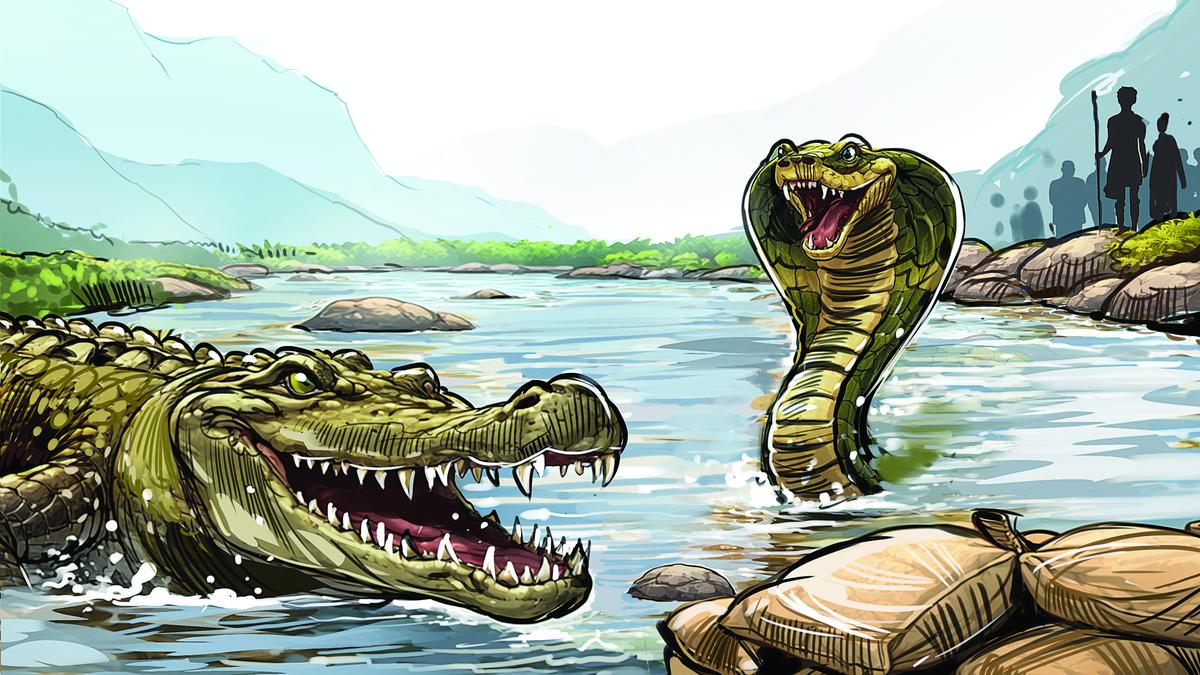
The Indian Border Security Force (BSF) has recently issued instructions to its units to explore the use of snakes and crocodiles as a natural deterrent in border rivers along the India-Bangladesh border. This unconventional approach stems from the challenges posed by the region's topography and frequent floods, which have made it difficult to construct traditional fencing systems.
The India-Bangladesh border, particularly in the northeastern states of West Bengal and Tripura, is known for its complex geography and frequent natural disasters. The region's rivers, such as the Gumani and the Kalni, often swell during the monsoon season, causing floods that inundate large areas and disrupt existing infrastructure. This has made it challenging for the BSF to maintain effective border security through conventional means.
In response to these challenges, the BSF has turned to nature for assistance. The force has tasked its units with studying the feasibility of utilizing snakes and crocodiles as a natural deterrent to prevent unauthorized crossings. The idea is to leverage the fear and respect these creatures instill in potential intruders, deterring them from attempting to cross the border illegally.
The BSF has identified several species of snakes and crocodiles that are native to the region and could serve this purpose. Among the snakes considered are the highly venomous Russell's viper and the highly venomous kraits, both of which are commonly found in the area. Crocodiles, particularly the mugger crocodile, are also being considered due to their size and reputation as formidable predators.
The BSF's decision to explore this approach is not without its controversies. Critics argue that relying on wildlife for border security could lead to unintended consequences, such as endangering the species or causing harm to innocent civilians. However, proponents of the idea maintain that the benefits of enhanced border security outweigh these concerns. They argue that the presence of these animals would serve as a visual and psychological deterrent, discouraging potential intruders from even attempting to cross the border.
In addition to their role as a deterrent, snakes and crocodiles could also provide valuable intelligence to the BSF. By monitoring the animals' behavior and movements, security forces could gain insights into potential threats and activities along the border. This would allow them to respond more effectively to any attempts at unauthorized crossings.
The BSF has already begun pilot projects in select areas to assess the effectiveness of this approach. Initial reports suggest that the presence of snakes and crocodiles has indeed deterred some would-be intruders. However, the long-term success of this strategy remains to be seen. The force is closely monitoring the situation and adjusting its tactics as needed to ensure the safety of both its personnel and the local population.
As the BSF continues to explore the use of snakes and crocodiles as a natural deterrent, it is clear that the challenges posed by the region's topography and frequent floods are pushing security forces to think creatively about border protection. While this approach may be unconventional, it represents an innovative effort to adapt to the unique challenges faced along the India-Bangladesh border.
In conclusion, the Indian Border Security Force's decision to explore the use of snakes and crocodiles as a natural deterrent in border rivers highlights the need for innovative solutions in the face of complex geographical and environmental challenges. As the force continues to implement and evaluate this strategy, it will be interesting to see how effectively these animals can contribute to enhancing border security in a region that is notoriously difficult to protect.