
Ex-CIA director says U.S. needs to learn "new concept of warfare" from Ukraine
Ex-CIA director David Petraeus says Ukraine has offset its disadvantages against Russia through its innovation in its unmanned systems.
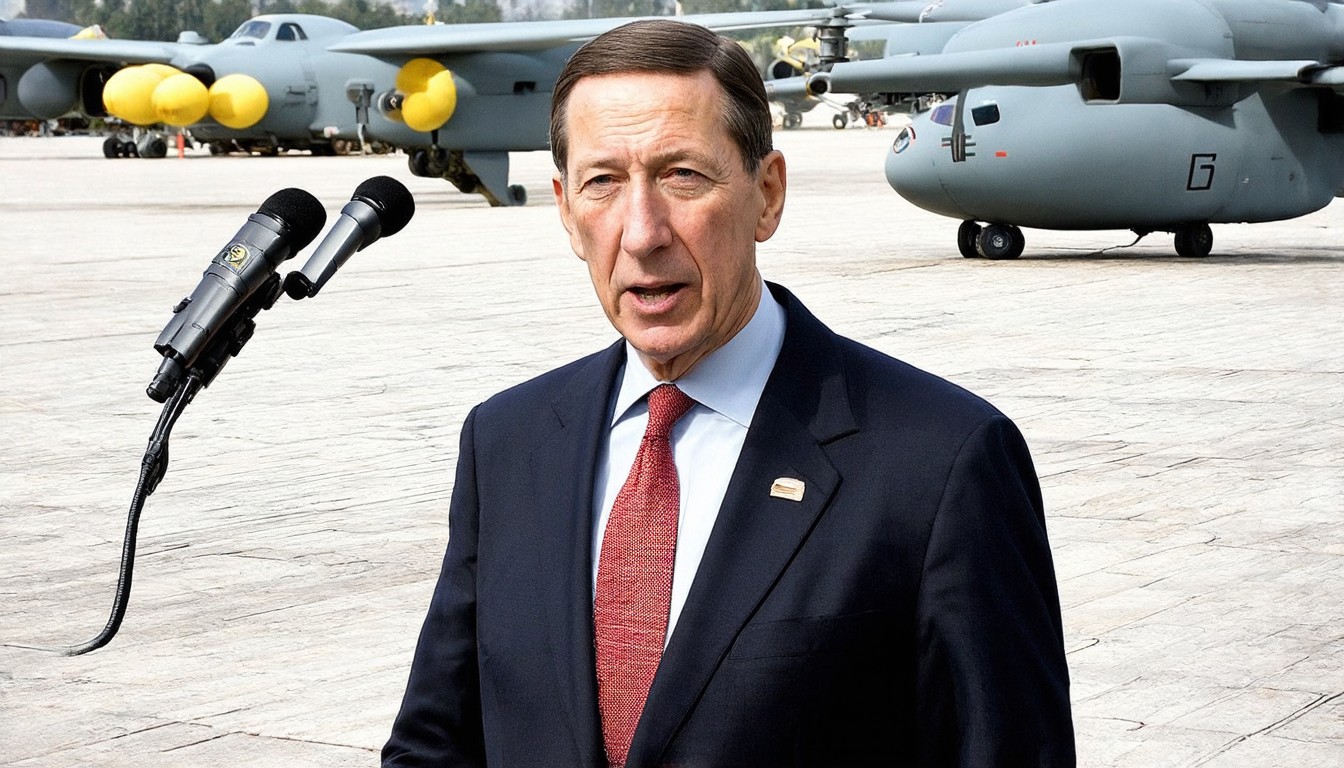
Former CIA director David Petraeus has recently called for the United States to adopt a "new concept of warfare" by learning from Ukraine's innovative use of unmanned systems in its conflict with Russia. In a series of remarks, Petraeus highlighted how Ukraine has managed to overcome significant disadvantages by leveraging technological advancements, particularly in the realm of drones and other unmanned aerial vehicles (UAVs).
Petraeus's comments come as Ukraine continues to face a formidable adversary in the form of Russia, a country with a far larger and more conventional military. Despite this, Ukraine has demonstrated remarkable resilience and strategic ingenuity, particularly in its ability to utilize drones and other unmanned systems to counter Russian forces. This has not only bolstered Ukraine's military capabilities but has also provided valuable lessons for nations like the United States, which are grappling with the evolving nature of modern warfare.
One of the key areas where Ukraine has excelled is in the development and deployment of drones. These unmanned aerial vehicles have proven to be invaluable in various capacities, from reconnaissance to direct combat support. By utilizing drones, Ukraine has been able to gather critical intelligence on Russian troop movements and positions, allowing its forces to respond more effectively. Additionally, drones have enabled Ukraine to conduct precision strikes with minimal risk to its own personnel, significantly reducing the human cost of conflict.
Furthermore, Ukraine's innovative use of drones has also disrupted Russian logistics and communication networks. By targeting supply lines and communication hubs, Ukraine has been able to hinder the Russian military's ability to maintain its operations, forcing them to adapt and rethink their strategies. This has not only put a strain on Russian forces but has also demonstrated the potential of unmanned systems to reshape the battlefield dynamics.
Petraeus's call for the U.S. to learn from Ukraine's example underscores the importance of adapting to the changing landscape of modern warfare. As traditional military strategies and technologies become increasingly obsolete, nations must embrace new concepts and technologies to remain competitive. The U.S., in particular, has long been a leader in military innovation, but it is crucial that it continues to stay ahead by studying and integrating lessons from conflicts such as the one in Ukraine.
Moreover, Petraeus's remarks highlight the broader implications of Ukraine's success in leveraging unmanned systems. As the world becomes increasingly interconnected and as the threat of hybrid warfare grows, the ability to adapt and innovate will be key to national security. By adopting a "new concept of warfare," the U.S. can ensure that it remains a formidable force on the global stage, capable of responding to a wide range of threats and challenges.
In conclusion, the insights provided by former CIA director David Petraeus serve as a stark reminder of the importance of innovation and adaptability in modern warfare. Ukraine's success in utilizing unmanned systems to counter a more powerful adversary demonstrates the potential of technology to level the playing field and redefine battlefield strategies. As the U.S. and other nations look to the future, it is imperative that they heed Petraeus's call and embrace a new concept of warfare, one that prioritizes technological advancement and strategic ingenuity. Only then can they ensure their continued ability to protect their interests and safeguard global stability in an ever-evolving security environment.








