Entanglement reveals the difficulty of computational problems
Efficiency and hardness of a computation problem are revealed The post Entanglement reveals the difficulty of computational problems appeared first on Physics World .
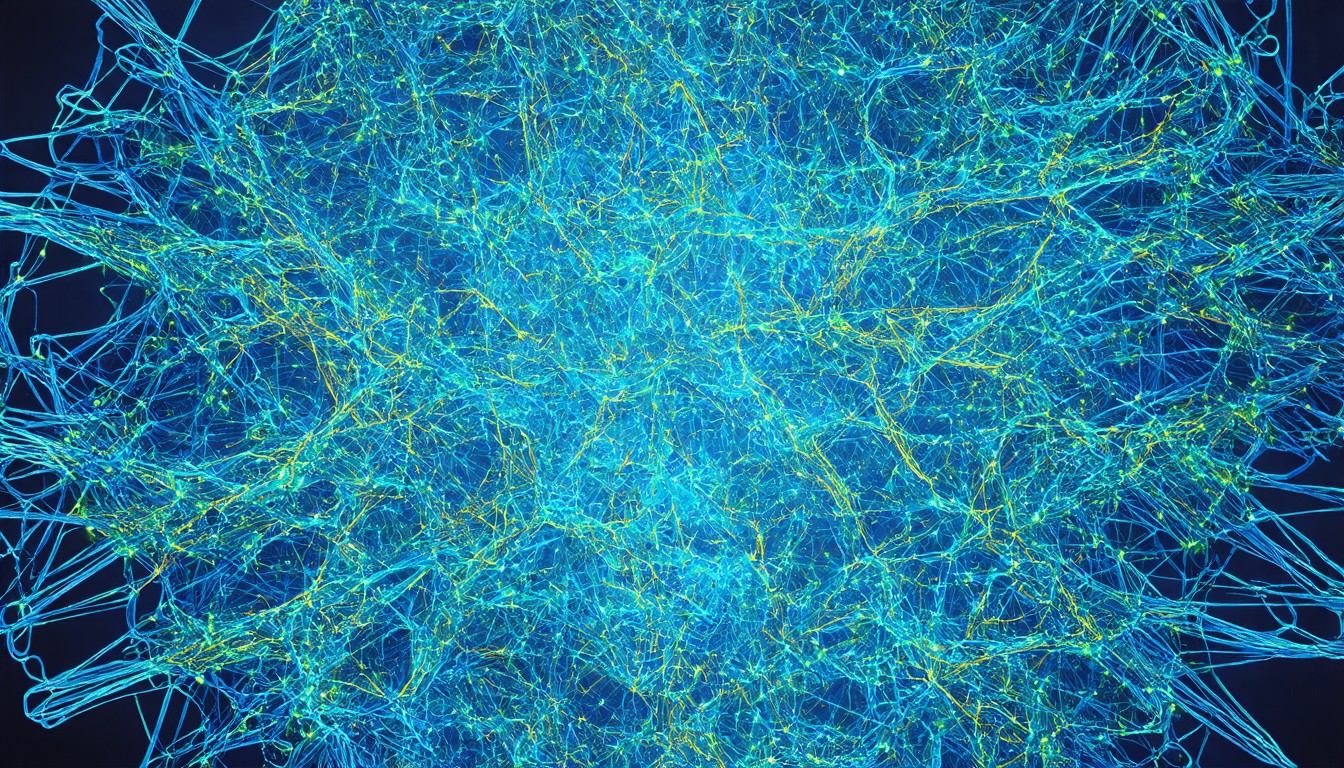
Entanglement, a fundamental concept in quantum mechanics, has long been recognized as a critical resource for quantum computing and various quantum technologies. However, a recent study by applied mathematicians Achim Kempf and Einar Gabbassov from Canada's University of Waterloo, affiliated with the Institute for Quantum Computing and the Perimeter Institute for Theoretical Physics, reveals that entanglement can also provide insights into the computational complexity of problems. Their findings, published in Quantum Science and Technology, highlight the role of entanglement in determining both the efficiency and hardness of quantum computation problems, particularly in the context of adiabatic quantum computing.
Adiabatic quantum computing is a model that represents a computational problem as a landscape of hills and valleys. Each point on this landscape represents a candidate solution to the problem, which could range from a configuration of possible states of three qubits to a complex issue like optimizing truck routes or designing pharmaceutical molecules. The actual solution to the problem corresponds to the lowest energy point, or minima, in this landscape. The challenge arises when the landscape is rugged, with multiple valleys, as the algorithm may get trapped in a local minimum that is not the global solution.
In classical computing, overcoming this issue requires exhaustively checking every possible valley to find the deepest one. However, Kempf and Gabbassov demonstrate that entanglement in adiabatic quantum computing allows the system to keep track of all valleys simultaneously, connecting them internally. This means that when one part of the landscape shifts, the entire landscape is affected at once, enabling the system to explore multiple possibilities in parallel. This quantum advantage contrasts with classical computing, where many possibilities simply mean making many independent guesses about the deepest valley.
The researchers' analysis underscores the intrinsic connection between entanglement and computational complexity. By examining how entanglement influences the structure of the landscape in adiabatic quantum computing, they provide a framework for understanding the efficiency and hardness of solving problems using quantum algorithms. This insight not only deepens our understanding of quantum computing but also offers a new perspective on the nature of computational problems themselves.
In conclusion, the study by Kempf and Gabbassov reveals that entanglement, a cornerstone of quantum mechanics, plays a pivotal role in determining the computational difficulty of problems. By illustrating how entanglement enables quantum systems to navigate complex landscapes more efficiently than classical counterparts, the researchers shed light on the potential and limitations of quantum computing. As quantum technologies continue to evolve, this work highlights the importance of entanglement as both a resource and a tool in the quest to solve some of the most challenging computational problems of our time.