
Endangered salmon returned to California’s far north — then the money dried up
Two years ago, Gov. Gavin Newsom unveiled a strategy to save declining salmon — spotlighting a historic partnership with the Winnemem Wintu Tribe to reintroduce endangered winter-run Chinook to the vital, cold waters upstream of Lake Shasta in far northern California.  Now, tribe officials say the state is ending its support, potentially causing salmon restoration […]
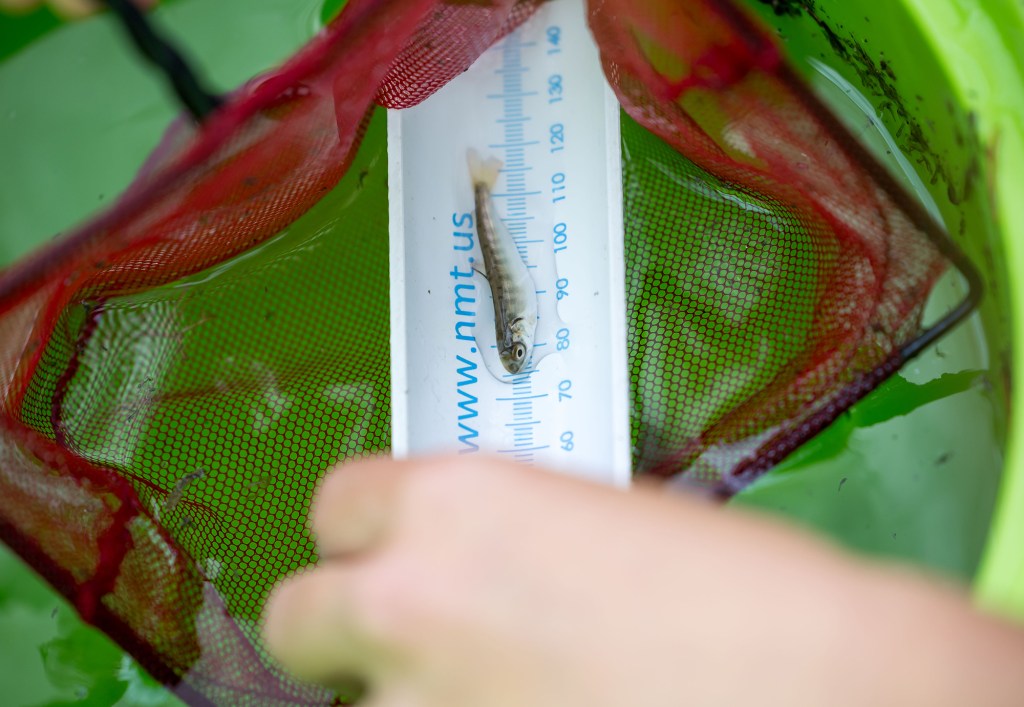
Two years ago, Governor Gavin Newsom announced a groundbreaking plan to save the declining salmon populations in California, particularly focusing on the endangered winter-run Chinook salmon. At the heart of this strategy was a historic partnership with the Winnemem Wintu Tribe, which aimed to reintroduce these salmon into the vital, cold waters upstream of Lake Shasta in far northern California. The initiative was seen as a beacon of hope for both the environment and the tribe, whose cultural identity is deeply tied to the salmon.
However, recent developments have cast a shadow over these efforts. Tribe officials have revealed that the state is withdrawing its financial support, potentially causing the salmon restoration project on the McCloud River to falter midway through. The sudden loss of state funding has left the tribe grappling with job losses and a diminishing chance of restoring the culturally significant fish to their ancestral waters.
Gary Mulcahy, the government liaison for the Winnemem Wintu Tribe, expressed his feelings of betrayal and disappointment. "It makes me feel betrayed. It makes the tribe feel betrayed," he said. "It's like they just gave up." The state officials, however, clarified that the funding was a one-time allocation tied to the state's drought response and has now been depleted. Stephen Gonzalez, a spokesperson for the California Department of Fish and Wildlife, stated in an email that the pilot program was designed to take urgent action during severe drought conditions while testing key tools and approaches needed for potential long-term reintroduction.
The urgency of the situation cannot be overstated. Federal scientists classify the Sacramento River's winter-run Chinook salmon as "one of the most at-risk endangered species." These salmon have been cut off from their historic higher elevation cold-water spawning grounds due to the Shasta and Keswick dams, trapping them in the Sacramento River for decades. In this warmer environment, the fish's eggs are often cooked by the river's temperature.
Maintaining a cold enough water temperature for the salmon's eggs puts constraints on how much water federal managers can release from Lake Shasta, which is a critical irrigation source for Central Valley farmers. Carson Jeffries, a senior researcher at the UC Davis Center for Watershed Sciences, highlighted the dilemma. "We are forcing the fish to be in places where they never were historically," he said. "When we have all those eggs in one basket, you are one really warm event from losing that cohort of fish."
The Winnemem Wintu Tribe and environmental experts have been working tirelessly to find solutions, but the sudden withdrawal of state support has left them scrambling to keep the project afloat. The future of the salmon restoration efforts on the McCloud River now hangs in the balance, as the tribe and scientists race against time to find alternative funding and strategies to ensure the survival of this endangered species. The stakes are high, not only for the salmon but also for the cultural heritage and way of life of the Winnemem Wintu Tribe, whose existence has long been intertwined with the health of the river and its ecosystem.








