Elisabeth Waldo Dies at 107; Fused Indigenous and Western Music
A classically-trained violinist, she incorporated traditional instruments native to Latin America in Western-style scores to create an atmospheric hybrid.
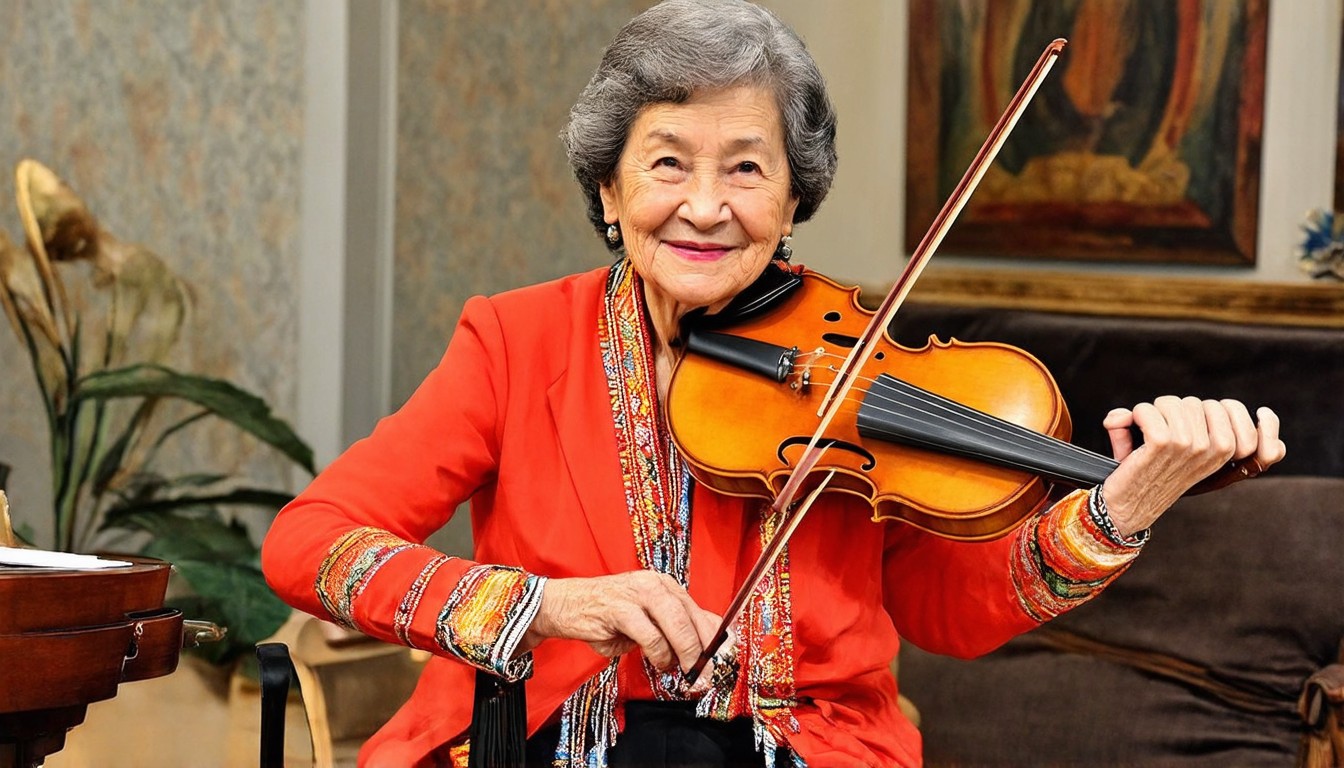
Elisabeth Waldo, a pioneering musician and composer who blended traditional Latin American instruments with Western classical music, passed away at the age of 107. Her innovative approach to music creation fused indigenous sounds with sophisticated Western compositions, resulting in a unique sonic landscape that captivated audiences worldwide.
Born in 1916, Waldo grew up in a family deeply connected to the arts. Her early exposure to music led her to pursue a formal education in violin at the prestigious Curtis Institute of Music in Philadelphia. There, she honed her classical skills, mastering the intricacies of European composers like Beethoven and Mozart. However, her passion for the rich cultural tapestry of Latin America would soon shape her musical identity.
In the 1940s, Waldo traveled to South America, where she immersed herself in the region's diverse musical traditions. She was particularly drawn to the indigenous instruments such as the quena, the charango, and the maracas, each with its own distinct timbre and cultural significance. Intrigued by these sounds, Waldo began to integrate them into her compositions, creating a fusion that was both groundbreaking and deeply personal.
Waldo's innovative spirit led her to reimagine traditional Latin American melodies through the lens of Western classical music. She composed pieces that featured the quena alongside the violin, or wove intricate rhythms from the maracas into symphonic scores. Her work not only bridged musical cultures but also highlighted the universal language of music.
One of her most celebrated compositions, "Sonidos de la Tierra," is a testament to her artistic vision. This piece blends the haunting beauty of the quena with the lush textures of a full orchestra, creating an atmospheric experience that transports listeners to the heart of the Andes. Over the years, Waldo performed her works across the globe, from Carnegie Hall to theatres in Bogotá and Buenos Aires, inspiring a new generation of musicians to explore the boundaries of musical expression.
Waldo's legacy extends beyond her compositions. She dedicated much of her life to mentoring young artists, encouraging them to embrace their cultural roots while pushing the boundaries of their creativity. Her teachings emphasized the importance of listening, both to the music of the past and the sounds of the present, and her students carried this ethos forward in their own work.
Elisabeth Waldo's passing marks the end of an era, but her musical contributions will continue to resonate. Her ability to merge indigenous and Western traditions in a way that felt both authentic and innovative has left an indelible mark on the world of music. As we celebrate her life and artistry, we are reminded of the power of music to transcend cultural divides and connect people across continents.
In her later years, Waldo often reflected on her journey, noting that her music was a reflection of her belief in the interconnectedness of all cultures. She saw her compositions as a bridge, one that invited listeners to experience the richness of different musical worlds. Today, her work serves as a testament to the enduring impact of that vision.
Elisabeth Waldo's life and music will be sorely missed, but her legacy will live on through the countless lives she touched and the unique sonic world she created. As we mourn her passing, we are also filled with gratitude for the gift of her artistry and the inspiration she provided to those who sought to explore the infinite possibilities of music.