
Eight ‌Muslim-majority countries 'strongly condemn' Israel's new death penalty law
Eight ‌Muslim-majority countries have "strongly condemned" a new Israeli law that makes death by hanging ​a default ‌sentence for Palestinians convicted ​in military courts of deadly attacks.
Eight Muslim-majority countries have "strongly condemned" a new Israeli law that makes death by hanging a default sentence for Palestinians convicted in military courts of deadly attacks. The move comes as tensions in the region continue to escalate, with both sides accusing each other of violating human rights and international law.
The law, which was passed by the Israeli government earlier this month, has been widely criticized by human rights organizations and international bodies. Critics argue that the death penalty is a cruel and unusual punishment that should be abolished in all circumstances. They also point out that the law disproportionately affects Palestinians, who are more likely to face military trials and harsher sentences than Israeli citizens.
In a joint statement, the eight countries—Algeria, Egypt, Iraq, Jordan, Lebanon, Morocco, Tunisia, and Turkey—called for the Israeli government to repeal the law and respect the rights of Palestinians. They emphasized that the death penalty is a violation of international human rights law and that it undermines efforts to achieve peace and stability in the region.
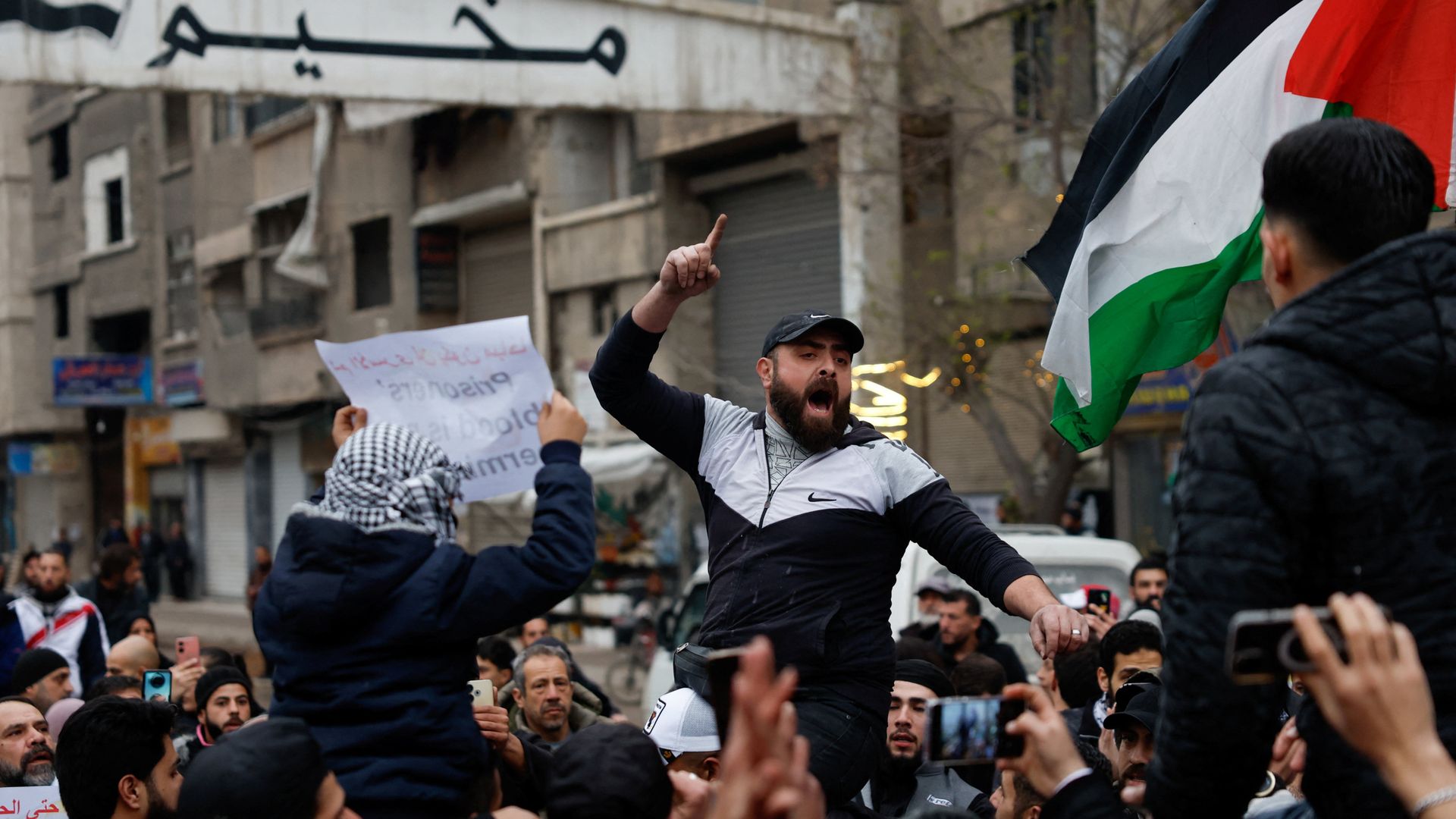
The condemnation comes as protesters continue to gather in various parts of the Muslim world, expressing solidarity with the Palestinian cause. In Syria, for example, hundreds of people demonstrated outside the Yarmouk refugee camp in Damascus, demanding an end to Israeli aggression and the immediate withdrawal of Israeli forces from Palestinian territories.
Israeli officials have defended the law, arguing that it is necessary to protect the lives of its citizens. They maintain that the law is a deterrent against terrorism and that it is applied equally to all those found guilty of serious crimes. However, critics argue that the law is disproportionate and that it serves to further entrench Israeli control over Palestinian territories.
The situation in the region remains tense, with both sides accusing each other of violating human rights and international law. The new Israeli law has only added to the existing tensions and has sparked widespread condemnation from Muslim-majority countries and human rights organizations around the world.
As the situation continues to escalate, there is a growing call for international intervention to help broker a peaceful resolution. However, achieving such a resolution will require both sides to be willing to compromise and to respect the rights of all individuals, regardless of their nationality or religion.
In the meantime, the condemnation from Muslim-majority countries serves as a reminder of the broader implications of the Israeli-Palestinian conflict. It highlights the need for a comprehensive approach that addresses not only the immediate humanitarian crisis but also the underlying political and social factors that contribute to the ongoing violence and instability in the region.
As the situation continues to evolve, it remains to be seen whether the international community can find a way to mediate a lasting peace between Israelis and Palestinians. Until then, the condemnation from Muslim-majority countries will continue to underscore the urgent need for action to address the human rights violations and promote a just and sustainable resolution to the conflict.








