
Droplet scientists push the boundary between living and non-living matter
Systems governed by chemistry and physics, not biology, can behave in surprisingly lifelike ways, as Giorgio Volpe, Rob Malinowski and Joe Forth explain The post Droplet scientists push the boundary between living and non-living matter appeared first on Physics World .
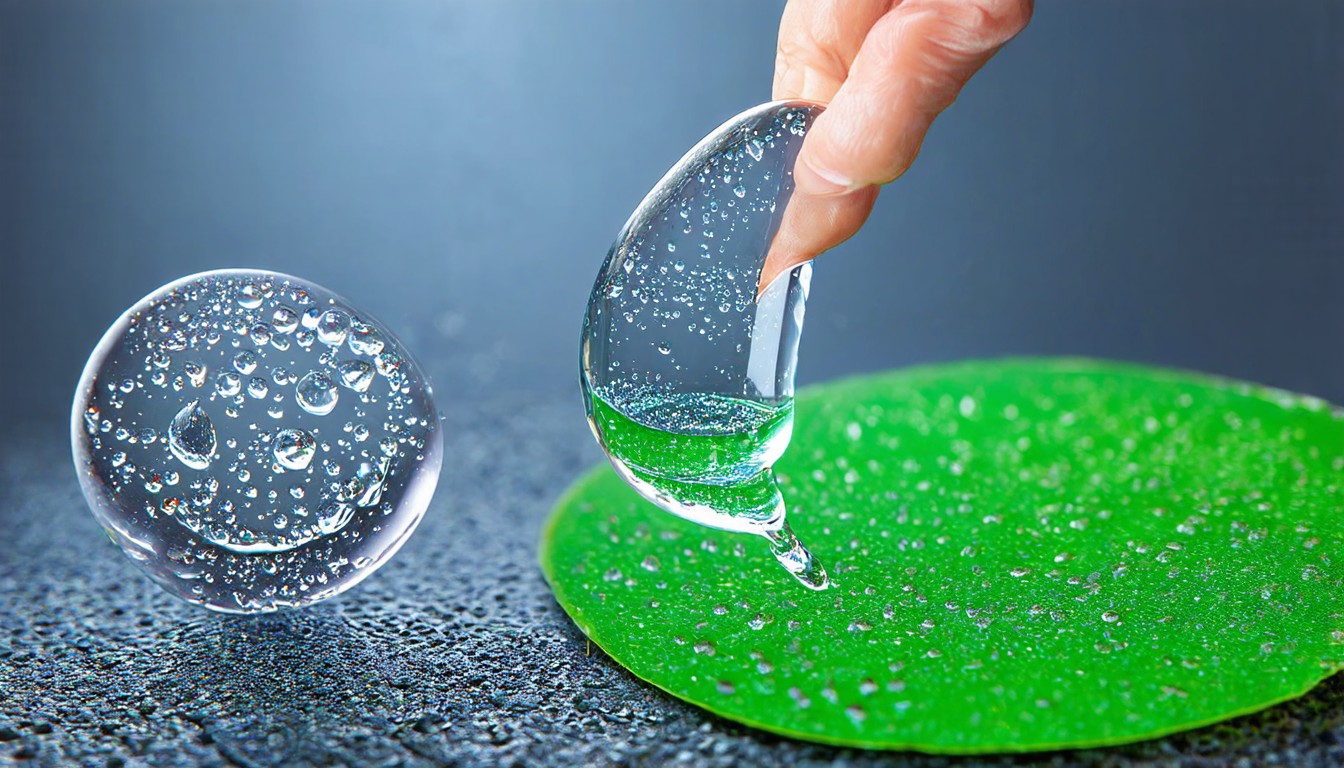
In recent years, the boundary between living and non-living matter has been blurred by the remarkable behavior of droplets. These seemingly simple systems, governed by chemistry and physics rather than biology, exhibit lifelike characteristics that challenge traditional notions of what constitutes life. In a recent episode of the Physics World Weekly podcast, three scientists—Joe Forth, Rob Malinowski, and Giorgio Volpe—discussed their fascination with "animate" droplets, which can respond to their surroundings in ways that mirror the behavior of living organisms.
To qualify as animate, these droplets must fulfill three criteria. First, they must be active, utilizing energy from their environment to perform tasks and accomplish work. Second, they must be adaptive, capable of shifting between different dynamic states in response to changes in their environment or internal states. Finally, they must be autonomous, processing multiple inputs and deciding how to react without external intervention.
Incorporating these behaviors into a droplet or a system of droplets is a complex challenge. The line between autonomous and non-autonomous systems has proven particularly difficult to navigate, and the trio of scientists engaged in a friendly debate over whether any droplet-based system has successfully crossed this threshold.
One of the obstacles in this field is its interdisciplinary nature. As Volpe noted, the community of droplet researchers is gradually finding a common language for discussions, but Forth joked that the situation is still one where "the chemists are scared of physics, the physicists are scared of chemists, everyone is scared of biology." Despite these challenges, the potential rewards of overcoming these disciplinary barriers are significant. Applications of animate droplets could range from everyday consumer products, such as deodorants, to more critical areas like oil spill cleanup.
Their work is based on a Perspective article co-authored by Volpe, a professor of soft matter in the chemistry department at University College London, UK; Malinowski, a research fellow in soft matter physics in the same department; and Forth, a colloid scientist. Through their research, they are pushing the boundaries of what is possible with droplets, demonstrating that systems governed by non-biological principles can indeed exhibit behaviors previously thought to be exclusive to living organisms.
As the scientists continue to explore the capabilities of animate droplets, they are not only advancing our understanding of complex systems but also paving the way for innovative solutions to real-world problems. Their work serves as a reminder that the line between living and non-living matter is not as fixed as it once seemed, and that the intersection of disciplines can lead to groundbreaking discoveries.








