
Drone pictures show Britain's eroding coastline edging closer to the country's oldest theme park after devastating landslips
Blackgang Chine on the Isle of Wight has lost around 350m of land to coastal erosion in the last 75 years, mostly caused by rain on its clay layers.
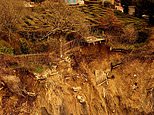
Drone pictures reveal the alarming rate at which Britain's coastline is eroding, with the Isle of Wight's Blackgang Chine theme park now threatened by relentless landslips. Over the past 75 years, the park has lost approximately 350 meters of land, primarily due to heavy rainfall infiltrating the clay layers beneath the shoreline. This erosion has not only reshaped the landscape but also poses a significant risk to the country's oldest theme park, which has been a popular tourist attraction for generations.
Blackgang Chine, established in 1845, is nestled along the south coast of the Isle of Wight, a region known for its dramatic cliffs and rugged terrain. The park's location, while picturesque, has become a source of concern as the erosion has not only reduced the park's land but also brought it perilously close to the edge of the cliff. Satellite and drone imagery captured by environmental agencies and local authorities have highlighted the rapid pace of the erosion, with some areas losing up to several meters of land annually.
The primary cause of this coastal erosion is the clay layers that underpin the shoreline. When heavy rainfall occurs, the water seeps into these clay layers, weakening their structural integrity. Over time, this process leads to the gradual collapse of the cliff face, resulting in landslips that threaten the stability of the park and surrounding areas. Experts have noted that climate change, with its increased frequency and intensity of rainfall events, has exacerbated this problem, making it a pressing concern for both the local community and national authorities.
The erosion has not only affected the park's land but also posed a threat to the park's infrastructure and operations. As the land erodes, the park's facilities, including paths, rides, and attractions, are at risk of being undermined or destroyed. This not only endangers visitors but also raises questions about the park's long-term viability. Park officials have been working closely with environmental agencies and geologists to assess the situation and develop strategies to mitigate the risks.
One potential solution being explored is the construction of sea walls or other protective measures to slow down the erosion process. However, such interventions can be costly and may have unintended consequences, such as altering the natural flow of water or disrupting local ecosystems. Alternatively, some experts have suggested that the park might need to adapt by relocating some of its attractions inland or redesigning its layout to account for the changing landscape.
The situation at Blackgang Chine serves as a stark reminder of the challenges posed by coastal erosion and the need for proactive measures to protect vulnerable sites. As the park's history spans nearly two centuries, its preservation is not only important for the local economy but also for cultural heritage. The Isle of Wight's coastal landscape, with its dramatic cliffs and rich history, is a natural wonder that must be safeguarded for future generations.
In response to the crisis, local and national authorities have increased their monitoring of the coastline and are collaborating with experts to develop comprehensive strategies to address the erosion. The Isle of Wight's tourism industry, heavily reliant on its natural beauty and historic sites, is particularly vulnerable to the impacts of coastal erosion. The future of Blackgang Chine and other coastal attractions will depend on the effectiveness of these efforts and the ability to balance conservation with economic development.
As the park continues to battle the relentless forces of nature, the community and visitors alike are reminded of the fragility of our coastal environments. The struggle to save Blackgang Chine from the encroaching sea is a poignant tale of resilience and the urgent need to address the impacts of climate change and coastal erosion on our most cherished landscapes.








