Home EducationDRC: Urban trees are natural CO₂ stores that merit...
Education⭐ Featured

DRC: Urban trees are natural CO₂ stores that merit closer attention

Urban trees are not just landscaping features. They are natural carbon sinks, capable of offsetting human activity-related carbon dioxide (CO₂) emissions.

7 April 2026 at 08:53 am
1 views
DRC: Urban trees are natural CO₂ stores that merit closer attention

In the Democratic Republic of the Congo (DRC), urban trees are increasingly being recognized as vital components of the solution to climate change. Traditionally overlooked in favor of old-growth forests, these trees in cities like Bunia have been found to play a significant role in carbon sequestration, according to a recent study conducted in the Ituri Province.

The study, published in October 2025, highlights the importance of urban trees as natural carbon sinks, capable of offsetting substantial portions of human-related carbon dioxide (CO₂) emissions. This realization has sparked renewed interest among scientists in the DRC and beyond, as cities have largely been absent from climate policies due to a lack of reliable data on their carbon-storing potential.

To address this gap, researchers from the University of Bunia conducted an inventory of 2,311 trees across 21 one-hectare plots in three communes of Bunia: Mbunya, Nyakasanza, and Shari. Employing non-destructive methods that relied on tree diameter, height, and wood density, the team estimated the aboveground biomass and carbon stock without needing to fell any trees.

The findings were striking. The urban trees in Bunia were found to store 1,759 tons of aboveground biomass, translating to 8,795 tons of carbon sequestered. This equates to the removal of 2,374 tons of CO₂ from the atmosphere. On average, each urban tree in Bunia stores 380 kilograms of carbon, which is equivalent to approximately 124 kg of CO₂ absorbed. In one urban hectare, the average carbon stock is 47.6 tons.

These figures demonstrate the significant potential of urban trees in mitigating climate change. While natural forests have long been recognized for their role in carbon absorption, the contribution of urban trees has often been underestimated. The Bunia study underscores the need for more research and policy development to integrate these green spaces into broader conservation efforts.

The recognition of urban trees as carbon sinks is particularly relevant in the context of rapidly urbanizing African cities. As infrastructure projects like the modern airport planned for Bunia continue to expand, there is an opportunity to prioritize green spaces and integrate them into urban planning. By doing so, cities can not only enhance their livability but also contribute meaningfully to global efforts to reduce CO₂ emissions.

The study from the University of Bunia serves as a valuable starting point for further exploration into the carbon sequestration potential of urban trees across the DRC and beyond. As climate change remains a pressing global challenge, every tool in the toolbox—including the seemingly humble urban tree—must be leveraged to make a difference. The findings from Bunia highlight the importance of reevaluating our approach to urban green spaces and recognizing their role as natural allies in the fight against climate change.

📰 Related News
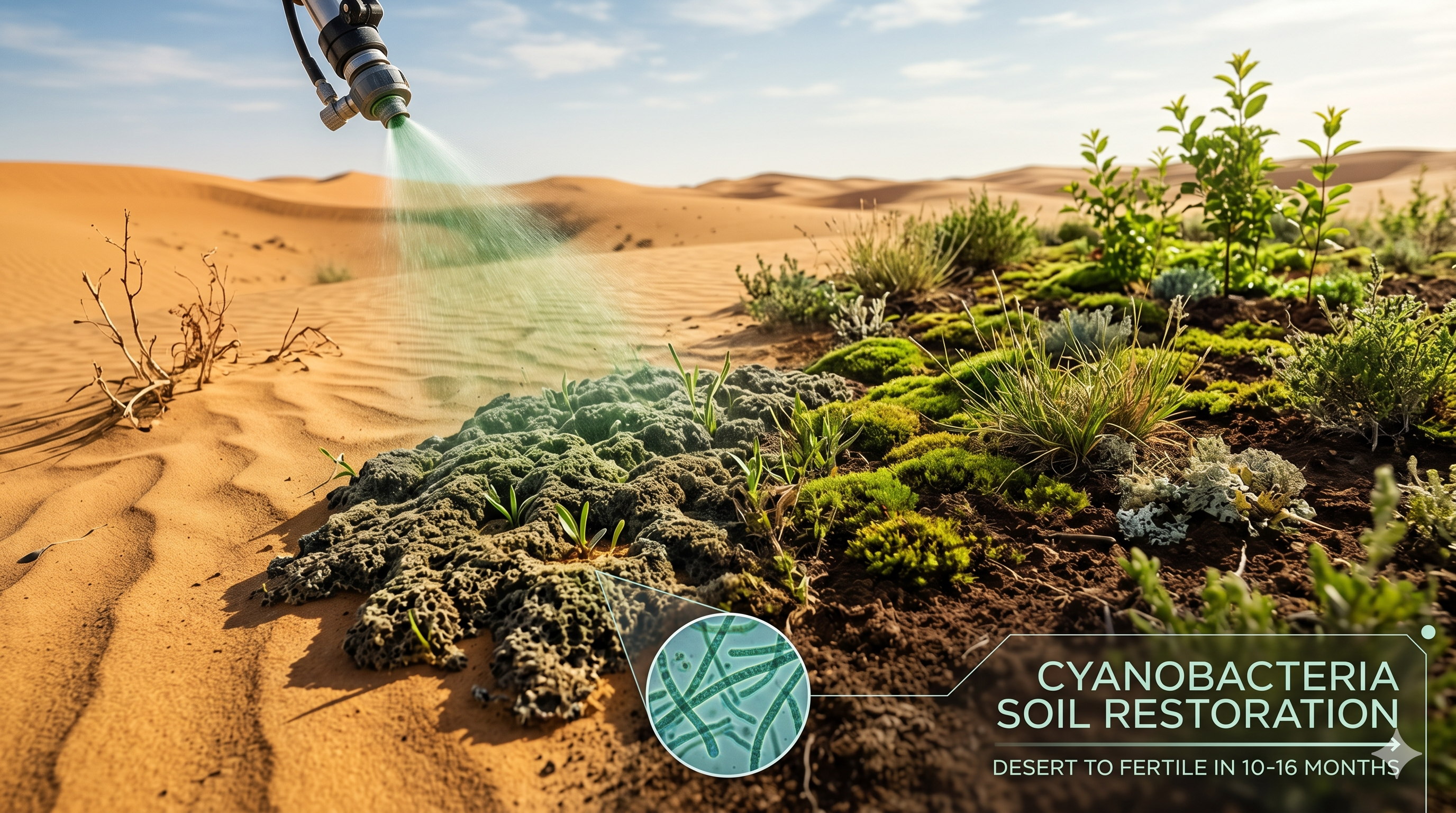
China is using a bacteria to turn desert into fertile soil in just 10 months
In a major breakthrough against desertification, researchers at Shapotou Desert Experimental Research Station have developed a technique that can transform barren desert sand into fertile, plant-supporting soil in just 10 months.
28 May
Rising costs ‘crippling’ most farming sectors in NI – FFA
The steering committee of Farmers For Action (FFA) has said that rising fuel, fertiliser, and other costs are now “crippling” most farming sectors in Northern Ireland. The organisation also said that “abysmal” farm gate prices are “breaking the camel’s back”. The FFA said the Department of Agriculture, Environment and Rural Affairs (DAERA) is “making things […] The post Rising costs ‘crippling’ most farming sectors in NI – FFA appeared first on Agriland.ie .
7 Apr
Weather: Strong winds over the weekend and staying unsettled
The weather this Easter weekend will see strong winds as Storm Dave hits Ireland, and it is set to remain unsettled after that into next week, according to Met Éireann. A Status Yellow warning has been issued for the whole country. This warning will come into effect at 2:00p.m tomorrow afternoon (Saturday, April 4) and […] The post Weather: Strong winds over the weekend and staying unsettled appeared first on Agriland.ie .
7 Apr
Announcing the AWS Sustainability console: Programmatic access, configurable CSV reports, and Scope 1–3 reporting in one place
AWS announces the Sustainability console, a new standalone service that consolidates carbon emissions reporting and resources, giving sustainability teams independent access to Scope 1, 2, and 3 emissions data without requiring billing permissions.
7 Apr
Spring grazing: Risk of negative energy balance
Unsettled weather means spring grazing is still quite messy, but its important to push on as the risk of negative energy balances (NEB) rise. NEB is often an issue at this stage, as much of the herd begins to reach their peak milk production but have not yet reached their maximum dry matter intake (DMI). […] The post Spring grazing: Risk of negative energy balance appeared first on Agriland.ie .
7 Apr
Raising the bar: Celebrating the best of West Cork’s dairy farming
At a time when dairy farming is under intense scrutiny, it’s easy to lose sight of what is actually happening on farms across west Co. Cork. Behind the headlines and debates, thousands of family farmers are quietly producing some of the highest-quality, lowest-carbon milk in Europe – while continuing to protect their land, their animals […] The post Raising the bar: Celebrating the best of West Cork’s dairy farming appeared first on Agriland.ie .
7 Apr
How has the wet spring affected feed costs?
We are now in April and yet a good number of herds have very little of the platform grazed, while others still have not seen any grass in 2026 due to the weather. To make matters worse, Met Éireann is still predicting two to three times more than the average rainfall for the week ahead. […] The post How has the wet spring affected feed costs? appeared first on Agriland.ie .
7 Apr
Most Irish dairy cows moved to sheds in March – survey
The majority of Irish dairy farmers have returned their cattle to sheds in some form due to the wet weather experienced recently, a new survey has found. This is based on the latest Calving Insights Survey conducted by FRS Co-Op for the month of March. The survey found that, despite some spells of dry weather […] The post Most Irish dairy cows moved to sheds in March – survey appeared first on Agriland.ie .
7 Apr
Opinion: Easter has always been a true celebration of Irish sheep production
Easter has always been synonymous with all that is good about Irish sheep production. And long may this continue to be the case. Spring-born lambs gambolling in fields always epitomise the ending of winter and the promise of better weather to come. It’s just a pity that the spring of 2026 has not lived up […] The post Opinion: Easter has always been a true celebration of Irish sheep production appeared first on Agriland.ie .
7 Apr
The basics of irrigation during hot weather
Hot, dry conditions test even the best irrigation strategies. Christo van der Westhuizen, agronomist at Netafim Southern and East Africa, explained to Glenneis Kriel how farmers can manage water efficiently to protect crops during hot days.
7 Apr