
Donald Trump issues expletive threat to Iran over Hormuz Strait blockage
Kethevane Gorjestani, France 24 In ternational Affairs Editor, has more.
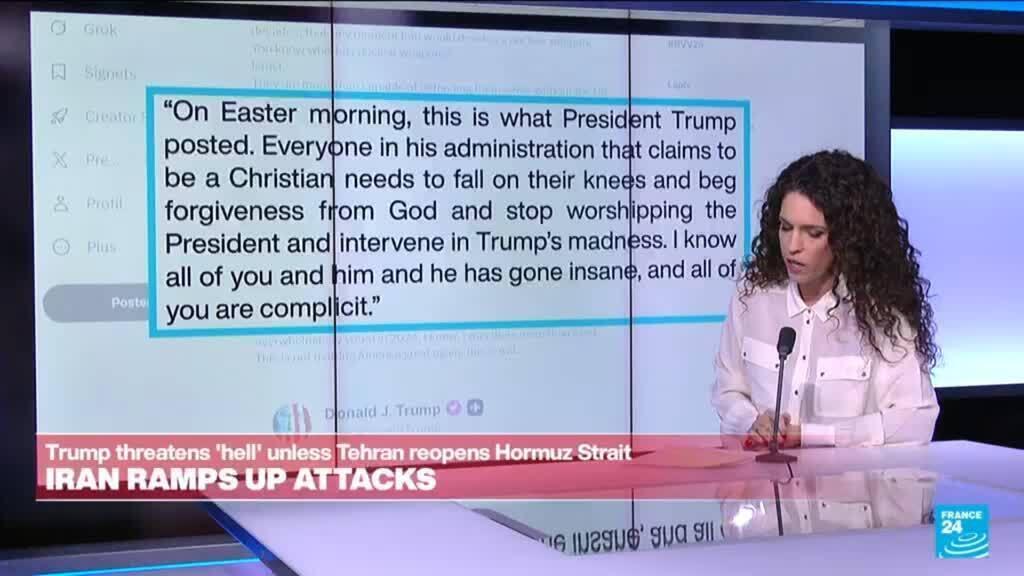
Donald Trump, the former President of the United States, has recently issued a direct and aggressive threat to Iran, using expletives, in response to the potential blockage of the Hormuz Strait. This move highlights the ongoing tensions between the two nations and underscores the volatile nature of the Persian Gulf region.
The Hormuz Strait, a narrow waterway between the Persian Gulf and the Gulf of Oman, is a critical chokepoint for global oil shipping. Approximately 30% of the world's oil supply passes through this strategically important area. In recent weeks, concerns have escalated over the possibility of Iran blocking the strait, potentially disrupting global energy markets and triggering a significant economic crisis.
Trump's expletive-laced threat, which was widely reported by international media outlets, was a stark departure from his usual diplomatic tone. The former president, known for his confrontational approach to foreign policy, has long accused Iran of aggression and destabilizing activities in the region. His threat comes as a direct response to Iran's recent actions, including the seizure of a British tanker and the alleged involvement in attacks on oil tankers in the Gulf.
The U.S. has been closely monitoring the situation, with officials expressing deep concern over the potential impact of a blockade on global energy prices and supply chains. The administration has warned Iran against any actions that could disrupt the flow of oil through the Hormuz Strait, emphasizing the severe consequences of such a move.
Iran, on the other hand, has denied any plans to block the strait, dismissing the U.S. concerns as baseless. However, the country has not ruled out the possibility of taking military action in response to perceived threats to its sovereignty and security. This has led to heightened tensions and increased military presence in the region, with both the U.S. and its allies preparing for potential escalations.
The threat from Trump also serves as a reminder of the broader geopolitical rivalry between the U.S. and Iran. The two nations have been locked in a complex struggle for influence in the Middle East, with Iran's regional ambitions and support for various proxy groups often clashing with U.S. interests. This rivalry has led to a series of incidents, including the assassination of Iranian General Qasem Soleimani in Iraq in 2019, which further intensified the tensions.
The Hormuz Strait blockage threat has also drawn attention to the broader challenges faced by global energy markets. With the world recovering from the COVID-19 pandemic, oil demand is expected to rise, putting additional pressure on the strait's capacity. Any disruption to the flow of oil could lead to significant price hikes and economic instability, particularly for countries heavily reliant on imported oil.
In response to the situation, the international community has called for diplomatic solutions and de-escalation. The European Union and other global powers have urged both the U.S. and Iran to exercise restraint and engage in dialogue to address their differences peacefully. However, the direct and aggressive language used by Trump in his threat to Iran suggests that diplomatic efforts may face significant challenges in the coming weeks.
As tensions continue to rise in the Persian Gulf region, the future of the Hormuz Strait and its critical role in global energy markets remains uncertain. The threat from Trump underscores the need for careful diplomacy and international cooperation to prevent further escalations and ensure the stability of this vital chokepoint.








