Donald Trump has a strong foreign-policy hand, but could blow it
Bullying foreigners can be sadly effective, but also a dangerous distraction
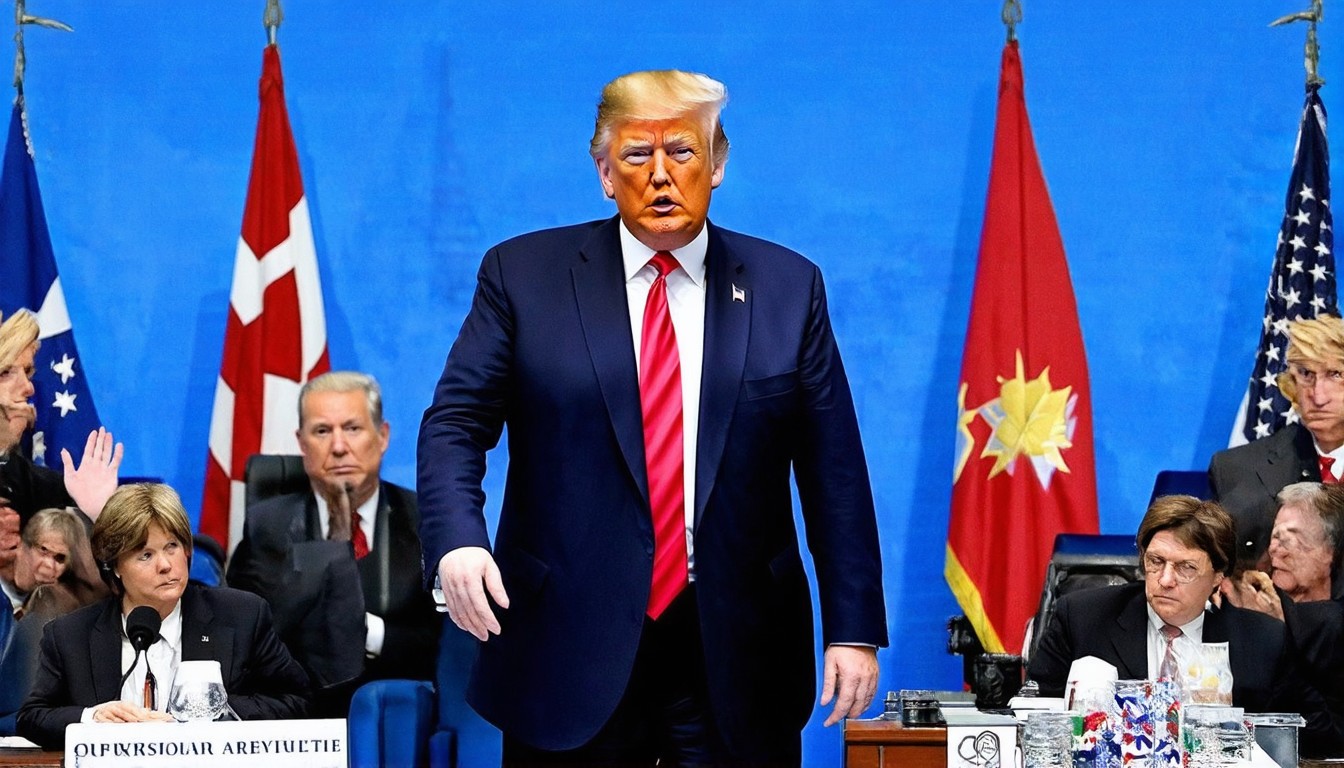
Donald Trump's foreign policy has been a topic of much debate and speculation since his election in 2016. While some argue that his blunt and aggressive approach has yielded short-term gains, others warn that it risks long-term stability and security. The question remains: does Trump's "strong hand" in international affairs ultimately serve the United States, or could it lead to a dangerous distraction that undermines global relations?
Trump's tenure has been marked by a series of high-profile confrontations with foreign leaders, from his trade wars with China to his acrimonious relationship with NATO allies. On one hand, these actions have been credited with renegotiating unfavorable trade deals and pushing back against perceived aggression from adversaries. For instance, the imposition of tariffs on China has reportedly led to concessions in trade negotiations, while the "America First" policy has emphasized national sovereignty and deterred perceived threats.
However, critics argue that Trump's approach is not only unsustainable but also counterproductive. The trade war with China, for example, has resulted in economic uncertainty and retaliatory measures that have hurt American businesses and consumers. Similarly, the administration's decision to withdraw from key international agreements, such as the Paris Climate Accord and the Iran nuclear deal, has alienated allies and emboldened adversaries.
Moreover, Trump's penchant for public humiliation of foreign leaders, such as his tweets targeting Canadian Prime Minister Justin Trudeau and German Chancellor Angela Merkel, has strained diplomatic relations. This behavior, while perhaps effective in garnering short-term media attention, risks eroding trust and cooperation among nations. In the long run, such tactics could lead to a fragmented global order, where countries are less willing to collaborate on shared challenges like terrorism, climate change, and pandemics.
Despite these concerns, some observers contend that Trump's blunt style has been a refreshing departure from the era of "leading from behind" that characterized the Obama administration. They argue that a more assertive foreign policy is necessary in an increasingly competitive global landscape, where other nations, such as Russia and China, are not hesitant to assert their interests.
However, the risks associated with Trump's approach cannot be ignored. The administration's handling of the COVID-19 pandemic, for example, has been criticized for its perceived lack of global leadership and cooperation. The U.S. has been accused of hoarding medical supplies and misleading other nations about the severity of the crisis, which has hindered a coordinated international response.
Furthermore, Trump's decision to prioritize bilateral deals over multilateral institutions has raised concerns about the future of international organizations like the United Nations and the World Health Organization. These institutions, while not perfect, provide a platform for dialogue and cooperation among nations. Dismantling them could leave a power vacuum that is filled by more authoritarian regimes, undermining global stability.
In conclusion, while Donald Trump's foreign policy has undeniably generated headlines and short-term gains, the long-term consequences remain uncertain. The question of whether his "strong hand" will ultimately serve the interests of the United States and the world hinges on the balance between assertiveness and diplomacy. As global challenges become increasingly interconnected, a sustainable and cooperative approach is essential. Trump's legacy in foreign policy will be shaped by whether his actions can be seen as a calculated strategy or a reckless distraction that jeopardizes the very security and stability he claims to prioritize.