
Do Beautiful Birds Have an Evolutionary Advantage?
Richard Prum explains why he thinks feathers and vibrant traits in birds evolved not solely for survival, but also through aesthetic choice. The post Do Beautiful Birds Have an Evolutionary Advantage? first appeared on Quanta Magazine
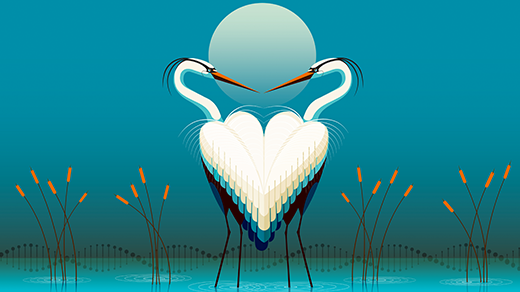
Richard Prum, a Yale evolutionary biologist and ornithologist, has spent his career exploring the intricate world of birds, which he sees as more than just descendants of dinosaurs—they are dinosaurs themselves. In a recent conversation with co-host Janna Levin, Prum delved into the deep evolutionary origins of feathers, challenging long-held assumptions about their primary function.
Traditionally, feathers have been thought to have evolved primarily for flight, insulation, or camouflage. However, Prum argues that feathers first appeared in dinosaurs long before birds developed the ability to fly. This suggests that their initial purpose was not directly related to these functions. Instead, Prum posits that feathers may have evolved through a process of aesthetic choice, driven by sexual selection.
Sexual selection is a key mechanism in evolution, where traits that enhance an individual's chances of attracting a mate become more prevalent over time. In many species, including birds, this can lead to the development of elaborate and often striking features. Prum's theory proposes that vibrant plumage and intricate feather patterns in birds are not just byproducts of survival adaptations but are also the result of aesthetic preferences within the species.
To support this idea, Prum points to the striking similarities between the evolution of feathers in birds and the development of peacock tails. Both examples illustrate how traits that may seem unnecessary for survival can become central to mating rituals. In the case of peacocks, the elaborate tail feathers are thought to have evolved not for survival but as a result of female preference for males with more elaborate displays.
Prum's research extends beyond just the visual aspects of birds. He has also studied the role of vocalizations in mate selection, demonstrating that birds with more complex songs are often more successful in attracting mates. This further supports the idea that aesthetic choices play a significant role in the evolution of avian traits.
However, Prum's theory is not without its critics. Some scientists argue that while sexual selection may contribute to the development of certain traits, it is not sufficient to explain the full range of avian adaptations. They contend that feathers and other features must have evolved primarily for survival purposes, such as insulation or flight.
Despite the debate, Prum's work has sparked renewed interest in the role of aesthetics in evolution. By challenging traditional views on the function of feathers, he has opened up new avenues for understanding the complex interplay between survival and mate choice in the natural world.
In conclusion, Richard Prum's research on the evolution of feathers in birds highlights the intricate relationship between aesthetics and evolutionary success. While feathers are undeniably important for survival, Prum's findings suggest that their development was also shaped by the aesthetic preferences of birds themselves. This perspective not only enriches our understanding of avian biology but also underscores the broader significance of sexual selection in shaping the diverse array of traits observed in the animal kingdom. As Prum continues to explore the mysteries of bird evolution, his work serves as a reminder that the natural world is often more complex and fascinating than we initially perceive.









