Discover the First Horror & Fantasy Magazine, Der Orchideengarten, and Its Bizarre Artwork (1919–1921)
From the 18th century onward, the genres of Gothic horror and fantasy have flourished, and with them the sensually visceral images now commonplace in film, TV, and comic books. These genres perhaps reached their aesthetic peak in the 19th century with writers like Edgar Allan Poe and illustrators like Gustave Dore. But it was in […]
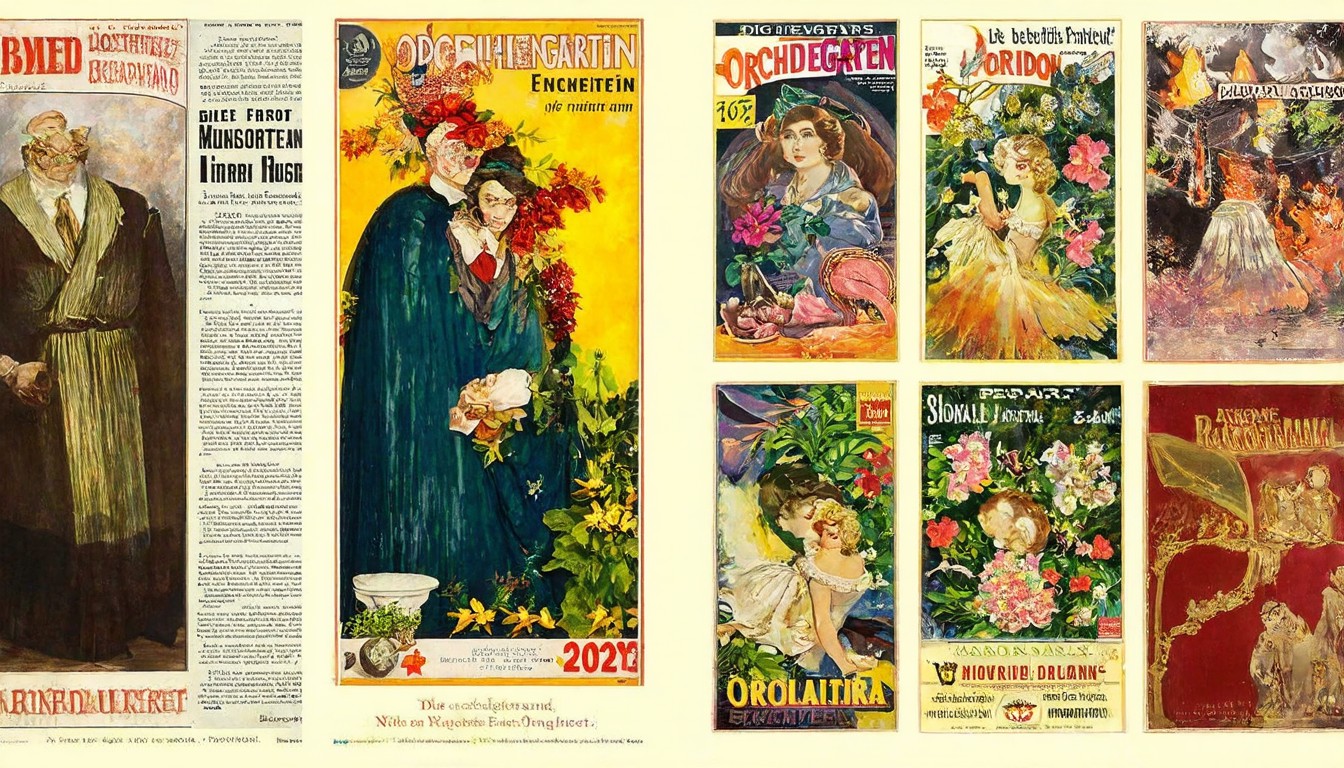
From the 18th century onward, the genres of Gothic horror and fantasy have flourished, and with them the sensually visceral images now commonplace in film, TV, and comic books. These genres perhaps reached their aesthetic peak in the 19th century with writers like Edgar Allan Poe and illustrators like Gustave Dore. But it was in the early twentieth century that a more populist subgenre truly came into its own: “weird fiction,” a term H.P. Lovecraft used to describe the pulpy brand of supernatural horror codified in the pages of American fantasy and horror magazine Weird Tales—first published in 1923. (And still going strong!) A precursor to EC Comics’ many lurid titles, Weird Tales is often considered the definitive early twentieth century venue for weird fiction and illustration.
However, we need only look back a few years and to another continent to find an earlier publication, serving German-speaking fans—Der Orchideengarten (“The Garden of Orchids”), the very first horror and fantasy magazine, which ran 51 issues from January 1919 to November 1921. The magazine featured work from its editors Karl Hans Strobl and Alfons von Czibulka, from better-known contemporaries like H.G. Wells and Karel Capek, and from forefathers like Dickens, Pushkin, Guy de Maupassant, Poe, Voltaire, Washington Irving, Nathaniel Hawthorne, and others. “Although two issues of Der Orchideengarten were devoted to detective stories,” writes 50 Watts, “and one to erotic stories about cuckolds, it was a genuine fantasy magazine.”
And it was also a gallery of bizarre and unusual artwork. 50 Watts quotes from Franz Rottensteiner’s description of the magazine’s art, which ranged “from representations of medieval woodcuts to the work of masters of the macabre such as Gustave Dore or Tony Johannot, to contemporary German artists like Rolf von Hoerschelmann, Otto Lennekogel, Karl Ritter, Heinrich Kley, or Alfred Kubin.” These artists created the covers and illustrations that defined the magazine’s unique style, blending elements of the grotesque, the fantastical, and the surreal.
Der Orchideengarten’s artwork was not just a backdrop for the stories; it was an integral part of the magazine’s appeal. The illustrations often served to enhance the eerie and otherworldly atmosphere of the tales, drawing readers into a world where the boundaries between reality and fantasy were blurred. The magazine’s editors carefully curated both the content and the visual elements, ensuring that each issue offered a cohesive and immersive experience for the reader.
The magazine’s contributors were a diverse group, reflecting the rich cultural landscape of Germany at the time. Editors Karl Hans Strobl and Alfons von Czibulka were both established writers in their own right, with a penchant for the fantastical and the macabre. Strobl, a prolific author, was known for his short stories and novels that often explored the darker corners of the human psyche, while von Czibulka was a poet and playwright whose work frequently delved into the supernatural.
The inclusion of well-known contemporaries like H.G. Wells and Karel Capek further elevated the magazine’s status, showcasing the global reach of the horror and fantasy genres. These authors brought their unique perspectives and styles to the pages of Der Orchideengarten, contributing to the magazine’s eclectic mix of stories and themes.
However, it was the artwork that truly set Der Orchideengarten apart. The magazine’s illustrators drew from a variety of influences, creating a visual language that was both innovative and timeless. The medieval woodcuts provided a sense of historical depth, while the works of masters like Gustave Dore and Tony Johannot brought a sense of tradition and craftsmanship to the magazine. Contemporary German artists like Rolf von Hoerschelmann, Otto Lennekogel, Karl Ritter, Heinrich Kley, and Alfred Kubin added a modern edge, infusing the artwork with a unique sense of style and imagination.
Alfred Kubin, in particular, was a standout contributor. Known for his intricate and often unsettling illustrations, Kubin’s work for Der Orchideengarten captured the magazine’s dark and surreal aesthetic. His detailed line drawings and muted color palettes created a haunting visual experience that complemented the stories’ eerie atmospheres.
Despite its short run of just three years, Der Orchideengarten left a lasting impact on the horror and fantasy genres. The magazine’s innovative approach to storytelling and its groundbreaking artwork helped pave the way for future publications like Weird Tales and EC Comics. Der Orchideengarten’s legacy can still be felt today in the countless works of fiction and art that continue to draw inspiration from its unique blend of the grotesque, the fantastical, and the surreal.
In conclusion, Der Orchideengarten stands as a pioneering publication in the history of horror and fantasy, bridging the gap between the 19th-century Gothic tradition and the 20th-century weird fiction movement. Its eclectic mix of contributors, from established writers to contemporary artists, and its groundbreaking artwork, created a magazine that was both a cultural phenomenon and a precursor to the genres’ future evolution. Der Orchideengarten may have been short-lived, but its influence on the world of fiction and art endures, reminding us of the power of the imagination to transcend time and space.