Discover the First Horror & Fantasy Magazine, Der Orchideengarten, and Its Bizarre Artwork (1919–1921)
From the 18th century onward, the genres of Gothic horror and fantasy have flourished, and with them the sensually visceral images now commonplace in film, TV, and comic books. These genres perhaps reached their aesthetic peak in the 19th century with writers like Edgar Allan Poe and illustrators like Gustave Dore. But it was in […]
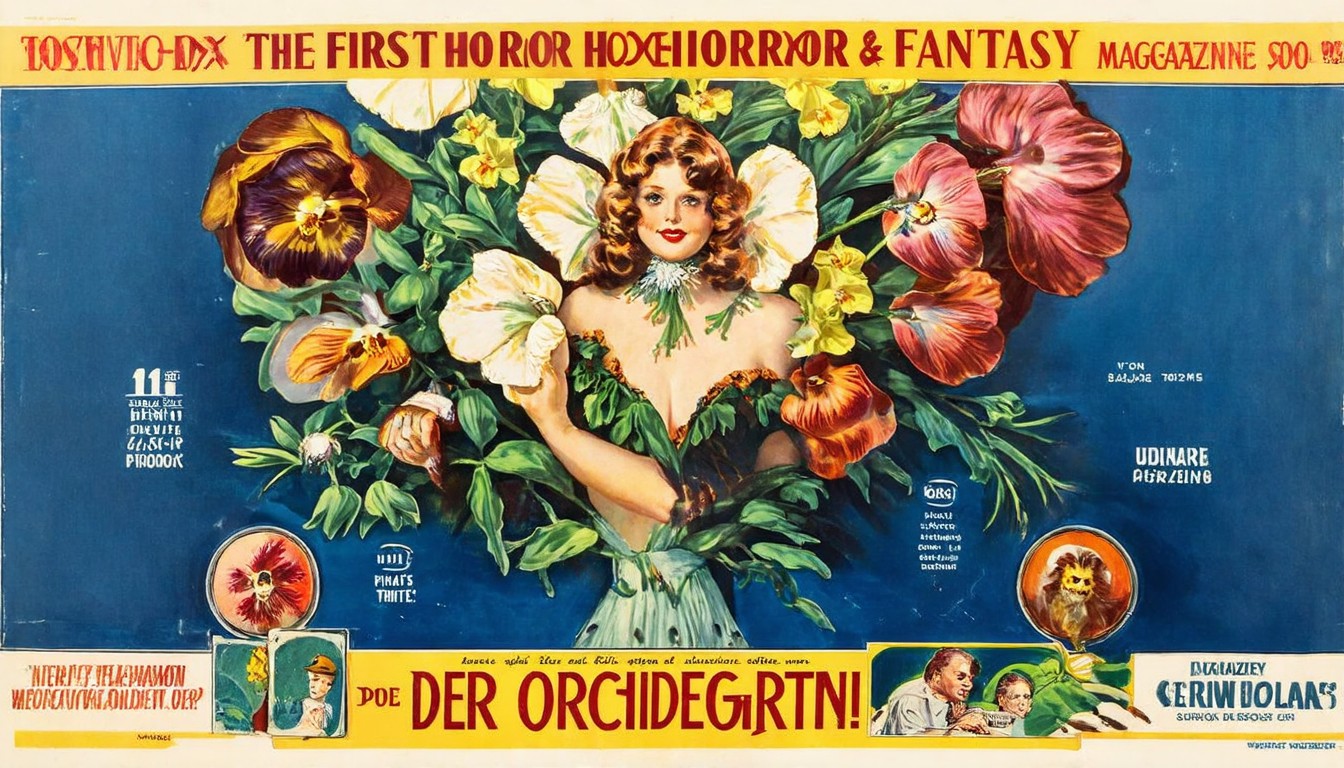
From the 18th century onward, the genres of Gothic horror and fantasy have flourished, and with them the sensually visceral images now commonplace in film, TV, and comic books. These genres perhaps reached their aesthetic peak in the 19th century with writers like Edgar Allan Poe and illustrators like Gustave Dore. But it was in the early twentieth century that a more populist subgenre truly came into its own: “weird fiction,” a term H.P. Lovecraft used to describe the pulpy brand of supernatural horror codified in the pages of American fantasy and horror magazine Weird Tales—first published in 1923. (And still going strong!) A precursor to EC Comics’ many lurid titles, Weird Tales is often considered the definitive early twentieth-century venue for weird fiction and illustration.
However, we need only look back a few years and to another continent to find an earlier publication, serving German-speaking fans—Der Orchideengarten (“The Garden of Orchids”), the very first horror and fantasy magazine, which ran 51 issues from January 1919 to November 1921. The magazine featured work from its editors Karl Hans Strobl and Alfons von Czibulka, from better-known contemporaries like H.G. Wells and Karel Capek, and from forefathers like Dickens, Pushkin, Guy de Maupassant, Poe, Voltaire, Washington Irving, Nathaniel Hawthorne, and others. “Although two issues of Der Orchideengarten were devoted to detective stories,” writes 50 Watts, “and one to erotic stories about cuckolds, it was a genuine fantasy magazine.”
And it was also a gallery of bizarre and unusual artwork. 50 Watts quotes from Franz Rottensteiner’s description of the magazine’s art, which ranged “from representations of medieval woodcuts to the work of masters of the macabre such as Gustave Dore or Tony Johannot, to contemporary German artists like Rolf von Hoerschelmann, Otto Lennekogel, Karl Ritter, Heinrich Kley, or Alfred Kubin.” These artists created the covers and illustrations that defined the magazine’s unique style, blending the sensibilities of the past with the emerging modernist trends of the time.
Der Orchideengarten’s artwork was not just a backdrop for the stories; it was an integral part of the magazine’s identity. The illustrations often pushed the boundaries of what was considered acceptable at the time, featuring dark, surreal, and sometimes disturbing imagery. This was a departure from the more restrained and ornate styles of the 19th century, reflecting the growing influence of Expressionism and the avant-garde movements that were taking root in Germany during this period.
The magazine’s editors, Strobl and von Czibulka, were instrumental in shaping its content and aesthetic. Strobl, a prolific writer of horror and fantasy, brought his own unique vision to the magazine, while von Czibulka, a literary critic and editor, ensured that the content was both intellectually stimulating and accessible to a wide audience. Together, they curated a mix of original stories, translations, and reprints from established authors, creating a diverse and engaging reading experience for subscribers.
Despite its short lifespan of just two years, Der Orchideengarten left a lasting impact on the horror and fantasy genres. Its innovative approach to storytelling and artwork paved the way for future publications like Weird Tales and inspired a new generation of writers and artists. The magazine’s influence can be seen in the works of later authors such as Lovecraft and Howard Phillips Lovecraft, who were avid readers of the genre and drew inspiration from the bold and daring spirit of Der Orchideengarten.
Today, Der Orchideengarten remains a fascinating relic of a bygone era, offering a glimpse into the early days of horror and fantasy literature. Its bizarre artwork and captivating stories continue to captivate readers, proving that the genres’ appeal has endured through the decades. As we look back on the magazine’s legacy, it’s clear that Der Orchideengarten was more than just a precursor to later publications—it was a pioneering force that helped shape the course of horror and fantasy for generations to come.