
Determination of Besatz in Cereals Using Physical Analysis Instrument Based on Imaging and Artificial Neural Network Technology
Introduction Approximately 23.97 million hectares of Türkiye’s land area are suitable for agriculture. Field crops occupy 69.9% (16.75 million hectares) of the agricultural land, excluding fallow areas. Cereals cover about 71% of this area (11.89 million hectares). Among the cereal crops, wheat has the largest share at 57%, followed by barley with 27%, and corn […]
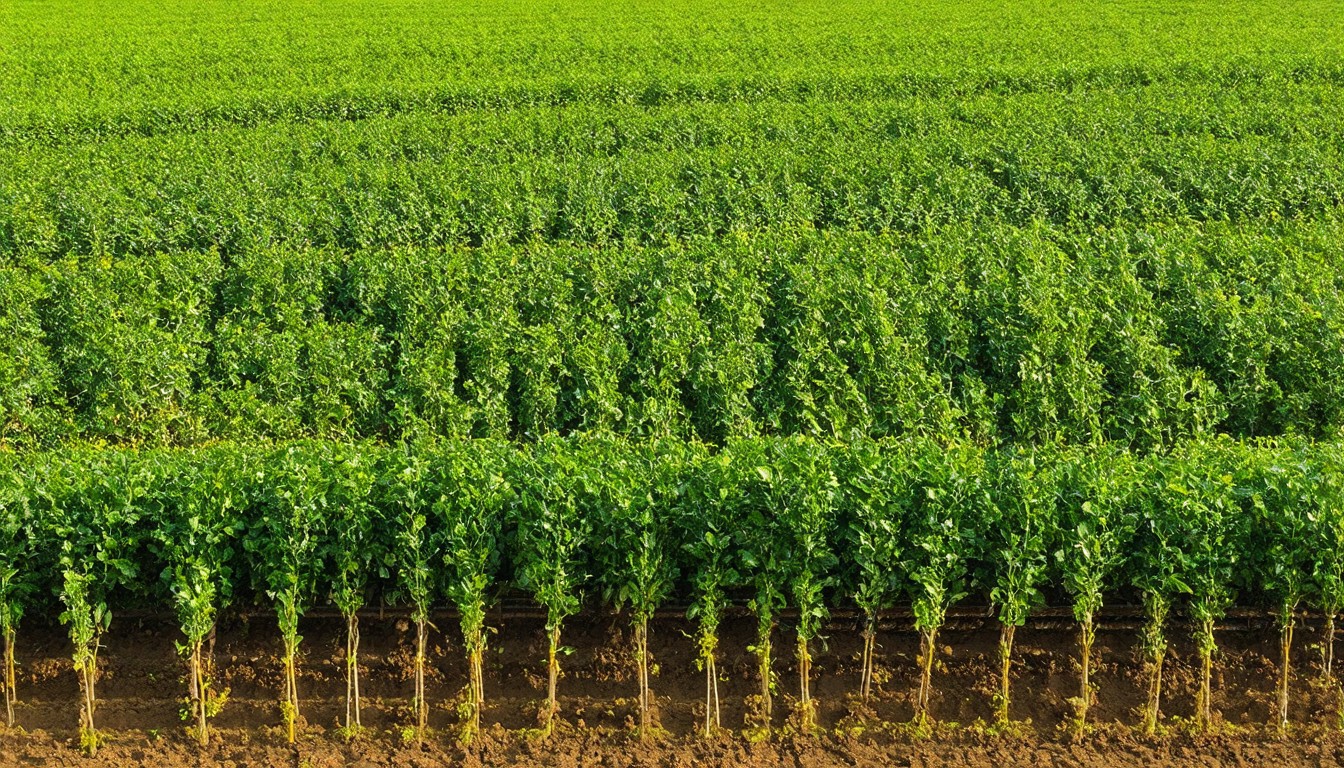
Approximately 23.97 million hectares of Turkey's land area are suitable for agriculture, with field crops occupying 69.9% (16.75 million hectares) of the agricultural land, excluding fallow areas. Cereals cover about 71% of this area (11.89 million hectares), with wheat having the largest share at 57%, followed by barley with 27%, and corn with 8.1%. As the world's population grows rapidly, the demand for agricultural products is increasing, and seed quality becomes a critical factor in meeting this demand. Traditional methods of assessing seed quality, such as seed purity, moisture and lipid content, and seed viability, are time-consuming and inefficient, making them unsuitable for modern agricultural needs. To address this, a new approach combining spectral image processing and artificial intelligence is being developed to automate and enhance the quality control of agricultural products.
Infrared spectroscopy and hyperspectral imaging are widely used in this context due to their real-time and effective capabilities. Vitreousness in durum wheat grains is a crucial quality criterion, indicating hardness and protein content. According to the TS 2974 Wheat Standard, the limits for vitreous grains in first, second, and third class wheats are 0-27, 28-35, and 36-50, respectively. If the vitreous grain content is 50% or more, the product is classified as Low-Quality Durum Wheat. Detecting vitreous grains in durum wheat is a specialized task that requires precise methods.
A 2010 study investigated determining the vitreousness of durum wheat using artificial neural networks and image processing techniques. The research compared two different neural network technologies to determine the most effective method for analyzing cereal quality. The first approach utilized a multilayer perceptron (MLP) neural network, while the second employed a support vector machine (SVM) classifier. Both methods involved preprocessing the hyperspectral images to enhance the contrast and remove noise, followed by feature extraction and selection.
The MLP neural network was trained using a dataset of hyperspectral images of durum wheat grains, with the goal of classifying them based on their vitreousness. The SVM classifier, on the other hand, was trained using a subset of the features extracted from the images. Both models were evaluated using cross-validation to ensure their accuracy and robustness.
The study found that the SVM classifier outperformed the MLP neural network in terms of classification accuracy. The SVM model achieved an average accuracy of 98.5%, while the MLP model achieved an average accuracy of 96.2%. This result highlighted the effectiveness of the SVM classifier in distinguishing between vitreous and non-vitreous grains.
The researchers also analyzed the computational efficiency of both methods. The SVM classifier was found to be more computationally efficient, with a training time that was approximately 30% faster than the MLP neural network. This advantage is particularly important in agricultural settings where real-time analysis is often required.
In conclusion, the study demonstrated that artificial neural networks and image processing techniques can be effectively used to determine the vitreousness of durum wheat grains. The SVM classifier emerged as the superior method, offering high accuracy and computational efficiency. This innovative approach has the potential to revolutionize the quality control of cereal products, enabling farmers and industry professionals to make more informed decisions about seed quality and grain production. As the demand for agricultural products continues to grow, the integration of advanced technologies like artificial intelligence and hyperspectral imaging will play a crucial role in meeting the challenges of modern agriculture.









